Yascha Mounk delivers a searing indictment not just of a sports organization, but of the economic extraction model that has turned the world's most beloved sporting event into a one-sided shakedown. While the narrative usually focuses on the brilliance of the athletes or the pageantry of the host cities, Mounk forces the listener to confront the grotesque financial architecture underneath: a system where sovereign nations and municipalities are contractually obligated to subsidize a private cartel's profits while receiving nothing in return.
The Evolution of Kleptocracy
Mounk begins by establishing the emotional stakes for the fan before pivoting to the institutional rot. He writes, "The tournament is disfigured by its prefix: FIFA, football's cartoonishly evil world governing body." This framing is deliberate; he wants us to feel the cognitive dissonance of loving a game while hating its masters. The author traces this history back to the era of Sepp Blatter, comparing his rule to Mobutu Sese Seko's exploitation of Zaire—a "pervasive empire of graft" where bribes were stuffed into envelopes.
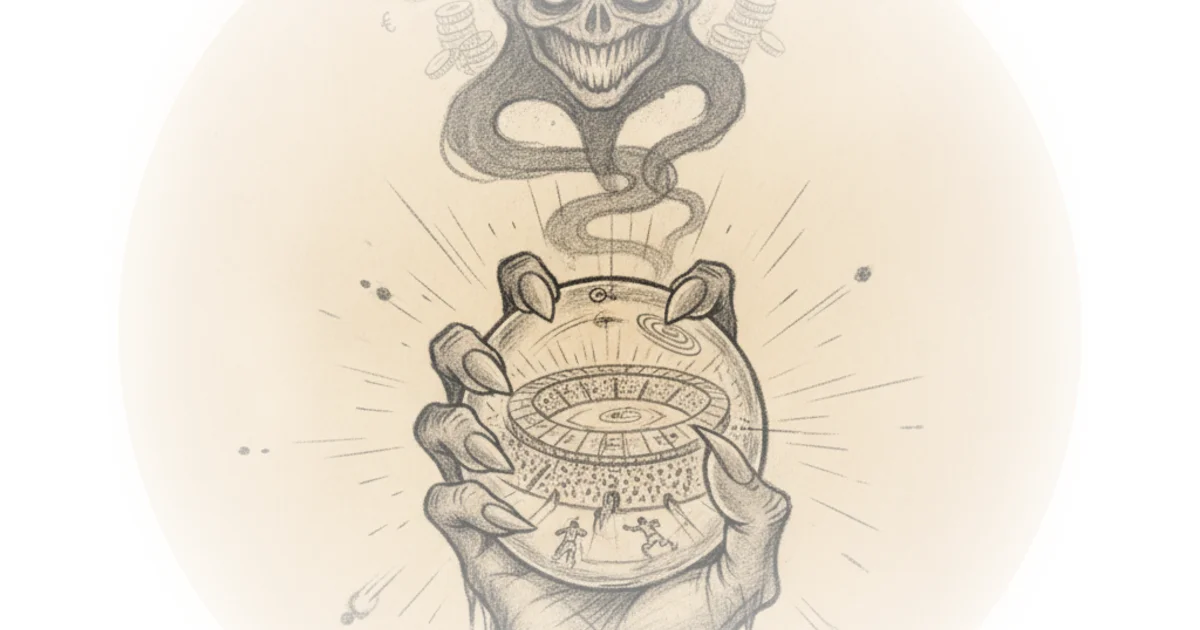
The commentary effectively distinguishes between the old guard and the new management. Mounk argues that while Blatter was a brute force kleptocrat, his successor Gianni Infantino represents a more sophisticated, corporate evil. As Mounk puts it, "If Sepp Blatter was Mobutu Sese Seko, Gianni Infantino is Gordon Gekko: a fully amoral Wall Street shark determined to use the huge leverage that control of the world's most popular event gives him to extract mindbendingly lopsided concessions." This distinction is crucial because it explains why the corruption has become harder to prosecute legally; it is no longer about criminal wire fraud, but about aggressive contract law.
"Instead of brazen crimes that attract Justice Department attention, he pushes counterparts up against a wall, dangling World Cup glitter to pressure them to sign contracts that extract every last cent out of them."
The piece highlights the 2015 indictments by the U.S. Justice Department as a turning point, noting how those cases were recently dismissed because they "don't fit with the administration's priorities." This detail serves as a stark reminder of how institutional momentum can be stalled by shifting political winds, leaving the structural problems of FIFA intact.
The Economics of Extraction
The core of Mounk's argument lies in the specific terms of the host city agreements. He details how cities like Toronto and Montreal were forced to cancel their own cultural events, such as jazz festivals or Formula One races, simply to clear space for FIFA's "Clean Zones." In Toronto, costs ballooned from $45 million to $380 million, leading one councillor to admit, "We gave them a blank cheque."
Mounk points out the absurdity of the financial arrangement: host cities receive zero share of game-day revenue—no tickets, no concessions, no merchandise. Yet, they are on the hook for security, infrastructure, and transportation. The author notes that the U.S. Treasury alone is expected to cover a $625 million tab for tournament security. This creates a scenario where FIFA expects to clear $11 to $14 billion in revenue while operating as a tax-exempt charity across three sovereign nations.
The argument here is that this isn't just bad business; it's an act of economic coercion. Mounk writes, "FIFA itself is a Swiss non-profit and pays no taxes on World Cup revenue under any circumstances." He further notes the irony that the U.S. Treasury has granted 48 national teams charitable status, effectively making the world's biggest commercial spectacle a tax-free entity for three governments.
Critics might argue that host cities voluntarily sign these contracts because the prestige and long-term infrastructure benefits outweigh the short-term costs. However, Mounk counters this by showing how cities are stripped of their rights to ban ambush marketing or charge sales tax on tickets, terms that seem designed to ensure the public pays while FIFA keeps every dollar.
The Addictive Paradox
Despite the damning evidence, Mounk admits he will watch anyway. He captures the dilemma of the modern fan perfectly: "I will watch the footie the way a socially conscious addict stuffs cocaine up his nose: in the full, nauseated knowledge that I'm bankrolling some of the very worst people in the world but genuinely unable to help myself." This confession grounds the piece; it acknowledges that the talent on the field—prodigies like Lamine Yamal or veterans like Messi—is so compelling that it overrides moral outrage.
The author's choice to juxtapose the "ghoulish" nature of FIFA with the "ravishing" quality of modern football creates a tension that is hard to resolve. He describes the tournament as a "damsel in its grip," suggesting the sport itself is innocent, even if its guardians are not. This framing allows him to critique the administration without asking fans to boycott the event entirely.
"Only a spectacle as compelling as the World Cup could withstand the torrent of slime FIFA keeps it immersed in."
This admission is both honest and troubling. It suggests that as long as the product on the field remains this high-quality, the public will continue to fund the very machinery that exploits them. The piece implies that without a shift in how these contracts are negotiated or enforced by governments, the cycle of extraction will simply repeat every four years.
Bottom Line
Mounk's strongest contribution is exposing the shift from criminal bribery to legalized economic predation, showing how FIFA now uses contract law rather than cash envelopes to strip host nations of revenue. The argument's vulnerability lies in its reliance on individual moral discomfort; while the analysis of the contracts is irrefutable, it offers no clear path for fans or governments to break the cycle other than watching with "nauseated knowledge." Readers should watch for how local municipalities respond to these terms in future bidding cycles, as the current model may eventually become too costly even for desperate cities.