Jordan Schneider cuts through the noise of pandemic fatigue to reveal a quiet but seismic shift: Beijing is no longer just reacting to outbreaks, but engineering a legal and bureaucratic fortress against the next one. While much of the world has moved on, Schneider argues that China has spent the last few years rewriting its foundational health laws to trade information control for speed, a pivot that could fundamentally alter how the next global crisis unfolds. This isn't about political posturing; it's about the hard mechanics of survival, and the stakes are nothing less than the difference between containment and catastrophe.
The Legal Overhaul
The core of Schneider's analysis rests on a surprising legislative surge that has gone largely unnoticed outside of policy circles. He writes, "Since 2023, Beijing has revised the Infectious Disease Law (IDL) and the Biosecurity Law and launched new frameworks like the Public Health Emergency Response Law (PHERL)." This is not mere administrative housekeeping. Schneider points out that these are binding laws passed by the top legislature, giving them far more teeth than the vague "guiding opinions" that often clutter China's policy space. The author suggests this legal architecture is a direct response to the fatal delays of 2020, where the system was paralyzed by a need for central approval before local officials could act.
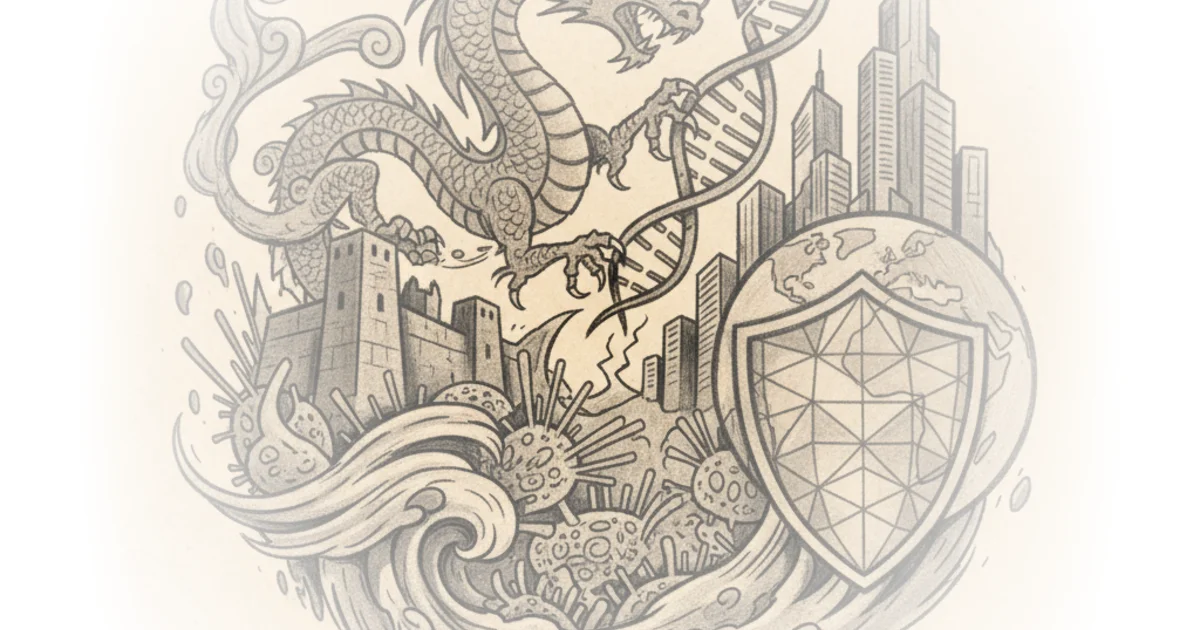
The most striking move is the creation of a legal category for "sudden outbreaks of unknown origin." Schneider notes, "The revision tries to fix this by adding 'sudden outbreaks of unknown origin' as an event that can be treated as Class A for response purposes." This allows the State Council to trigger massive containment measures before a pathogen is even identified. It is a pre-emptive strike against the very ambiguity that doomed the early response to SARS-CoV-2. However, a counterargument worth considering is whether this legal power will actually be used, or if the deep-seated culture of risk-aversion among local officials will still lead to delays despite the new rules.
"Beijing appears willing to trade some information-control for a more rule-bound, faster-moving system, though whether officials feel empowered to speak up remains uncertain."
The Bureaucratic Machine
Schneider's piece shines when he maps the new hierarchy of power, contrasting China's unified chain of command with the fragmented nature of the American system. He describes a structure where the State Council acts as the "top command centre," activating a "Joint Prevention and Control Mechanism" that pulls in over 30 ministries, from health to industry to the military. "Mobilizing dozens of ministries and a national response is something the CCP can do better than anyone," Schneider writes, highlighting the sheer efficiency of a centralized command structure.
This centralization is a double-edged sword. Schneider acknowledges that while it allows for rapid deployment of resources, "a bad call at the top can misdirect the entire system." He contrasts this with the United States, where the decentralized model means "one state's mistakes don't necessarily drag everyone else down," but also where federal coordination can stall. The author's assessment of China's current trajectory is sobering: "Pandemic prevention in China has moved from emergency reaction to long-term system design." This shift suggests that the next time a virus emerges, the initial scramble for resources may be a thing of the past, replaced by a pre-programmed, automated response.
Critics might note that Schneider's praise for this efficiency overlooks the human cost of such rigid systems. The same mechanism that can mobilize a million masks in a day can also enforce lockdowns with brutal speed, as seen in previous years. The focus on institutional capacity sometimes risks obscuring the reality of how these powers are exercised on the ground.
The Global Stakes
Perhaps the most provocative part of Schneider's argument is his assessment of China's global positioning. He argues that Beijing is using these reforms to position itself as a health leader for the "Global South," while simultaneously casting the United States as a country that "bungled COVID." Schneider writes, "That determination increasingly stands in contrast to the United States, where public health institutional capacity has lost steam since 2020." He notes that China is building a system designed to avoid the reputational costs of international scrutiny, preferring a domestic monitoring network that reduces reliance on the World Health Organization.
This strategic isolationism is a calculated risk. By creating a self-sufficient system, China hopes to avoid the political fallout of admitting a new outbreak early. Schneider observes, "A more centralized domestic monitoring and command system gives China greater ability to manage potential outbreaks internally, reducing pressure to depend on international organizations." Yet, this creates a dangerous blind spot for the rest of the world. If China can contain a virus within its borders without sharing data, the global community loses its earliest warning signal. The ghost of the 2002–2003 SARS outbreak looms here; just as the initial suppression of data then allowed the virus to spread globally, today's legal and technical barriers could do the same.
"The post-COVID reform wave feels like a similar energy stemming from a similar realization that their pandemic readiness system was far behind where it should have been."
Bottom Line
Schneider's most compelling insight is that China is treating the next pandemic not as a medical emergency, but as a governance challenge to be solved through law and hierarchy. The strongest part of his argument is the detailed breakdown of how new laws like the PHERL are designed to bypass the bureaucratic inertia that caused the initial failure in Wuhan. However, the piece's biggest vulnerability is its reliance on the assumption that legal changes will automatically translate into behavioral changes among local officials who have been conditioned to hide bad news. The world should watch not just for the next virus, but for whether China's new legal shield becomes a wall that keeps the rest of us in the dark.