Wayfare delivers a startling diagnosis for the modern age: the true enemy isn't a political figure or a specific policy, but a pervasive system of control it calls "the Machine." This piece argues that our addiction to screens, artificial intelligence, and endless growth isn't just a cultural glitch, but a spiritual crisis that has hollowed out community and replaced human independence with precarious dependence. For anyone feeling the weight of a flattened, homogenized world, this analysis offers a vocabulary for a malaise that often feels inarticulate.
The Architecture of Control
The commentary begins by reframing the concept of evil not as a person, but as a system. Wayfare reports that for Paul Kingsnorth, the author of Against the Machine, the Antichrist is "the Machine, a system that includes progress, modernity, and the accelerating growth of technology." This is a bold move, shifting the battlefield from the ballot box to the very infrastructure of daily life. The piece notes that this system didn't appear overnight; it traces its lineage back to the historical "enclosure of the commons," a moment when shared resources were privatized, forcing people into a state of dependency. This historical context is vital, reminding us that our current lack of autonomy is a design feature, not a bug.
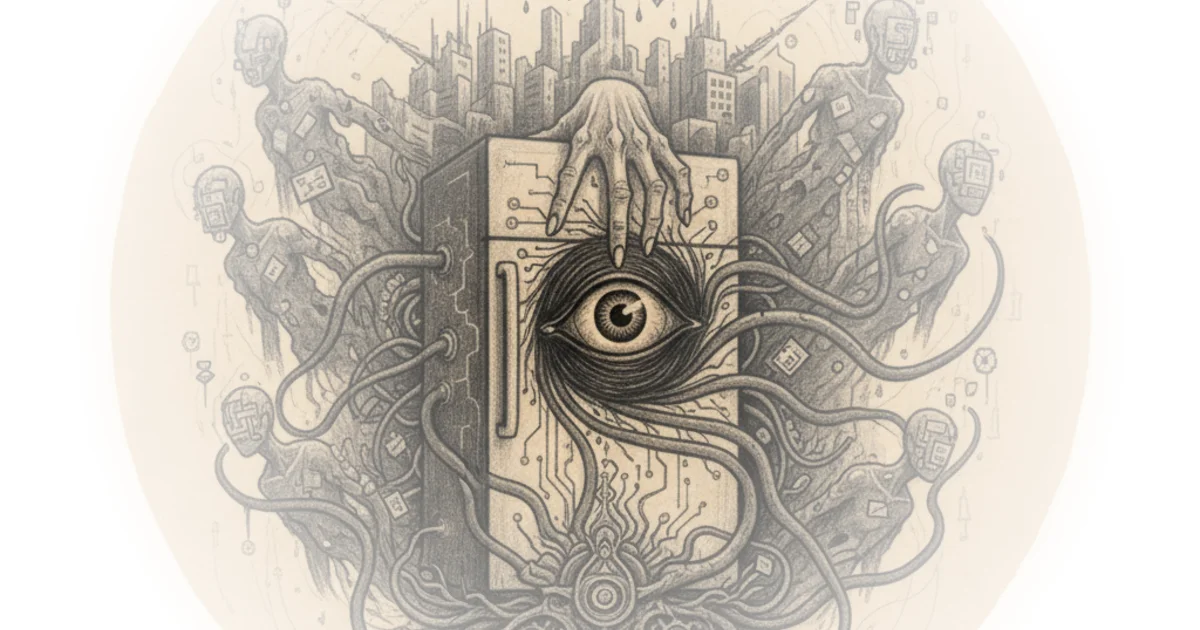
The argument deepens when describing the modern city dweller. Wayfare quotes Kingsnorth directly: "A city's inhabitants are dependents: they have neither the space, the skills, the time nor the inclination to fend for themselves." This observation cuts through the illusion of urban freedom. We are told we are consumers with choices, but the piece suggests we are actually "hirelings" whose survival is entirely tethered to a complex, fragile supply chain. If that chain snaps, as the text warns, we would be left with "little to nothing," lacking the skills or neighbors to support ourselves. This lands with a chilling clarity in an era of just-in-time delivery and gig economy instability.
"If a machine is the metaphor you use to represent other living beings, then a machine is what you will make of the world."
The piece draws on Lewis Mumford to illustrate the ultimate goal of this system: total control. Wayfare notes that in this culture, "every aspect of life must be brought under control: controlled weather, controlled movement, controlled association, controlled production, controlled prices, controlled fantasy, controlled ideas." The endgame, the editors argue, is not just efficiency, but the acceleration of mechanical control itself. This framing challenges the popular narrative that technology is a neutral tool; instead, it suggests the tool is reshaping the user to fit its own logic. Critics might note that this view risks romanticizing a pre-industrial past that was often brutal and short, but the piece's focus is on the loss of agency, not necessarily the loss of comfort.
The Spiritual Cost of Homogenization
Moving from the physical to the cultural, the article examines how the Machine flattens human experience. Wayfare points out that as we travel, towns increasingly resemble "Strip Mall USA," and regional dialects vanish. The piece argues that culture has shifted from "where and how we commune" to "where and what we consume." This is a profound shift in how we relate to one another. We are no longer rooted in a shared history or a specific place; we are atomized individuals consuming the same content.
The commentary leans heavily on psychiatrist Iain McGilchrist to explain this disconnection. Wayfare reports McGilchrist's view that "we no longer live in the presence of the world, but rather in a representation of it. There is no territory in this new world, only map." This distinction is crucial. We are living in a simulation of reality, curated by algorithms and data, rather than engaging with the messy, unquantifiable truth of the world. This connects back to the historical concept of the Luddites, who, as the piece clarifies, were not anti-technology but were fighting for "the right of craft control over trade" and local autonomy. They understood that when technology overrides human values, it becomes a threat to the moral economy.
The piece also invokes Ivan Illich's Tools for Conviviality, suggesting a way forward: we must ask if a tool "further[s] my independence or diminish[s] my skills." This is a practical filter for the digital age. However, the article admits that Kingsnorth's diagnosis has limits. It notes that by labeling the entire system as the Antichrist, the argument can "collapse to some degree under its own weight," creating a zero-sum game that feels impossible to fight without total revolution. The piece acknowledges that Kingsnorth himself retreats to a more modest call for "askesis"—self-discipline and setting boundaries—rather than burning down the internet.
A Theological Synthesis?
In its final stretch, the commentary attempts to bridge the gap between rejecting the Machine and engaging with the world. It introduces a fascinating historical twist: the idea that technology itself has deep Christian roots. Wayfare cites David Noble's The Religion of Technology, noting that for centuries, technology was seen as a "means to salvation," a way for humanity to link with the Divine. The piece suggests that the current crisis is a result of this project going off the rails, attempting to replace God's salvation with a "cybernetic arm of flesh and metal."
The editors then pivot to a specific theological perspective, referencing the Doctrine and Covenants and the concept of theosis—the process of becoming like God. The argument posits that if "all spirit is matter, but is more fine or pure," then technology need not be the enemy. Instead, the goal should be to build "Zion," a community where there are no poor and where people are of "one heart and one mind." This reframes the challenge: it is not about destroying technology, but about redirecting it toward community and spiritual growth. The piece concludes that while Kingsnorth sounds the alarm effectively, the real work lies in finding a synthesis where technology serves human thriving rather than replacing it.
Bottom Line
Wayfare's coverage of Against the Machine succeeds in identifying the spiritual and communal vacuum at the heart of our technological age, offering a compelling critique of the "Machine" that goes beyond standard political talking points. Its greatest strength is the historical grounding in the enclosure of the commons and the Luddite movement, which provides a necessary depth to the conversation. However, the piece's biggest vulnerability lies in its inability to fully resolve the tension between rejecting the system and living within it, leaving the reader with a powerful diagnosis but a somewhat vague prescription for the future. The most urgent takeaway is the need to ask not just what a tool can do, but what it does to us.