Doomberg shifts the geopolitical gaze from diplomatic spats to the cold, concrete reality of subterranean fortification, arguing that China's massive underground network is not merely defensive posturing but a logistical blueprint for a prolonged, high-stakes conflict. The piece forces a uncomfortable reckoning: the world's largest tunnel system, spanning over 3,000 miles, may house a nuclear arsenal ten times larger than Western estimates, fundamentally altering the calculus of deterrence in the Asia-Pacific. This is not a story about rhetoric; it is a story about the physical preparation for a war that could engulf millions of civilians.
The Underground Great Wall
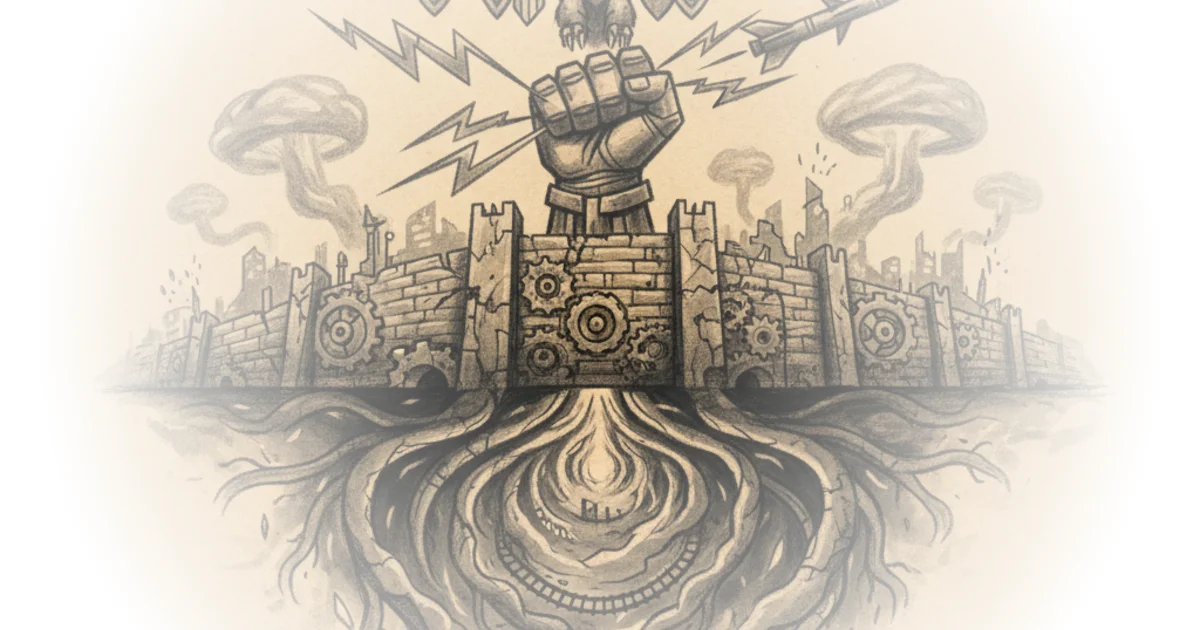
Doomberg anchors the argument in the sheer scale of China's infrastructure, noting that "scattered across China and buried deep underground is a series of interconnected tunnels designed to harden its military against conventional and nuclear strikes." The author contrasts this with American capabilities, observing that the system is "by far the world's largest, significantly more comprehensive than similar sites in the US." This comparison is jarring because it suggests a strategic asymmetry that Western intelligence may have underestimated for decades. The infrastructure includes rail systems and factory complexes, creating a "full-blown logistics network" that allows for sustained operations even under siege.
The implications for nuclear strategy are dire. Doomberg highlights a 2011 Georgetown University study which "estimated that China may have as many as 3,000 nuclear warheads, an order of magnitude larger than most arms-control experts estimated." If this scale has expanded in the intervening years, the traditional concept of mutually assured destruction becomes unstable. The author posits that the stated purpose of ensuring a "credible second-strike nuclear capability" may be a cover for a more aggressive posture. Critics might note that tunnel systems are often designed for survivability rather than first-strike aggression, and that stockpile estimates remain highly speculative. However, Doomberg's point stands: the physical capacity for a massive, hidden arsenal exists, and the intent behind it is increasingly opaque.
"One can imagine how this system and its inventory have developed in the intervening years."
From Rhetoric to Reality
The commentary pivots to the immediate flashpoint: the deteriorating relationship between China and Japan. Doomberg frames this not as a temporary diplomatic frost but as a crisis that "constitutes one of the most dangerous moments between the two countries since World War II." The author details how Beijing is weaponizing economic interdependence, noting that "Chinese travelers have canceled more than half a million plane tickets to Japan since Saturday" and that "ships are patrolling in disputed waters." This economic coercion is paired with military threats, as state-affiliated academics warn that "the entire country of Japan could be turned into a 'battlefield.'"
The human cost of this escalation is the piece's most haunting element. When Doomberg writes that "Beijing is using harsh rhetoric, military saber-rattling and economic coercion to make clear its displeasure," the subtext is the potential for civilian suffering on a massive scale. The suspension of seafood imports and the pulling of films are not just economic levers; they are signals that normalcy is being dismantled in preparation for kinetic action. The author suggests that these moves are "innocuous insurance policies against potential geopolitical aggression" only if viewed in isolation. Together, they form a pattern of preparation for a war to bring Taiwan back into the fold.
The War Economy
Doomberg argues that the true danger lies in the convergence of military buildup and economic mobilization. The author observes that China has been "overinvesting in domestic energy capacity and vastly expanding its stockpiles of critical goods," actions that look like standard economic policy until viewed through the lens of war preparation. The piece warns that "while we have been skeptical of China's intent to preempt diplomacy with kinetic action, the stakes involved warrant an uncomfortably close look at what the country has been up to." This skepticism is healthy, but the evidence of a "war economy" is mounting.
The geopolitical context is critical here. The tension is exacerbated by "an economic war between the US and China" and the "US military refocusing from Europe to the Asia–Pacific theater." Doomberg suggests that the administration's strategic pivot may be accelerating the very conflict it seeks to manage. The argument is effective because it refuses to treat military posturing and economic policy as separate silos. Instead, it presents them as two sides of the same coin: a comprehensive national strategy for conflict.
"A more alarming interpretation of these events: China is preparing to fight a war, presumably to bring Taiwan back into its fold."
Critics might argue that economic stockpiling is a rational response to global supply chain fragility rather than a prelude to invasion. Yet, the specific combination of a massive underground nuclear network, the suspension of trade with a specific neighbor, and the rhetoric of total war makes the alternative interpretation difficult to dismiss.
Bottom Line
Doomberg's strongest contribution is the synthesis of physical infrastructure data with current geopolitical friction, revealing a potential war machine that is already operational beneath the surface. The argument's vulnerability lies in the reliance on speculative estimates regarding nuclear warhead counts, which remain unverified by independent inspectors. The reader must watch for whether the administration's response to these signals de-escalates the tension or inadvertently validates China's fears, pushing the region closer to the brink of a conflict where the human cost will be measured in the millions.