Steve Vladeck dismantles a dangerous legal fiction being peddled by the White House: the idea that federal agents possess a blanket shield against state prosecution for any action taken on the job. In a moment where rhetoric often outpaces reality, Vladeck offers a necessary corrective to the claim that local authorities committing crimes by arresting federal officers are the ones breaking the law.
The Myth of Absolute Immunity
The piece begins by addressing a recent statement from White House Deputy Chief of Staff Stephen Miller, who asserted on national television that Immigration and Customs Enforcement officers enjoy total immunity. Miller claimed, "to all ICE officers: you have federal immunity in the conduct of your duties. And anybody who lays a hand on you or tries to stop or obstruct you is committing a felony." Vladeck immediately identifies this as a fabrication, noting that the federal government retains the power to prosecute its own officers for criminal acts. The author argues that the administration's failure to pursue such prosecutions is a policy choice, not a legal barrier. "The fact that this administration is wholly uninterested in pursuing such prosecutions is a problem, but given that most of the relevant statutes of limitations won't expire until 2030 or later, that's not even close to 'immunity,'" Vladeck writes. This distinction is crucial; it separates the political will to enforce the law from the actual existence of the law itself. By conflating the two, the executive branch attempts to create a zone of impunity that does not exist in the statutes.
"Their accusations are so often confessions."
Vladeck points out the irony of an administration accusing state officials of "seditious conspiracy" while simultaneously shielding federal actors who may be violating state laws. The commentary suggests that this rhetorical strategy is designed to intimidate local prosecutors rather than reflect a sound legal position. Critics might argue that federal supremacy should inherently protect officers from local interference, but Vladeck counters that this protection is not a free pass for misconduct. The argument holds weight because it relies on established doctrine rather than political assertion.
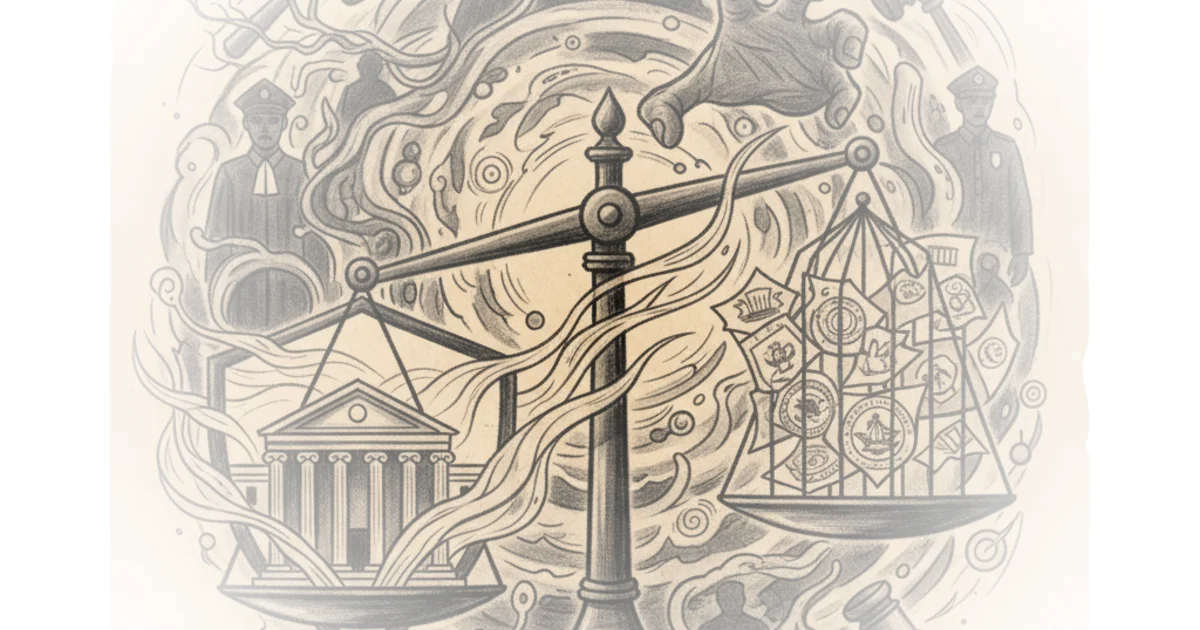
The Real Limits of Supremacy Clause Immunity
The core of Vladeck's analysis dives into the actual legal doctrine known as "Supremacy Clause immunity," tracing it back to an 1890 Supreme Court decision, In re Neagle. The author explains that while the Constitution does prevent states from prosecuting federal officers for acts they were authorized to perform, the scope is narrow. "When these things are shown, it is established that he is innocent of any crime against the laws of the state, or of any other authority whatever," Vladeck quotes from the historical ruling. However, he quickly pivots to the modern application, emphasizing that this immunity is conditional, not categorical.
The author outlines a two-part test that courts generally apply: the officer must be performing an act authorized by federal law, and they must do no more than what is "necessary and proper" to achieve that goal. Vladeck highlights the prevailing judicial standard, citing Judge Michael McConnell's view that immunity applies only when "the agent had an objectively reasonable and well-founded basis to believe that his actions were necessary to fulfill his duties." This framing shifts the debate from a question of identity (are they federal officers?) to a question of conduct (was the force used reasonable?).
This is where the administration's claim falls apart. Vladeck argues that even under the most generous interpretation, "it is by no means a get-out-of-prosecution-free card." The author notes that if an officer's actions are disproportionate to the federal policy they are enforcing, the shield drops. A counterargument worth considering is that federal officers often face chaotic situations where split-second decisions are made, making an "objective reasonableness" standard difficult to apply in hindsight. Yet, Vladeck maintains that the law has historically allowed for prosecution when the conduct exceeds the bounds of necessity. The doctrine is designed to prevent states from obstructing federal law, not to license federal officers to violate state criminal codes with impunity.
The Human Cost of Legal Obfuscation
Beyond the dry legal mechanics, Vladeck touches on the broader implications for accountability. He acknowledges that criminal prosecution is an imperfect tool, noting that "there is plenty of law enforcement conduct that would constitute a violation of the Constitution but not of any state criminal statutes." However, he insists that the threat of local prosecution remains a vital, albeit underutilized, check on power. The author writes, "There ought to be even more pathways for holding federal officers who violate our rights accountable; and local and state criminal prosecutions, in at least some cases, are not remotely foreclosed." This is a sobering reminder that the legal system is not as one-sided as the rhetoric suggests. The human cost of ignoring this reality is high; when officers believe they are immune, the potential for abuse increases, and the communities they serve lose faith in the rule of law.
"The relevant law is far more permissive when it comes to the ability to hold federal officers accountable than Stephen Miller would have you believe."
The commentary also briefly touches on the Court's current docket, including the refusal to stay an execution by nitrogen hypoxia. Vladeck aligns with Justice Sotomayor's dissent, which argued that the Court turned its back on the Eighth Amendment by allowing a method of execution that causes "torturous suffocation." This side note reinforces the author's broader theme: the Court and the executive branch are increasingly willing to overlook established legal protections in favor of aggressive enforcement or procedural finality.
Bottom Line
Steve Vladeck's analysis effectively debunks the administration's claim of absolute immunity, grounding the argument in centuries of legal precedent rather than political spin. The piece's greatest strength is its clarity in distinguishing between the possibility of prosecution and the policy of non-enforcement. Its vulnerability lies in the reality that while the law permits state prosecution, the political and logistical hurdles remain formidable, meaning the theoretical shield may still function as a practical barrier for many officers. Readers should watch for whether state attorneys general are willing to test these legal boundaries in court, as the outcome will define the limits of federal power in the states.