Chris La Tray transforms a routine seasonal greeting into a profound meditation on Indigenous resilience, using the rhythm of the autumn equinox to anchor a narrative about the accelerating visibility of Native voices in American cultural life. Rather than focusing on policy or conflict, the piece offers a rare, ground-level view of how marginalized communities are reclaiming space in institutions that historically excluded them, arguing that the sheer presence of Native people sharing Native perspectives is itself a form of resistance.
The Weight of Presence
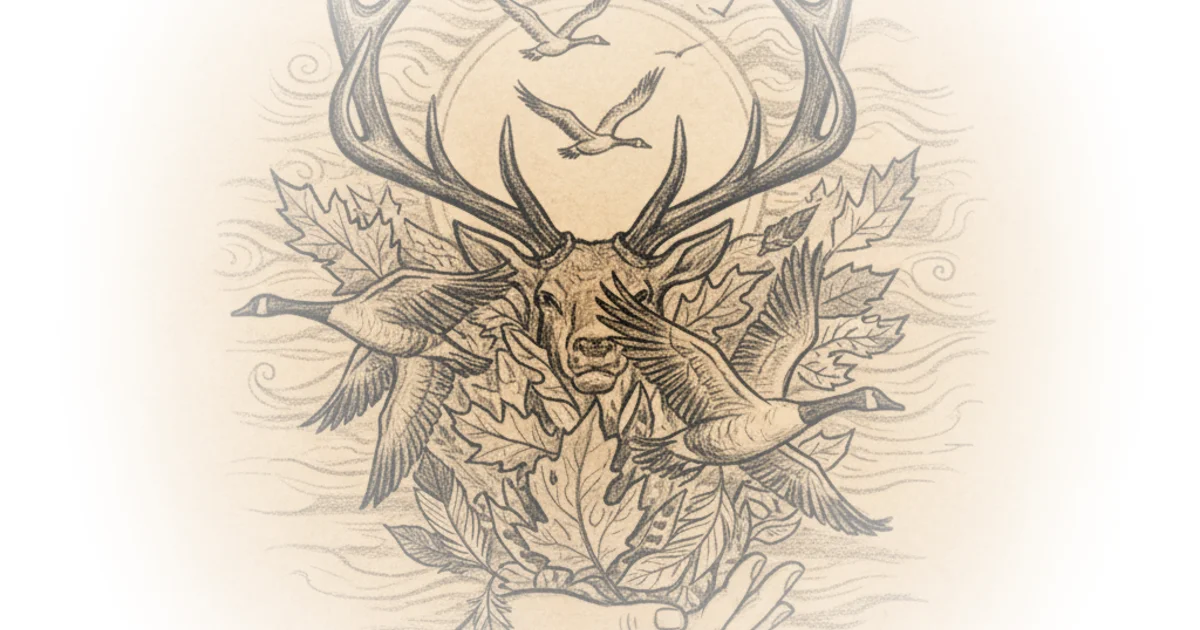
La Tray opens by grounding the reader in the natural world, noting that "this is when I feel most connected to my poet self" as the days shorten and the elk begin to bugle. This sensory immersion is not merely atmospheric; it sets the stage for a deeper argument about connection to place and community. He describes the emotional impact of recent speaking engagements, particularly a panel at the Mississippi State Capitol where he and three other Native speakers occupied the "old Supreme Court" chamber. The setting was jarring, yet the composition of the panel was transformative. "It was a powerful, powerful moment to look down the line of my co-panelists and see only Native people sharing Native perspectives to a well-attended audience," La Tray writes.
The core of La Tray's observation is that representation is no longer just about numbers; it is about the shift in the air of the room. He notes that while he was once often the sole Indigenous voice at such events, the landscape is changing. "It's getting better at festivals and things," he observes, recalling a time in 2021 when he was likely the only Native person at a major mountain festival, contrasted with the current reality of multiple Indigenous voices on stage. This evolution is framed not as a policy win, but as a cultural thawing that allows for a deeper sense of belonging. Critics might argue that this optimism overlooks the structural barriers that still limit Indigenous participation in mainstream media and academia, but La Tray's point is that the momentum has undeniably shifted, even if the pace remains frustratingly slow for some.
It was thrilling and, even if the four of us were the only Indians in the area, it felt mighty.
The Architecture of Cultural Ambassadorship
Beyond the personal joy of these gatherings, La Tray turns his attention to the logistical and financial machinery required to sustain Indigenous cultural institutions. He details the planning for the return of the Indigenous Peoples' Festival (IPFEST) in 2026, now titled "IndigiPalooza MT: Resistance 250+." The choice of title is deliberate, marking the festival as a counter-narrative to the nation's 250th anniversary celebrations. La Tray emphasizes that the festival's survival depends on community support, noting that "your continued and generous and essential support of this newsletter via paid subscriptions remains the bedrock supporting pretty much all of my efforts."
The piece highlights the precarious nature of Indigenous cultural production, which often relies on grassroots funding rather than institutional endowments. La Tray describes the festival's first year as a "glorious reality" that burned through the fog of administrative chaos, yet he admits that "I really didn't know what it was like to be at the festival as a guest because I wasn't one." This admission underscores the immense labor required to build these spaces. The upcoming festival aims to tell the story of that inaugural event to secure future funding, a strategy that relies on the emotional resonance of the attendees' experiences. "We'll be seeking funding and a big part of that will be telling the story of the inaugural event," he explains, inviting past attendees to share their thoughts to help build the case for support.
A Legacy of Resistance
La Tray weaves in historical context to reinforce the theme of enduring resistance, specifically highlighting the story of Minnie Hollow Wood, a Lakota woman who fought alongside male warriors at the Battle of the Greasy Grass. "For this she earned the right to wear a warbonnet," La Tray notes, using her story to illustrate that Indigenous women have always been central to the fight for sovereignty, not just passive observers. This historical anchor serves to remind readers that the current cultural resurgence is part of a much longer lineage of survival. The piece concludes with a shift away from the "hot takes" and political noise of the day, offering instead a poem by David Budbill and a call to appreciate the quiet, persistent work of community building.
It would be great if this evolution in representation would speed up but it's nice to see it happening, even if more quickly in some places than others.
Bottom Line
La Tray's most compelling argument is that the mere act of gathering Indigenous voices in shared spaces is a radical reclamation of history and future. The piece's greatest strength lies in its refusal to frame Indigenous culture as a tragedy or a victim narrative, instead celebrating the joy and power of presence. However, the reliance on individual labor and grassroots funding to sustain these vital cultural institutions remains a significant vulnerability that the broader public must address if this momentum is to last.