More Perfect Union exposes a disturbing pattern in 2025: the chaos of the administration trade policy is not a bug, but a feature designed to extract wealth from corporate insiders. The author argues that tariffs serve as a weapon of leverage, where exemptions are not granted based on economic logic, but purchased through massive political donations and personal flattery. This is a critical read for anyone trying to understand why the economy feels so volatile while specific industries seem to thrive despite the rhetoric.
The Mechanics of the Quid Pro Quo
The investigation begins by dismantling the public narrative that tariffs are a tool for national rebalancing. Instead, More Perfect Union posits that the system operates on a simple, corrupt exchange. The author writes, "There is a quid pro quo system embedded directly into Trump's core economic policies." This framing is powerful because it shifts the reader's perspective from confusion over erratic policy to clarity about the underlying motive. The chaos is intentional; it creates the anxiety necessary for companies to pay for certainty.
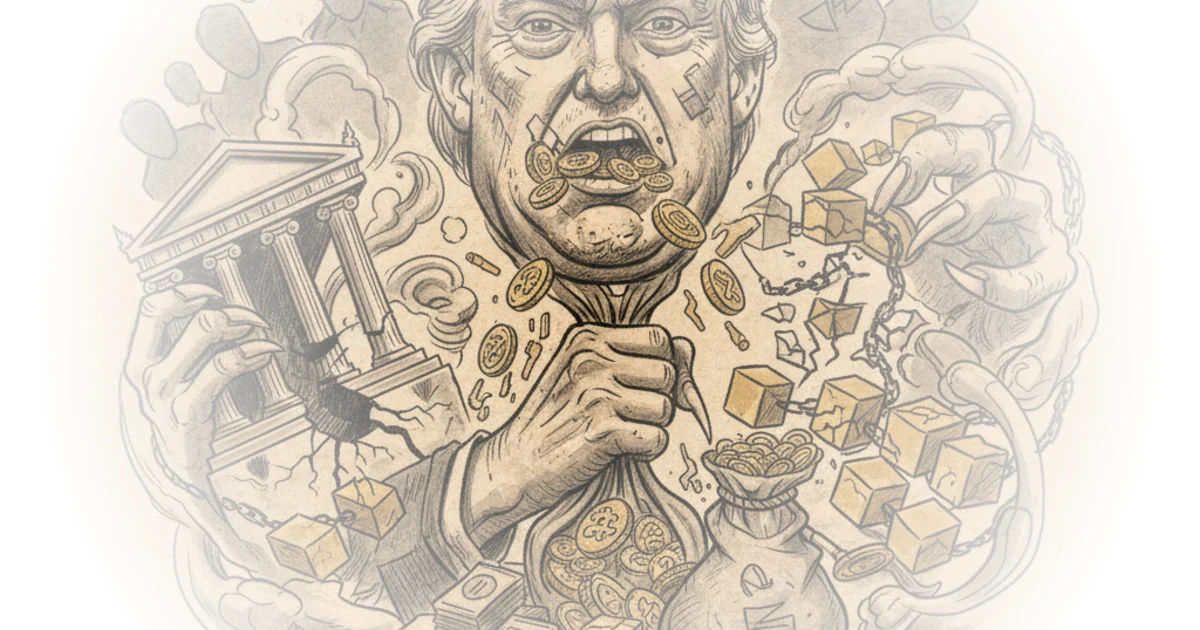
The piece uses Pilgrim's Pride, a meat packing giant owned by JBS, as the primary case study. The company made a $5 million donation to the inaugural fund, its largest ever, just months before the administration granted them a specific exemption from tariffs on Brazilian beef. More Perfect Union notes, "Threaten everyone with tariffs, extract payments from the few, and then quietly spare those who were loyal to you." This evidence is compelling because it connects a specific financial transaction to a specific policy reversal, suggesting a direct causal link rather than mere coincidence.
Critics might argue that the timing of the donation and the tariff exemption could be coincidental, or that the exemption was part of a broader strategy to lower food prices for consumers. However, the author counters this by pointing out that the exemption was highly specific to the donor's supply chain, while other sectors faced continued uncertainty.
"Relief only appears after money changes hands. We see it in donations, in pardons, and in tariffs."
The Pattern of Corporate Insurance
The commentary expands to show that this is not an isolated incident but a repeatable playbook across multiple industries. The author details how automakers like Ford and General Motors, along with tech giants, all contributed $1 million to the inaugural fund. In return, they received exemptions on the very tariffs that threatened to cripple their supply chains. More Perfect Union writes, "The big automakers had already bought their insurance." This metaphor effectively illustrates the transactional nature of the relationship: the donation is the premium, and the tariff exemption is the payout.
The author also highlights the case of Switzerland, where the "payment" was not just cash but a "charm offensive" involving gold trinkets and flattery. The result was a reduction in tariffs from 39% to 15%. This section of the argument is particularly striking because it reveals that the "currency" of influence can be varied, ranging from hard cash to soft power, depending on what the donor can offer. The author observes, "When you're swept up in the chaos and you don't have a policy solution to offer, sometimes optics are enough."
This analysis suggests that the administration is not looking for policy consistency but for loyalty and leverage. The author argues, "An entire government has been reorganized around one man's need for leverage and loyalty." This is a bold claim, but the cumulative evidence of tailored exemptions for donors supports the assertion that the system is personalized rather than institutional.
The Casualties of the System
While the insiders profit, the article identifies who pays the price: those without the capital to buy access. The soybean farmer is presented as the tragic counter-example. Despite losing their primary market in China due to retaliatory tariffs, they received no exemptions and only insufficient government bridge payments. More Perfect Union states, "In a system like this built on chaos, the people who can't pay for economic certainty are the ones who pay the price."
This contrast is the emotional core of the piece. It moves the argument from a dry analysis of trade policy to a story about inequality. The author points out that while the government offered $12 billion in aid, farmers lost up to $44 billion. The disparity highlights the failure of the "bridge" to reach the other side. The author concludes that the system punishes those who cannot afford to play the game, regardless of their contribution to the economy.
"Chaos creates opportunities to get paid. Relief only appears after money changes hands."
Critics might suggest that the soybean farmers' losses were an inevitable consequence of a trade war, not a result of corruption. However, the author's point is that the administration had the power to mitigate the damage through exemptions, as it did for other industries, but chose not to for those without political leverage.
Bottom Line
More Perfect Union delivers a damning indictment of the 2025 trade regime, successfully arguing that the apparent randomness of tariff policy is actually a calculated mechanism for extracting wealth. The strongest part of the argument is the clear, documented link between specific donations and specific policy exemptions, which transforms the narrative from one of economic incompetence to one of deliberate graft. The biggest vulnerability is the reliance on a single year of data, which may not yet reflect long-term structural shifts, but the immediate evidence is too specific to ignore. Readers should watch for whether this pattern of "pay-to-play" exemptions continues to deepen as the administration faces new economic pressures.