A British government minister commissioned a private intelligence firm to investigate a handful of journalists — and then handed their findings to the United Kingdom's premier signals intelligence agency. The scheme unraveled not because anyone in power wanted accountability, but because one of the targeted reporters happened to write for Rupert Murdoch's Sunday Times.
The Commission
The story begins with financial shenanigans that were never supposed to see daylight. Internal correspondence revealed that Morgan McSweeney — who would later become Keir Starmer's chief of staff — had failed to declare £730,000 in donations to Labour Together, the think tank where Parliamentary Secretary Josh Simons was then employed. Journalists published exposés. The establishment response was predictable: instead of addressing the allegations, Labour Together hired a private firm to investigate the journalists themselves.
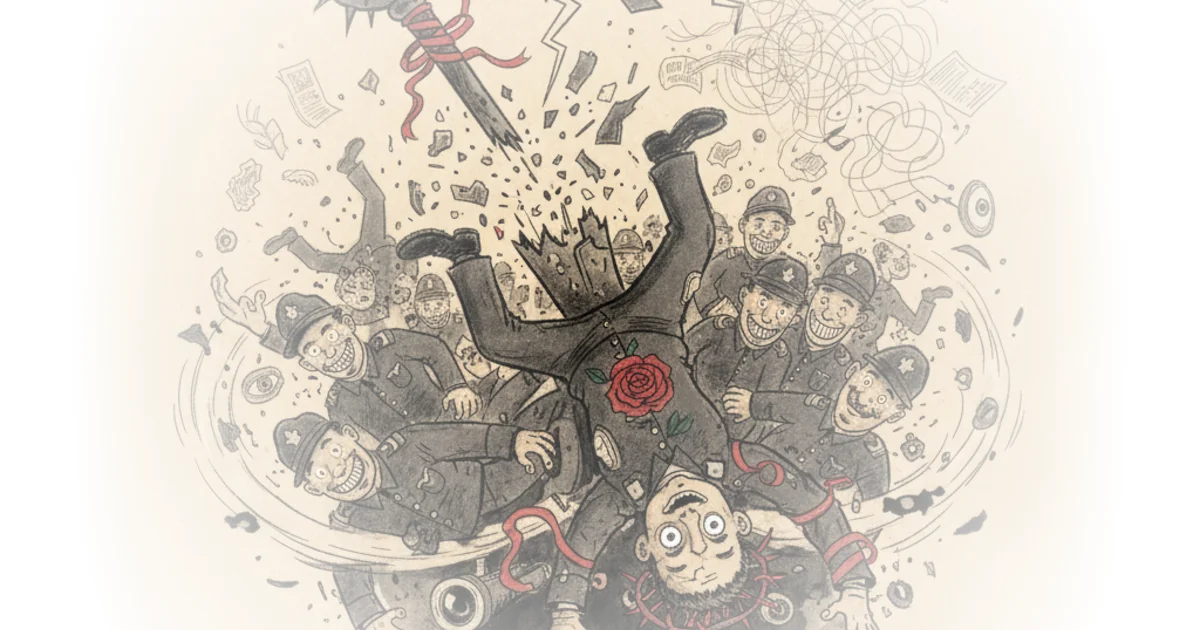
Matt Taibbi writes, "In return, they had us investigated and turned over the APCO report to the National Cyber Security Centre — part of GCHQ, the British analog to the NSA." The National Cyber Security Centre is Britain's primary cyber defense agency, a branch of Government Communications Headquarters, the country's equivalent of America's National Security Agency. A think tank's political embarrassment was escalated into a matter for the spy agency.
The Report
APCO Worldwide — a "global advisory" firm with a client roster including the Saudi Ministry of Economy, Israeli arms manufacturer Elbit Systems, and the United States State Department — produced a document that went far beyond checking donation records. As Taibbi puts it, "APCO hired human operatives to 'research' key figures."
The results were damning — not for the journalists under scrutiny, but for the people who commissioned the work. The APCO report falsely accused the journalists of using material from a Russian hack in their reporting. It questioned political affiliations, invented friendships, and made "false and outrageous comments about faith, family background and anything else that can be used to smear." One Sunday Times reporter found himself the subject of a character assassination section, complete with invented social connections and attacks on his religious background.
The whole exercise reads less like legitimate research and more like the kind of opposition dossier one would expect from a political campaign in its death throes — which, given the current state of Keir Starmer's government, may not be far from the truth.
The main thing is finding a firm morally flexible enough to use pretend sources or phrenology or "examination of stories and social media posts" to call someone a Russian or Chinese asset in print.
The Blame Game
What makes this story particularly revealing is the finger-pointing that followed exposure. Simons and APCO spent a week issuing contradictory statements, each attempting to pin responsibility on the other. Simons claimed he was "distressed" and "furious" that APCO had gone "beyond the contract." APCO insisted it had been retained only "to conduct research into a news article and upcoming published works to inform its communication strategy."
As Taibbi notes, these two accounts are irreconcilable. Simons said the firm was asked to investigate a hack. APCO said it was asked to research news articles. Both cannot be true, and neither version absolves the people involved.
The most striking detail: Simons claims he intervened to ensure that information on just one journalist — Gabriel Pogrund of the Sunday Times — was withdrawn before the materials were passed to the National Cyber Security Centre. If true, this confirms that the others were not protected. The intervention wasn't about principle. It was about picking the wrong target — a Sunday Times reporter, with the full weight of News Corp behind him.
The Media Complicity
Perhaps the most uncomfortable element of the story is how some of Britain's most prominent newspapers participated in what amounted to a smear campaign before the facts were known.
The Guardian's political editor sent an email warning one of the targeted journalists that a story about a National Cyber Security Centre investigation was running "tomorrow" — a classic journalistic pressure tactic designed to intimidate sources into silence. When the journalist pushed back, noting that any suggestion his information came from a hack was "provably false," the promised Guardian story never appeared.
Yet when the Guardian did eventually cover the story, it repeated the same unverified allegations about a Russian or Chinese hack, despite having been told on the record years earlier that those claims were false. "They were developing a dirty tricks campaign to spike genuine public interest reporting," says Paul Holden, one of the targeted journalists.
Critics might note that newspapers routinely receive tips from political sources and that competitive pressure to break a story can lead to rushed reporting. That defense doesn't hold here: The Guardian had been warned directly that the hack allegations were fabricated, and published them anyway.
The Bigger Picture
The pattern Taibbi identifies extends well beyond one British think tank and one American PR firm. The technique is straightforward: hire a private intelligence firm to produce "research," feed it to a politician who repeats it under parliamentary privilege, and watch newspapers amplify claims they would never have verified independently.
The private intelligence world operates in exactly this gray zone. Firms share investigators, recycle sources, and produce reports that would never survive courtroom scrutiny — but thrive in the space between political communication and journalism. APCO's connections to Christopher Steele's Orbis Business Intelligence, including shared human sources, illustrate how the same network of opposition researchers moves fluidly between British and American politics.
Taibbi writes, "If authorities from any country dig into the private intelligence world, they're going to find that episodes like this one are not isolated at all." The apparatus exists to serve anyone willing to pay for it. The only variable is which journalists get targeted — and whether they work for a paper powerful enough to force the story into the open.
Critics might argue that political organizations have every right to defend themselves against damaging reporting, and that investigating the source of leaked documents is a legitimate exercise. But investigating the source is one thing. Delivering a false accusations dossier to a national security agency is another. The former is politics. The latter is an attempt to weaponize state intelligence infrastructure against the press.
Bottom Line
The Starmer government is losing ministers not because of isolated misjudgments, but because the machinery built to protect it has turned inward — spying on journalists, manufacturing smears, and hoping the right newspaper wouldn't notice. It did. The story will matter only if it forces scrutiny of the broader industry that makes this kind of operation routine: the private intelligence firms, the political operatives who hire them, and the editors willing to publish their output without asking questions. A government that treats journalists as a national security threat is already treating its citizens the same way.