Fred Mills doesn't just report on Dublin's traffic; he exposes a decades-long cycle of political paralysis that has turned a vibrant European capital into the eleventh most congested city on Earth. While the headline screams about a $27 billion plan, the real story is a brutal accounting of lost time: by 2025, the average driver will sit in gridlock for 95 hours annually, a figure that has already jumped 32% since 2023. This piece is essential listening because it moves beyond the usual complaints about traffic to dissect the specific engineering and political failures that have kept Dublin's airport rail link nonexistent for nearly thirty years.
The Cost of Paralysis
Mills opens with a stark reality check: Dublin's population has surged by a third since 2000, yet its infrastructure has remained static. "During our peak rush hours, the average speed across the network is about 11 km an hour," he notes, adding a devastating comparison: "If you're a fast runner, you'll actually run quicker than that." This framing is effective because it translates abstract congestion statistics into a visceral, personal failure of governance. The economic stakes are equally high, with delays projected to cost the economy €1.5 billion annually by 2040. As Mills points out, "A lack of travel infrastructure isn't a great advertisement" for foreign investors, turning a local commute issue into a national competitiveness crisis.
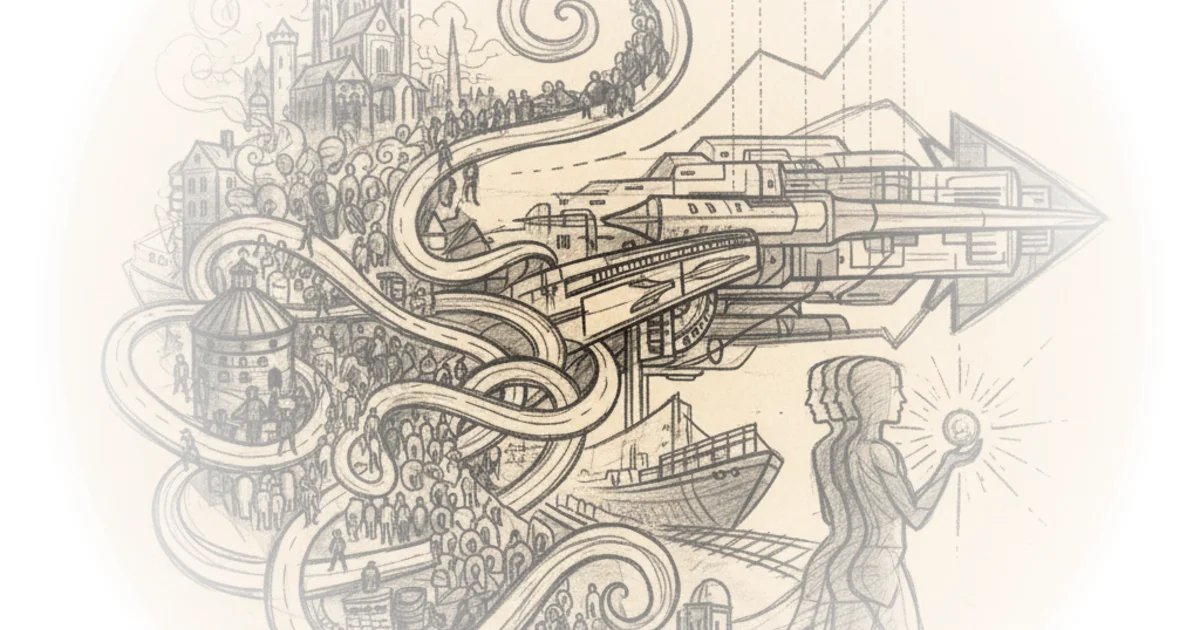
The author's coverage of the political history is particularly sharp. He details how the government previously promised a 2:1 investment ratio favoring public transport, only to U-turn on the policy. This flip-flopping has eroded public trust to a dangerous degree. "If you were born the day that the metro was initially due to open, you'll be able to vote by the time it does actually open," Mills observes, highlighting the generational gap between promise and delivery. This skepticism is well-founded; the city has been teased with a metro since the turn of the century under the Transport 21 initiative, a plan that once promised a €34 billion overhaul including an airport link. Yet, as the financial crisis hit and the "Celtic Tiger" died, the project slipped down the priority list, leaving Dublin as one of the last European capitals without direct rail access to its airport.
"The time that we've been talking about the metro and to construct a metro, a snail could have gone from Dublin City Center out past the airport and do the whole line based upon how long it's taken us to get to where we are right now."
Critics might argue that the author leans too heavily on the frustration of delay without fully exploring the complexities of securing planning permission in a historic city. However, the evidence of repeated missed deadlines—from the 2007 airport link promise to the 2027 Metro North target that never materialized—supports the narrative of systemic failure. The recent granting of planning permission in October of last year, after years of redesign, suggests a shift, but the public remains wary.
The Engineering Gamble
The article's most technical insight lies in explaining why the new MetroLink is projected to cost between €9.5 billion and a staggering €23 billion. Mills clarifies that this isn't just inflation; it's a deliberate choice to minimize surface disruption. Early designs favored "cut and cover" excavation, a cheaper method that involves digging from the surface down. However, in a city with narrow, picturesque streets and severe existing congestion, closing roads for months was deemed too chaotic. "Cut and cover is incredibly disruptive... more chaos than necessary is just asking for trouble," Mills writes, explaining the pivot to Tunnel Boring Machines (TBMs).
This shift to deep tunneling, reaching depths of up to 30 meters, protects the foundations of heritage sites and keeps traffic moving, but it comes at a premium. The cost per kilometer could rival New York's Second Avenue subway, making it one of the most expensive underground lines globally. The author notes that while TBMs are "far from boring," they are undeniably expensive. "Tunneling has got to be minimized to protect the foundations of those buildings," he explains, detailing the engineering necessity behind the price tag.
The trade-off, however, is immediate and painful disruption. The construction will not be subtle. "You've got to remember that these tunnels are being dug directly beneath workplaces, public parks, and people's homes," Mills warns. The project will close 20% of St. Stephen's Green, a beloved public space, and turn Albert College Park into a mandatory intervention shaft for ventilation and emergency access. This creates a paradox: to fix the city's mobility, the city must endure a decade of noise, dust, and closed parks. "This metro line is going to make things a whole lot worse before it makes them any better," he admits, a candid acknowledgment that the solution requires enduring a short-term nightmare.
"Honestly, I think people just want the government and the authorities to get on with it and deliver it and stop talking about it."
A counterargument worth considering is whether the sheer scale of this single line justifies the cost when a more distributed network of surface trams or bus rapid transit might have offered quicker, cheaper relief. However, given Dublin's density and the specific need to connect the airport to the city center without worsening the M50 bottleneck, the deep metro approach appears to be the only viable long-term solution, even if the short-term pain is severe.
Bottom Line
Mills delivers a compelling case that Dublin's congestion is not merely a traffic problem but a symptom of institutional indecision that has cost the city decades of progress. The strongest part of the argument is the clear link between the choice of expensive deep-tunneling methods and the necessity of preserving a historic, congested city center. The biggest vulnerability remains public patience; with costs soaring and construction set to disrupt daily life for years, the administration must deliver a finished product that justifies the immense price tag, or risk a permanent loss of credibility. The clock is ticking, and for Dublin, the snail has finally started to move.