Theater's Empty Rooms
Seth Bockley's examination of Punchdrunk's Viola's Room captures something unsettling about contemporary performance: the removal of living bodies from spaces designed for human encounter. What makes this piece notable isn't just its description of an actorless immersive experience at Manhattan's The Shed, but its quiet alarm about what disappears when art becomes purely mechanical.
The Mechanics of Immersion
Bockley walks barefoot through corridors guided by Helena Bonham Carter's voice in noise-canceling headphones. Beautiful rooms. Empty rooms. "This 'immersive theater' experience features no actors at all," he notes, contrasting it with Punchdrunk's earlier Sleep No More, where masked audience members followed actual dancers through a hotel.
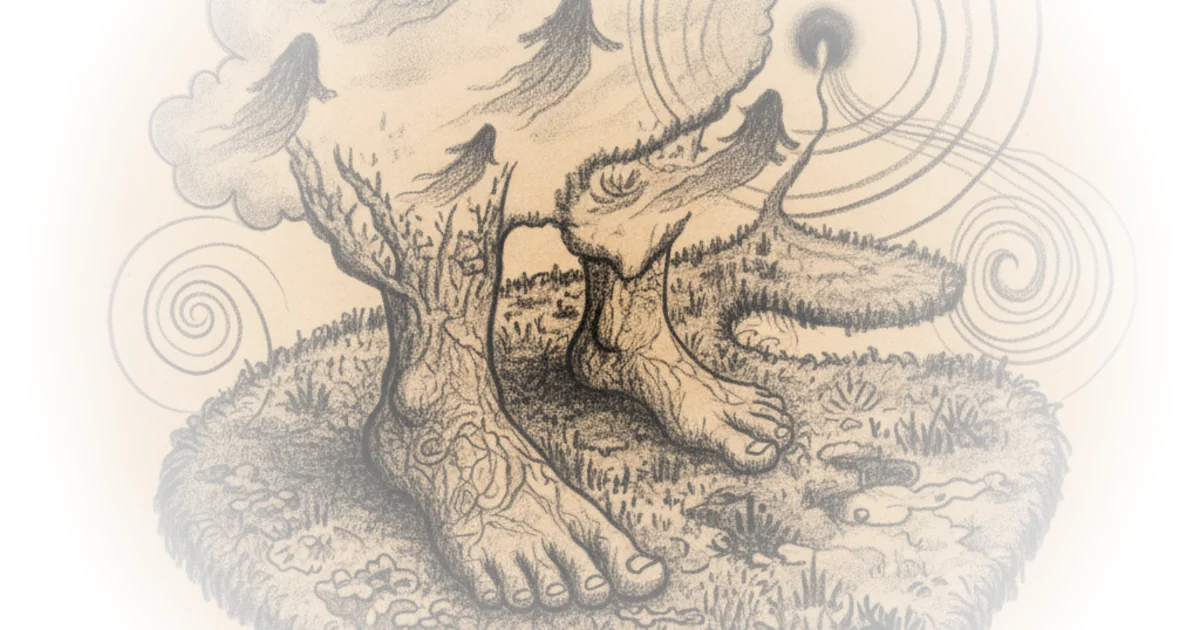
The operating principle resembles a haunted house or Disneyland ride—unicursal, single-file, guided by ear and faint lights. Bockley finds enchantment here: a 1990s teenager's bedroom with Soundgarden playing, antique parlors feeling recently abandoned, cold winds and earthen smells swirling around gnarled trees. The textured carpet triggers childhood memory. "I left feeling satisfied, but also that I had been inside a dream. Which is to say, alone."
"Theater without actors means that the viewer is the one acting."
Bockley, himself a theater director, acknowledges discomfort with performers. "They feel things . . . a lot. They feel things all over the stage." The extensive onboarding for Viola's Room reassures guests: no hired performers, no jump scares, no human interference between self and environment. Mood-based art with limited attention spans as the only interruption.
High-End Waxworks
Elsewhere in The Shed's 500-seat Griffin Theater, actors still act in plays. But Bockley detects something mechanical there too—The Effect featured very good actors, immaculately lit, tailored costumes, expensive microphones amplifying slightest murmurs. "This is very high-end theater. It is theater for people who do not wish to sing along with a song, comment on the action ('woo!'), watch an actor tune a guitar between songs, or break a sweat."
The Shed approaches waxworks—a hushed controlled space for replication of luxury products, precise artworks with no residue, just sheen. Critics might note that this critique overlooks how traditional theater has always excluded certain bodies and voices through its very structures of professionalism and unionization.
Detective Work as Narrative
Audience members become detectives, solving puzzles, discovering criminal identities, seeking cues to proceed. "We scrutinize odd drawings on the walls, pass empty dinner tables, hear shards of narration about a girl secretly meeting a devil in the moonlight." Maybe the motion itself is the narrative. Hansel and Gretel without expectation of home at the trail's end.
Bockley connects this to video games: Breath of the Wild, Gone Home, Firewatch. All depict deserted worlds containing historical evidence that players uncover—diaries, remote phone calls, smoldering campfires, empty beer cans. "We wander, seeking evidence. We occupy a pleasantly forensic state of mind."
The Economics of Elimination
From a producer's viewpoint, theater without actors eliminates payroll. The actors' union makes head-count substantial budget proposition. Even on the Fringe, successful touring shows are one or two-person maximum. "It's cheaper to buy a thousand drones than to train one soldier."
All the actorless immersive experience needs is crew to act as stage managers for machines. Bockley recalls The Simpsons predicting automation's age: "The wars of the future will be fought by small robots. And as you go forth today, remember your duty is clear: to build and maintain those robots."
Yet memorable time-based experiences tend to contain human friction. Without it, work wears thin. "A ticketed and timed-entry immersive art offering with no live performers is like a coin-operated espresso machine; it tastes metallic. Something's missing." Critics might argue that this framing romanticizes human labor while ignoring how automation can democratize access to experiences otherwise gated by class and geography.
The Human Wince
Bockley's most unforgettable moment at The Shed occurred before entry: a docent asking guests to remove shoes and socks, douse bare feet with antibacterial spray. When speaking about the spray, the docent winced slightly, acknowledging human discomfort of discussing bodies as bacterial vectors.
"That moment, that very human wince — I'll not forget soon. I'd pay good money to see an actor convey something so real."
The hand of the artist remains present in painted clouds and pinhole heavenly bodies, as in Tim Hunkin's Novelty Automations in London. The intimacy of Hunkin's eclipse simulator—a metal box with clunky cranking ceiling closing out light except pinprick stars—proved extremely emotional. Human attendants maintained the wondrous automata of medieval Islamic world. Bockley holds soft spot for creator serving marvelous machines.
Bottom Line
Viola's Room achieves sensory enchantment while exposing theater's economic capitulation to automation. The human wince matters more than the perfect machine. Bockley writes: "No one will sweat, or bow at the end. We will simply walk through this dream and out into the next." The dream is beautiful. The emptiness is the point. But something vital disappears when art becomes a ride.