Tim Mak's reporting from the Black Sea coast delivers a jarring reality check: for Ukrainians, the concept of a summer vacation has been irrevocably hijacked by the threat of missile strikes. While the world often views war zones as binary spaces of conflict and safety, Mak reveals a third, more exhausting zone where leisure and terror coexist in the same breath. This is not a story about frontline heroics, but about the psychological toll of trying to find normalcy when the sky itself is a weapon.
The Illusion of Safety
Mak constructs his narrative around the sensory dissonance of the Ukrainian coast. He describes the transition from the "blazing sun" and "salty air" to the "piercing, ominous sound" of an air raid alert with a precision that forces the reader to feel the sudden drop in temperature. The core of the argument is that the war has not just destroyed infrastructure; it has colonized the human mind. As Mak writes, "No one has fully mapped what years of war do to a country's collective psyche — that research doesn't exist yet for Ukraine, and won't for years." This admission is crucial; it suggests that the current data on casualties and economic loss is merely the tip of the iceberg, with a deeper, invisible trauma accumulating beneath the surface.
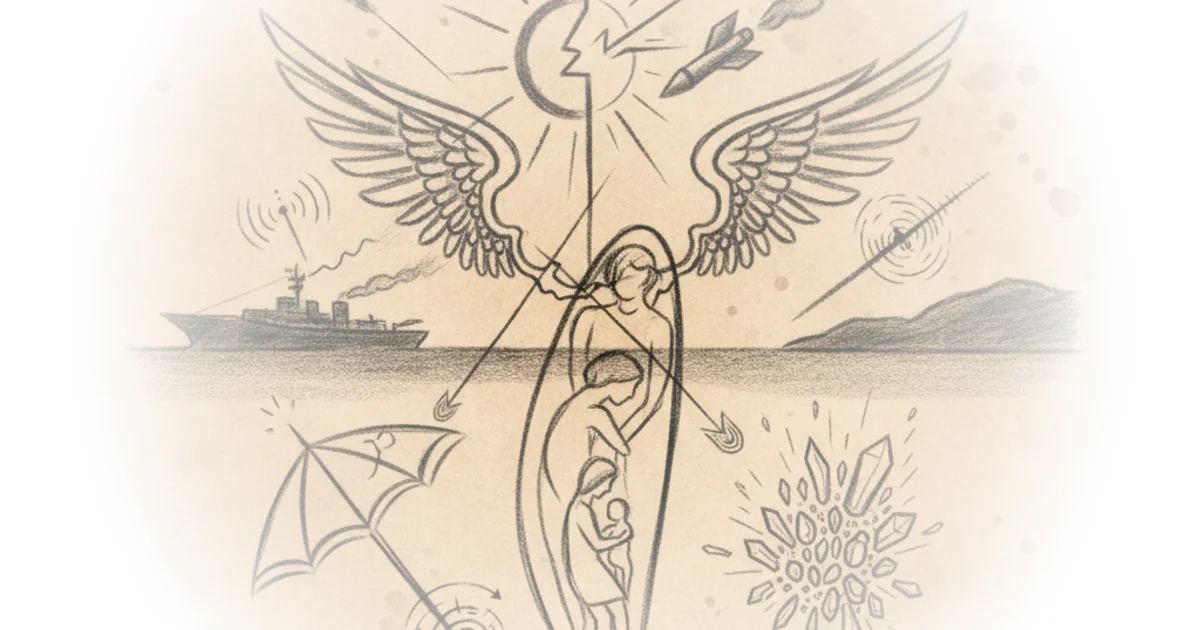
The piece highlights that the Odesa region, once a standard resort destination, has become a paradox. Despite the danger, 38 out of 45 beaches in Odesa remain open, crowded with tourists who are essentially gambling with their lives. Mak notes that in July 2026 alone, strikes resulted in a record number of civilian casualties, 70 percent higher than the previous year. The author argues that these attacks have an economic impact comparable to sinking cargo ships, yet the human cost is often reduced to statistics. "Tourists killed while enjoying their summer vacation only make up a small share, but it still means that Ukraine has no safe places to rest within the country," Mak observes. This framing is effective because it strips away the abstraction of war, forcing the reader to confront the reality that there is no "back home" to retreat to.
"We aren't expecting that at all, because we don't have any staff — it was just me, my mom, and my dad. People would come just for the weekend because everyone was still afraid to travel. And we took whatever little money they gave us, there weren't any set prices."
The Economics of Survival
Mak shifts the lens to the micro-economy of a single family business in Zatoka, run by Anna Zapsha. Her story illustrates the precariousness of rebuilding a life when the ground is constantly shifting. The Zapsha family opened their hotel in 2021, only to face a full-scale invasion the following year. Mak details how they survived on savings and the goodwill of strangers, noting that "the only thing we were relying on was what we'd earned over four months — and we hadn't worked at all that year." This anecdote serves as a powerful counter-narrative to grand geopolitical strategies; it is about the sheer will to keep a swimming pool from being a grave.
The author also weaves in the specific infrastructure challenges that define this region. He references the Zatoka Bridge, a critical artery that has been repeatedly targeted, forcing travelers to take a detour through Moldova. "To get there, you have to drive through Palanka, the border crossing with Moldova, and take a detour," Mak explains, highlighting the logistical nightmare that defines even the simplest trips. This detail adds depth without needing a full summary of the bridge's history; it simply shows how war has rewritten the map of daily life. Critics might argue that focusing on a single hotel owner romanticizes the struggle, but Mak balances this by noting that competitors on the western side of the bay were completely destroyed or seized, underscoring the randomness of survival.
The Psychology of the Shelter
Perhaps the most haunting section of Mak's coverage is his examination of the air raid shelter. In a normal context, a shelter is a place of safety. Here, it is a source of anxiety. Mak points out that near the water, it is "almost impossible to make it deep enough and totally safe." Furthermore, the guests themselves, many from frontline cities like Kharkiv or Sumy, have become desensitized to the danger. "The visitors from Kyiv, which faces missile attacks once every few days, and frontline regions... tend to behave casually, no matter the danger," Mak writes. This casualness is not bravery; it is a symptom of a psyche that has adapted to the unacceptable.
The human cost is further illuminated through the story of a soldier with PTSD who apologized for stuttering. "We had an experience with a soldier who stuttered due to PTSD and asked if that was okay for us," Anna recalls. Mak uses this moment to pivot to a broader critique of how society treats trauma. "Although in reality, we're the ones who have to adapt to them," he concludes. This inversion of the usual dynamic—where the injured must accommodate the able-bodied—is a sharp, necessary observation. It suggests that the true victory in this war will not be measured in territory regained, but in the ability of a society to hold space for its broken members.
"Everyone chooses a resort the best they can. Everywhere's a nightmare right now. We're living in conditions where we just adapted, but we need to change the picture so our minds don't… well, so we don't go off the deep end."
The Hidden Dangers Beneath the Waves
Mak does not shy away from the physical dangers that persist even when the air is clear. He details the threat of sea mines, which are washed ashore by storms and can detonate before experts arrive. "A mine that explodes in the water is particularly dangerous because the shock wave is significantly more powerful than an airborne explosion," he notes. This adds a layer of visceral horror to the beach setting, transforming the soothing murmur of waves into a potential death trap. The author also touches on the unique tactical disadvantage of the Odesa region: the proximity to occupied Crimea means ballistic missiles have a much shorter flight time, leaving less reaction time for civilians than in Kyiv. This geographic reality makes the decision to stay on the beach an act of profound, if desperate, resilience.
Bottom Line
Tim Mak's piece succeeds by refusing to treat the war as a distant geopolitical event, instead grounding it in the intimate, terrifying experience of a summer day. The strongest element is the focus on the psychological adaptation of civilians who are forced to treat missile alerts as background noise. The argument's vulnerability lies in its reliance on individual anecdotes, which, while powerful, may not capture the full scale of national trauma. However, the verdict is clear: until the threat of missiles recedes, the concept of a "vacation" in Ukraine will remain a fragile, dangerous illusion.