This week's London Centric delivers a rare, granular look into the black box of algorithmic management, exposing how a major e-bike company quietly dismantled safety protocols to serve the gig economy. Michael Macleod uncovers leaked internal messages revealing that Lime effectively created a two-tier traffic system in public parks, allowing delivery couriers to bypass "turtle mode" speed limits while ordinary citizens were forced to crawl. It is a stark illustration of how corporate efficiency often trumps public safety when left unchecked by regulators.
The Two-Tiered Roadway
Macleod opens with a jarring discovery: leaked WhatsApp messages from within Lime show the company actively removed speed restrictions for food delivery drivers in London's most sensitive pedestrian zones. "London Centric has been sent leaked internal WhatsApp messages that show how Lime has removed speed restrictions for London's food delivery drivers," Macleod writes, setting the stage for a story about regulatory arbitrage rather than simple technological glitching.
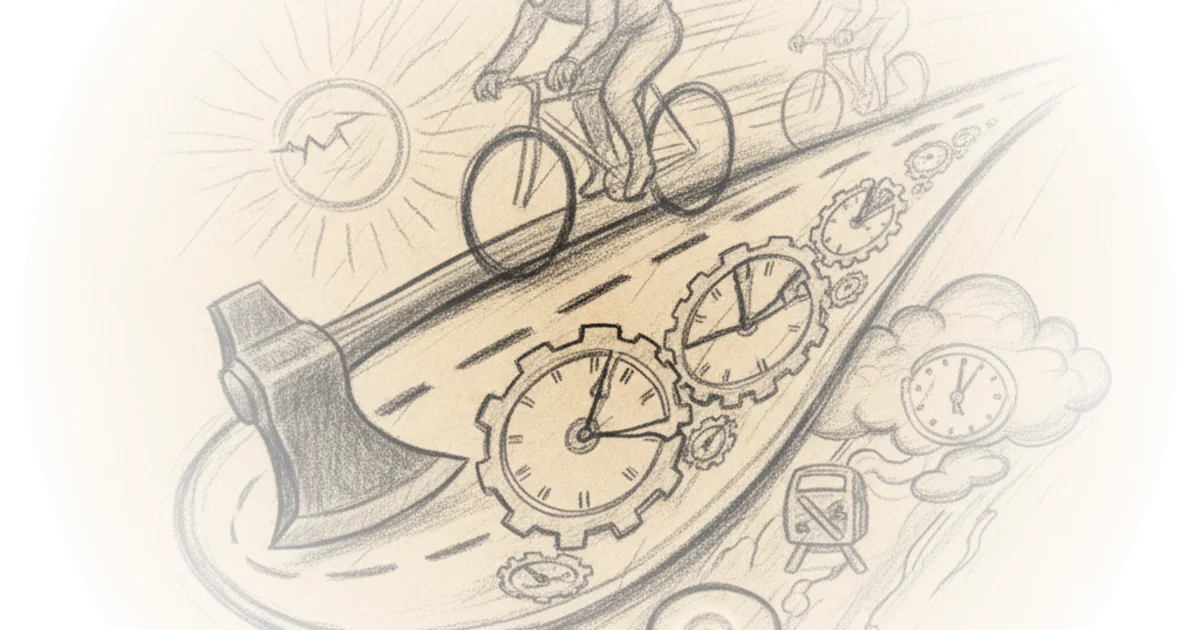
The core of the argument is that this wasn't an accident; it was a calculated feature of a new "Delivery Pass." Matt Ward, Lime's US-based general manager for new verticals, explicitly told riders in April: "We are testing allowing delivery drivers exclusive access to quickly deliver into these areas without losing boost." Macleod notes that this created a dangerous disparity where a pizza courier could hit 15.5mph through St James' Park or Regent's Park while a pedestrian with a rental bike was capped at 8mph.
This framing is effective because it moves the conversation from "bad drivers" to "systemic incentives." The piece highlights that delivery riders are trapped in a high-speed economy where slower journeys mean fewer jobs and less income. As Macleod puts it, "Slower journeys mean fewer completed jobs for the delivery drivers and therefore less income in a food delivery system that incentivises drivers to take risks and break the law."
Ordinary Lime users see a map of London covered in speed restrictions (left), while the restrictions vanish for delivery drivers (right).
Critics might argue that Lime was simply trying to solve a real problem: the proliferation of illegal, unregulated e-bikes that travel at 30mph and cause lithium battery fires. Macleod acknowledges this context, noting that "illegal e-bikes with throttles can easily travel at up to 30mph... contributing to the enormous growth in deadly lithium battery fires." However, the solution of creating a privileged class of speeders in pedestrian zones feels like swapping one safety hazard for another. The company's attempt to legitimize delivery fleets by offering legal bikes was undermined by prioritizing speed over the very "turtle mode" that made those bikes safe in the first place.
The Reversal and the Risks
The narrative takes a turn when Macleod reports on Lime's reaction to the exposure. After being contacted, the company announced an immediate U-turn. A spokesperson stated: "We are currently in the process of reinstating 'turtle mode' and yellow 'go-slow' zones for delivery riders." The company framed this as part of a pilot phase where they were "continuing to learn," but Macleod's reporting suggests the learning curve involved a direct threat to public safety.
This section underscores the fragility of self-regulation in the gig economy. Without external pressure, the default setting for platforms is speed and volume. The article also touches on another technical misstep: an "auto pause" feature intended to prevent theft that instead locked bikes while riders were still cycling. Macleod notes, "Unfortunately, the feature started misfiring, with delivery drivers reporting that Lime e-bikes would lock themselves while they were cycling along London roads." This detail serves as a potent metaphor for the broader issue: technology deployed without sufficient human oversight creates chaos rather than order.
The Broader Context of Urban Conflict
While the Lime story dominates, Macleod weaves in other threads of urban friction that resonate with the themes of labor and infrastructure. He briefly touches on the ongoing tube strikes, noting that talks between the RMT trade union and Transport for London collapsed over a four-day working week dispute. This connects back to the gig economy theme: in both cases, workers are fighting for conditions that allow them to survive economically without burning out or risking their lives.
Furthermore, Macleod addresses the viral misinformation regarding a "ham sandwich ban" at Eastbury School, debunking the claim with direct verification from the school and council. He writes that the claim was made by Orla Minihane of the Restore Britain party, who admitted she was "merely telling you what I was told." This segment serves as a necessary counterweight to the technological analysis, reminding readers that in a polarized information environment, verifying facts is just as critical as auditing algorithms.
At some point the decision was taken by Lime to prioritize speed, even in public spaces.
Bottom Line
Macleod's reporting on the Lime speed limit bypass is a masterclass in holding corporate power accountable through transparency; it proves that safety features are often optional settings rather than fixed standards. The piece's strongest element is its refusal to let Lime off the hook with vague "pilot program" excuses, instead forcing a public admission of a two-tiered road system. However, the story leaves an unresolved tension: even if the speed limits are restored, the economic pressure on delivery riders to break them remains, suggesting that policy changes alone may not be enough to fix the broken incentives of the gig economy.