Devin Stone reframes a high-stakes international legal threat not as a defense of free speech, but as a calculated extortion scheme designed to monetize a journalistic error. By dissecting the specific mechanics of the BBC's editing mistake against the backdrop of the administration's history of frivolous litigation, Stone exposes a pattern where the threat of a lawsuit is far more valuable than the lawsuit itself.
The Anatomy of a Bogus Claim
Stone begins by dismantling the narrative that this is a genuine defense of reputation. He points out the absurdity of the administration's claim that the BBC used AI to fabricate quotes, when the reality was a much simpler, albeit unethical, editorial splice. "No one put words in the president's mouth," Stone writes. "They just took different parts of the speech and played them closer together than he said them." This distinction is crucial; it shifts the issue from a technological fabrication to a traditional, albeit flawed, journalistic practice. Stone argues that while the editing was a breach of ethics, it does not constitute the legal fraud the president is alleging.
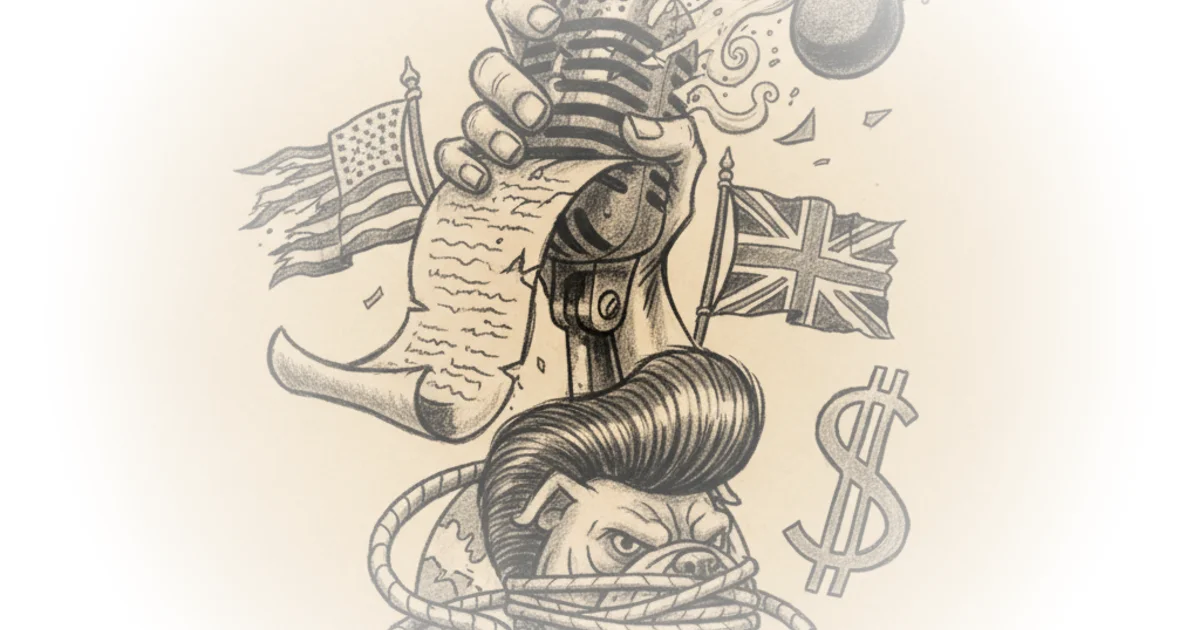
The author then contextualizes this specific incident within a broader, decades-long strategy of legal harassment. He notes that the president has sued a staggering array of entities, from the Pulitzer Prize Committee to his own deputy attorney general. "In exactly none of these cases has a judge or jury said, 'Yes, Mr. Trump. This is a meritorious lawsuit and you win,'" Stone observes. This track record suggests that the goal is rarely a judicial victory. Instead, the legal system is being weaponized to extract settlements from media companies that prefer paying a few million dollars to avoid the cost and distraction of a trial. Stone effectively argues that these are not real lawsuits, but rather "stickup notes with a very big White House-shaped gun behind them."
They're like a stickup note with a very big White House-shaped gun behind them.
Critics might argue that a public figure has a right to sue for defamation regardless of past losses, and that the First Amendment protects the right to file a complaint even if it ultimately fails. However, Stone counters that the sheer volume and lack of merit in these filings indicate a bad-faith strategy designed to intimidate rather than seek justice.
The Globalization of Culture Wars
The commentary then pivots to the international dimension, highlighting how a domestic culture war in the UK was exploited for American political gain. Stone details how a memo from a former BBC adviser, criticizing the network's coverage of gender and immigration, reignited a dormant controversy over the January 6th documentary. He notes that the editing error had zero political impact when it aired in 2024, as the president won the election easily. "Pretty much everyone forgot about the show until November 3rd, 2025," Stone writes, emphasizing that the lawsuit is a reaction to a political memo, not a genuine legal injury.
Stone illustrates how the BBC, a pillar of British civic society, became a political football in a domestic UK culture war, only for the president to step in and internationalize the conflict. He points out the irony that the BBC apologized and retracted the segment, yet the president demanded a billion dollars in compensation. "He said he simply had to sue, not to enrich himself, of course, but to protect the public," Stone paraphrases, immediately undercutting the claim by noting the demand for cash. The author suggests that the lawsuit is less about correcting the record and more about leveraging the BBC's fear of a protracted legal battle to extract a payout from British taxpayers.
The Jurisdictional Hurdle
Finally, Stone addresses the legal feasibility of the case, noting significant jurisdictional hurdles. He explains that under Federal Rules of Civil Procedure, a complaint must show a legally cognizable injury, which is difficult to prove when the broadcast never aired in the United States. "It's not clear that any court in Florida has jurisdiction over the BBC," Stone writes, pointing out that the corporate entities are domiciled in Britain. He acknowledges that the president might try to argue the BBC does enough business in Florida to establish a connection, but he dismisses this as a weak argument given the lack of actual harm within the state.
The author concludes that the complaint is "larded down with irrelevant whining" about bias and bad journalism, which are not illegal acts. By focusing on the procedural weaknesses and the history of failed claims, Stone paints a picture of a legal action that is doomed to fail in court but successful in generating headlines and political leverage.
Bottom Line
Stone's most compelling argument is his identification of the lawsuit as a revenue-generating tool rather than a genuine legal pursuit, supported by a damning history of zero judicial wins. His biggest vulnerability is the assumption that the BBC will not settle; while unlikely, the high cost of international litigation could still force a settlement that validates the strategy. Readers should watch to see if the court dismisses the case on jurisdictional grounds, which would serve as the ultimate validation of Stone's critique.