The most shocking thing about Jula's death is not that he died homeless — it's where he died. He collapsed in an underpass just meters from the Houses of Parliament, in one of the wealthiest cities on Earth, surrounded by thousands of empty homes nobody ever lives in."
The Death
On the evening of December 18th, 2018, central London was bustling with pre-Christmas activity. MPs and lobby journalists made their way home through the public underpass connecting Westminster to the Tube station. It was a Tuesday, cold, with temperatures dropping toward freezing.
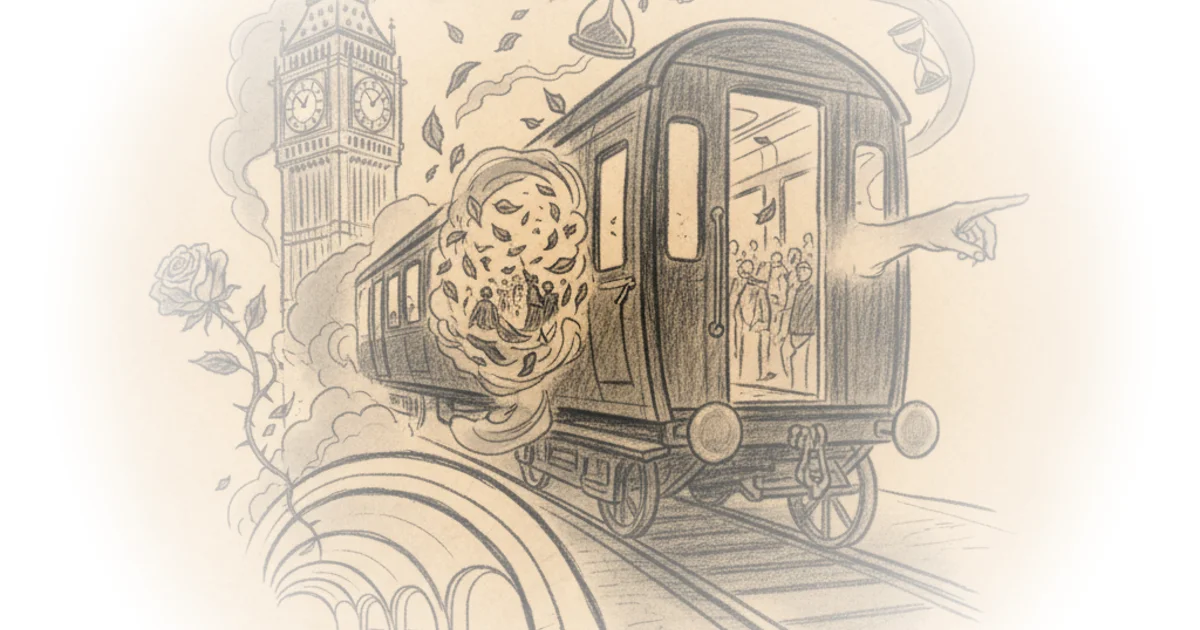
Jula — Julia Romesh, 43 years old — had curled up on the tunnel floor, seeking warmth. The underpass offered shelter from the winter chill and a chance to pick up spare change from passersby. That night carried a festive atmosphere. It was only a week until Christmas.
At around 11 p.m., Jula started choking. His friend Gabbor watched him convulse on the ground. He turned blue. They couldn't revive him. One of them called an ambulance. By the next morning, he was dead.
Kojo Karam, writer and researcher, first heard Jula's story in 2018. It haunted him. How does someone die cold and unseen in the shadow of power, surrounded by empty homes? The answer widens into a hidden world linking money, secrecy, and power — a world that decides who gets a home and who doesn't.
Who Was Jula?
Simon Hatzenstone, a journalist at the Guardian, had worked with colleague Daniel Lavell on a series humanizing homeless people. Jula's story was an obvious choice. His death made headlines but was quickly forgotten.
Gabbor, who met Jula at a day center for rough sleepers near Trafalgar Square, remembered him as a gentle giant — always helpful, always funny, making people happy. He came to the UK in the early 2000s, worked as a kitchen porter, lost his job, and ended up sleeping rough.
In 2013, Jula traveled through Europe looking for work — spending time in Malta, Paris, and Hungary. Wherever he went, he wanted to build a life: a good job, a good house, a big family.
He returned to London in September 2018 without a job or any way to afford rent. Because he'd just arrived back in the country, he wasn't entitled to benefits unless he had employment. Without a fixed address, it was harder to find work. He was backed into a corner with no way out.
By winter 2018, an estimated 24,000 people were sleeping rough across the UK — in tents, cars, and on streets. Once you're homeless, it's very hard to get out again.
The Housing Crisis
Karen Buck, former Labour MP for Westminster and North Kensington, served as a local councillor too. She explains how Westminster became the epicenter of the national housing crisis: public spending cuts after 2010 gutted welfare support, leaving people unable to sustain their tenancies. Cuts to other services meant those released from prison or institutions — those needing intervention for addiction or mental health problems — had nowhere to turn.
Councils were also forced to sell off homes under Right to Buy without enough money to replace them. The level of social housing simply evaporated while need increased.
Nick Bano, a housing lawyer and author, points out the UK's grim statistics: Britain has the world's worst homelessness rates. Its closest rival is Belgium. The UK dwarfs US statistics. One in five homes are now privately rented. Housing — something everyone needs — is being hoarded by investors.
In Westminster especially, there's another crisis no one talks about: thousands of houses sitting empty. In some parts of the borough, more than 50% of properties are classified as long-term empty. Around the corner in Pimlico, modest three-bedroom houses where families once lived now have letter boxes stuffed with months of uncollected leaflets.
Wealthy investors from inside and outside the UK are snapping up property as a safe place to park cash or watch its value rise. This turns parts of the borough into ghost towns.
In 2023, Westminster Council set up a hotline for residents to report empty homes. But identifying owners is nearly impossible — many properties are bought offshore, registered not in mainland Britain but in tax havens where local laws allow total secrecy. The properties might be owned by trusts or shell companies, making the actual beneficiaries impossible to identify.
Across England and Wales, nearly 150,000 properties are owned by offshore vehicles. In London alone, they're worth an estimated £55 billion. That money flooding into the capital drives up property prices, making London more expensive for everyone except those who can afford to play the housing market as an investment vehicle.
The Bottom Line
This story is not just about one man's death — it's a window into how housing policy fails the most vulnerable while wealth floods into empty properties. The strongest part of this argument is its concrete specificity: Jula died literally in the shadow of power, surrounded by homes no one lives in, in a city that boasts the world's worst homelessness statistics.
The vulnerability lies in whether any of this can be fixed. Critics might note that solving homelessness requires far more than just empty homes — mental health services, addiction support, job creation, and fundamental welfare reform all matter too. But the piece makes a compelling case that housing as an investment vehicle rather than a home is where the story starts.
What comes next? The question of who actually owns these properties — and whether they're ever brought into use — may determine whether Jula's death becomes a turning point or just another forgotten headline.