This is not just another academic scandal; it is a stress test for the very idea of meritocracy in modern higher education. Yascha Mounk dissects a case where the most compelling evidence of fraud comes not from institutional oversight, but from independent researchers using digital tools, while the university itself doubles down on a narrative of victimhood. The story forces a confrontation between the undeniable mechanics of plagiarism and the powerful political impulse to shield a specific demographic profile from scrutiny.
The Architecture of a Myth
Mounk begins by laying out the seductive nature of Jason Arday's public biography: a man who allegedly went from being non-verbal at age 11 to a Cambridge professor by 37, while simultaneously becoming an ultra-marathon legend and a massive charity fundraiser. It is, as Arday himself put it, a story that sounds "ridiculous." Yet, the piece argues that the narrative has collapsed under the weight of forensic analysis.
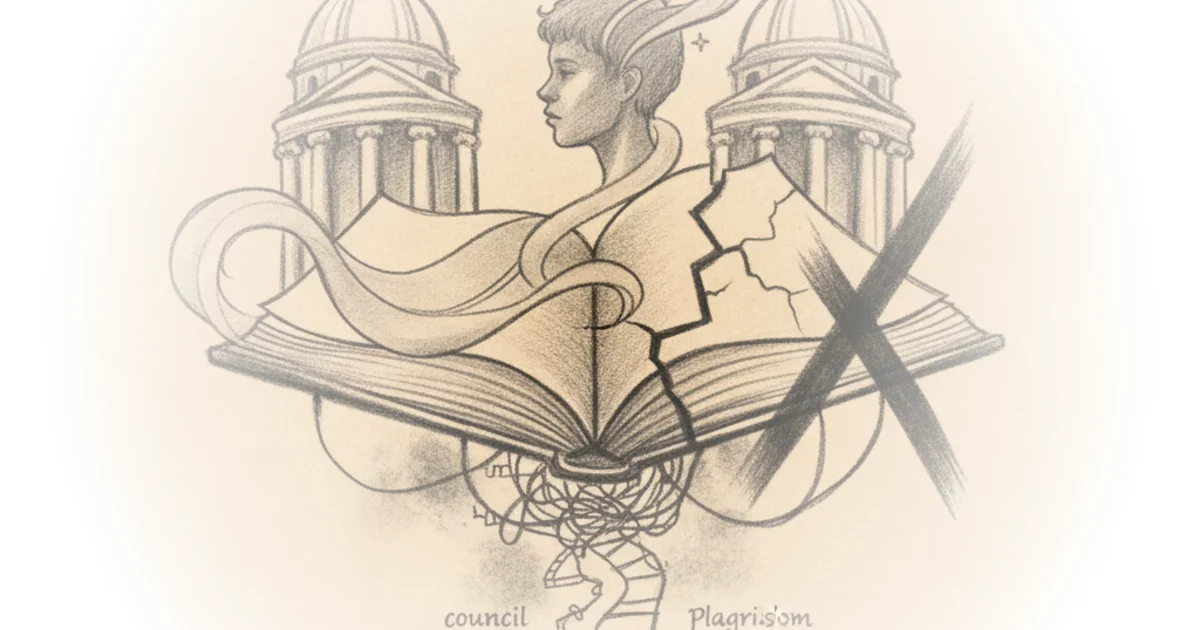
Mounk highlights the work of Nathan Cofnas, a former Cambridge fellow who utilized the plagiarism detection software Copyleaks to uncover "over 30 cases of substantial overlap" in Arday's doctoral dissertation with the work of another scholar. The evidence is not subtle; it is structural. "There is no other plausible explanation than plagiarism for the overlaps," notes the academic Dave Harris, who first raised the alarm. The sheer volume of verbatim copying, combined with the discovery of fabricated quotes and impossible athletic feats, suggests a pattern of fabrication that extends far beyond simple academic sloppiness.
The commentary notes that this is not the first time digital forensics have upended academic reputations, echoing the dynamics seen in the Copyleaks deep dives where software became the only impartial arbiter in a sea of institutional denial. When the facts are this stark, the question shifts from "Did this happen?" to "Why are institutions refusing to see it?"
"This is a story about DEI and the corruption that is required to sustain the system of DEI—of elevating people based on identity characteristics rather than merit."
The Institutional Reflex
The most damning aspect of the coverage, according to Mounk, is not the plagiarism itself, but the reaction of the institutions tasked with upholding truth. When the allegations surfaced, Cambridge University did not launch a transparent inquiry; instead, a spokesperson declared Arday the "victim of a vile campaign." Mounk points out the irony that the university's defense relies on the very identity politics that allegedly enabled the hiring in the first place.
The piece details how Arday's supporters, including the Good Law Project, have framed the investigation as a racist attack, circulating letters signed by thousands that decry the "sustained and malicious attacks" on a "working class Black man." Mounk argues that this framing effectively weaponizes anti-racism to shield academic dishonesty. The defense has pivoted to Arday's neurodivergence, with figures like Simon Baron-Cohen expressing concern that media scrutiny could trigger suicide among autistic people.
Mounk critiques this pivot as a dangerous precedent. "The notion that Arday would be screened from repercussions for academic misconduct given his neurodivergence or medical history directly challenges notions of meritocracy that are at the core of the academic system." The article suggests that by treating Arday as a special case, the university is undermining the integrity of the degree itself. If a professor can plagiarize because of their background, what does that mean for the thousands of students who earned their degrees through rigorous, unassisted work?
Critics might argue that the focus on Arday's personal history is a necessary check against a system that has historically excluded marginalized voices. However, Mounk counters that protecting one individual from accountability does not fix systemic exclusion; it merely erodes the credibility of the institution protecting them. The defense of Arday on grounds of identity, rather than evidence, ultimately harms the very cause of diversity it claims to champion.
The Collapse of Credibility
As the story has unfolded, the fabric of Arday's personal history has unraveled further. Mounk details how claims of receiving a "severed pig's head" were debunked by the Metropolitan Police, and how assertions of knife threats were not supported by CCTV footage. Perhaps most damaging is the contradiction in Arday's own timeline regarding his literacy and his GCSE qualifications.
The article notes that Arday's defense has largely shifted to a plea for mercy rather than a denial of the facts. "I am accountable for the mistakes I've made," Arday told The Times, yet he simultaneously minimized the stakes by saying, "I didn't murder somebody." Mounk finds this distinction jarring. In the context of academia, where truth is the currency, the admission of plagiarism is a fatal blow, regardless of whether it involved physical violence.
The piece draws a parallel to the Carter-Ruck deep dive, where the use of defamation law by powerful figures to silence scrutiny is examined. Here, Arday enlisted the firm to spike an article in Times Higher Education, a move that temporarily delayed the story but ultimately backfired by drawing more attention to the allegations. The attempt to silence the accusers only highlighted the weakness of the defense.
"The case for his defense collapses... There is no question that there is extensive plagiarism."
Bottom Line
Yascha Mounk's analysis is a masterclass in separating the signal of academic fraud from the noise of political posturing. The strongest part of the argument is the forensic dismantling of Arday's biography, which leaves the institutional defense with no ground to stand on. The biggest vulnerability in the counter-argument is the reliance on identity as a shield against evidence, a strategy that ultimately damages the credibility of the institutions that employ it. The reader should watch for whether Cambridge finally conducts an independent investigation, or if the university chooses to protect its reputation by burying the truth alongside the plagiarized text.