Tom van der Linden reframes Denis Villeneuve's Arrival not as a puzzle about time travel, but as a profound meditation on the human refusal to embrace life's fullness because of the inevitable pain of loss. While most analyses fixate on the linguistic mechanics of the heptapods' language, van der Linden argues that the film's true engine is a psychological journey from emotional isolation to radical acceptance of mortality. This distinction matters because it shifts the conversation from sci-fi speculation to a urgent, personal question: do we shrink from living to avoid the grief that comes with loving?
The Architecture of Grief
The piece begins by dismantling the audience's initial assumption about the protagonist, Louise Banks. Van der Linden notes that the film's opening sequence, which appears to be a tragic backstory of a daughter dying young, is actually a glimpse into the future. "The movie sets up what feels like backstory to Louise... and then at the end it's revealed oh this was actually her Future Vision," he explains. This structural twist is not merely a clever narrative trick; it fundamentally alters the character's starting point. Van der Linden argues that without the assumed grief, Louise is not a woman healing from trauma, but someone who is "very much reclusive in a sense" and "emotionally reclusive."
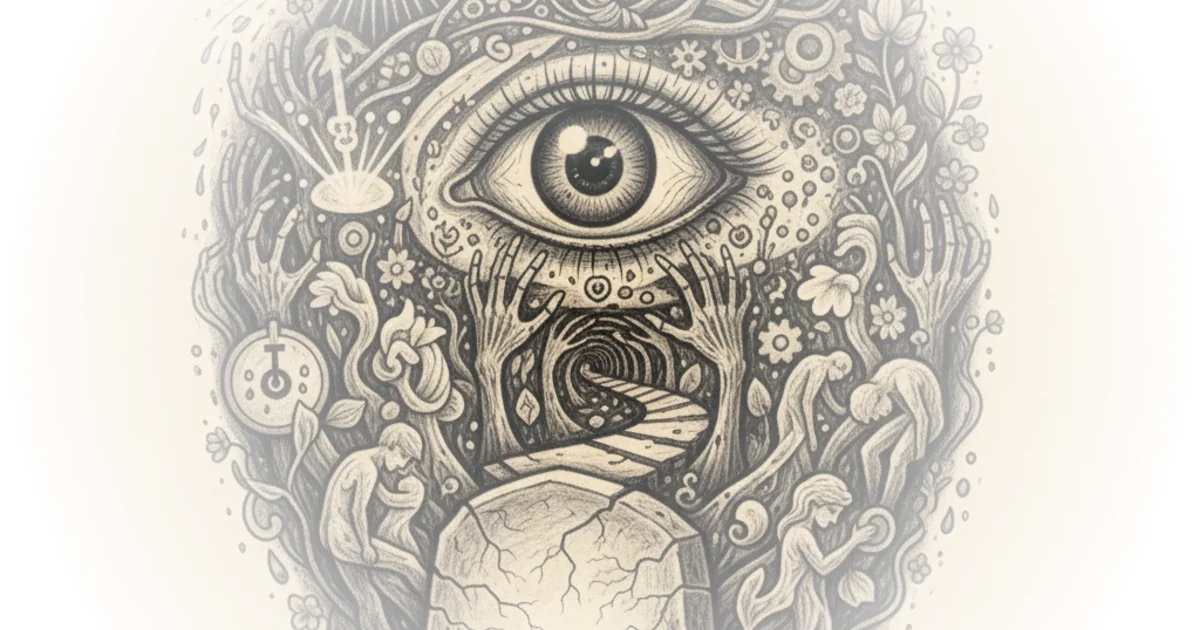
The commentary suggests that Louise's isolation is a defense mechanism. She lives a rigid, patterned life, symbolized by her solitary existence and her reliance on a "giant almost comedy giant body pillow." Van der Linden posits that this behavior stems from a desire to control the uncontrollable. "She kind of lives sheltered in the sense that she doesn't let anything really come close to her," he writes. This framing is compelling because it transforms the alien encounter from an external event into an internal catalyst. The aliens do not just teach her a new language; they force her to confront the very thing she has been avoiding: the certainty of death.
Louise kind of embodies that rather extreme version of [denying death] where she's just living this very monotone life and that's also her journey then to kind of open herself up to death and life and mortality and tragedy in order to just also experience life.
The Denial of Death
To ground his analysis, van der Linden draws on the work of cultural anthropologist Ernest Becker and his book The Denial of Death. The core of the argument is that humans are terrified of their own mortality, and this fear drives them to "shrink down from the fullness of life." Van der Linden writes, "We are both afraid of death and afraid of life and so we kind of navigate a strange space in between as we go through life basically." This connection between the philosophical and the cinematic is the piece's strongest asset. It explains why Louise's journey is so difficult; she isn't just learning to communicate with aliens, she is unlearning a lifetime of self-protection.
The author points out that Louise's rigidity is visible even before the aliens arrive. When the world is in upheaval, she maintains her routine, calling her mother and heading to an empty classroom. "There is obviously a lot of upheaval in the society about it but then the next day you know Louise is kind of like she calls her mom and she says like oh I'm about the same," van der Linden observes. This refusal to let the chaos in is a symptom of her fear. By keeping the world at a distance, she avoids the risk of being hurt, but she also avoids the joy of being alive. The film's resolution, therefore, is not about saving the world from war, but about Louise choosing to embrace a life she knows will end in tragedy.
Critics might note that this psychological reading risks oversimplifying the film's political subtext regarding global cooperation and the dangers of nationalism. While the personal journey is central, the stakes of the narrative are undeniably geopolitical. However, van der Linden's focus remains on the human element, arguing that the political resolution is only possible because the protagonist has first resolved her internal conflict with mortality.
Embracing the Fullness
The conclusion of the piece circles back to the film's central thesis: that knowing the end does not negate the value of the journey. Van der Linden emphasizes that the film asks us to "Embrace that in its fullness and not try to shrink down from Life yeah in order to try and escape a death that will come for us anyways." This is a radical proposition for a genre often dominated by dystopian fear. Unlike the bleakness of Blade Runner or the fatalism of Dune, Arrival offers a rare, optimistic vision of humanism.
"It's the rare kind of like... positive optimistic science fiction film to be honest like most of the Sci-Fi we get is at least in this kind of movie is kind of Bleak or dystopian."
The author's personal connection to the material adds weight to this analysis. He mentions that the director's wife, who wrote a book on the production, included a section validating his interpretation of the film's emotional core. This external confirmation reinforces the idea that the film's message is intentional and deeply felt. The argument holds up because it aligns with the film's emotional arc: Louise chooses to have a child despite knowing the child will die young, because the experience of loving them is worth the inevitable pain.
Bottom Line
Tom van der Linden's commentary succeeds by shifting the lens from the mechanics of time to the psychology of grief, offering a deeply humanistic reading of a sci-fi classic. The strongest part of the argument is its application of Ernest Becker's theories to Louise's character arc, providing a robust framework for understanding her isolation and eventual transformation. The piece's biggest vulnerability is its minimal engagement with the film's political commentary on global unity, which remains a crucial component of the narrative's resolution. For the busy listener, this analysis provides a clear, emotional roadmap to understanding why Arrival remains a masterpiece of modern cinema.