In an era obsessed with finding the 'why' behind every crisis, this piece from Wayfare offers a startling counter-intuitive pivot: the very act of trying to logically explain suffering is the real problem. It argues that our relentless drive to justify pain rationally actually dulls our moral response to it, a claim that cuts through centuries of theological debate to demand immediate, practical love instead of intellectual satisfaction.
The Trap of Rationalization
The article begins by acknowledging the universality of pain, noting that whether from war, famine, or loneliness, "None of us has escaped suffering; some have endured it intensely." Rather than offering a platitude, Wayfare traces the historical shift in how humanity has approached this reality. For roughly 1600 years, the question of evil's origin was largely settled; it was viewed as a consequence of sin or a mystery to be accepted. The piece notes that early thinkers like Augustine and Aquinas did not see a contradiction between a good God and human suffering because they viewed evil not as a substance, but as "the absence of good."
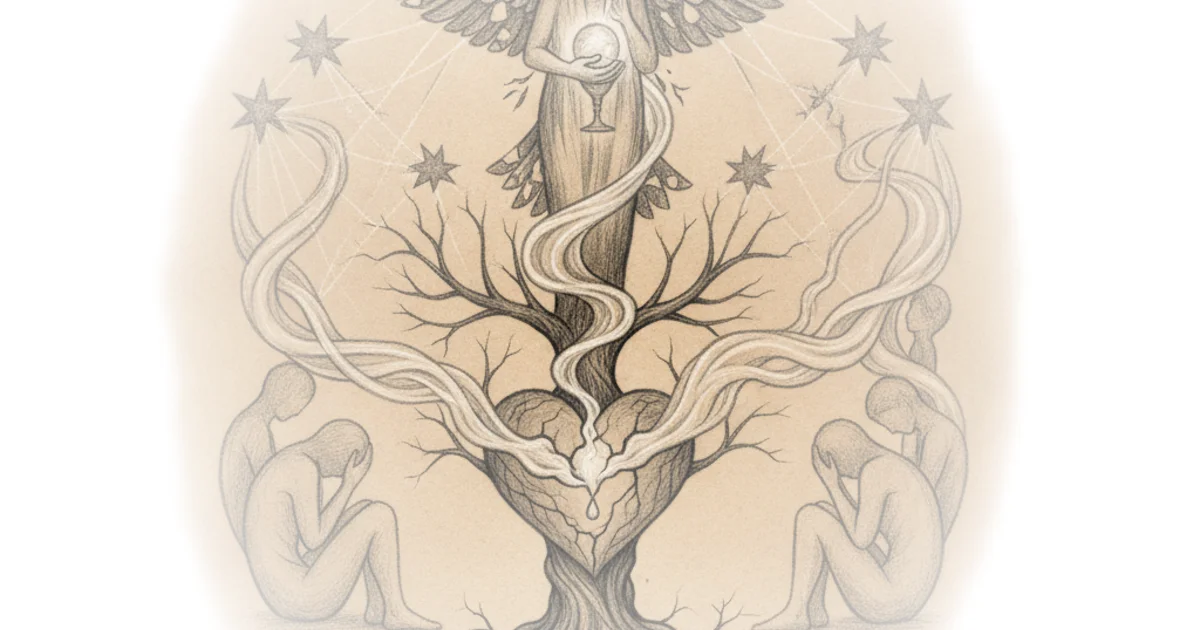
However, the narrative shifts dramatically in the seventeenth century. The focus moved from "how to respond" to "how to explain." Wayfare highlights how philosophers like G. W. F. Leibniz coined the term "theodicy" to argue that our world is "the best of all possible worlds," a stance famously mocked by Voltaire as absurd in the face of real agony. The article suggests this intellectual maneuvering has had a corrosive effect on faith, noting that David Hume's argument—that a loving, all-powerful God is logically incompatible with evil—has driven many toward atheism. This framing is powerful because it exposes the vanity of the modern project: we have spent three centuries trying to solve a puzzle that, by its nature, resists solution.
It is evil to make sense of evil. Evil and suffering do not make sense. Their existence cannot be reconciled with what is good.
This assertion is the piece's most provocative claim. It suggests that by successfully constructing a rational framework for suffering, we implicitly grant it a legitimate place in the cosmic order, thereby numbing our horror and reducing our urgency to act. Critics might argue that understanding the causes of suffering is a prerequisite for solving it, and that dismissing the search for 'why' as a distraction ignores the practical need for root-cause analysis in policy and medicine. Yet, the article's point is theological and moral, not epidemiological: it warns that explanation can become a substitute for empathy.
Beyond the Philosophical Detour
The commentary then explores how specific religious traditions, particularly those influenced by Joseph Smith, attempt to reframe the problem. Wayfare reports that Smith's teachings portray God as an embodied being who cannot prevent all suffering due to the constraints of co-eternal matter and human agency. This view, championed by thinkers like B. H. Roberts, removes the logical incompatibility Hume identified by limiting God's power to prevent evil, not his willingness to help.
However, the piece is quick to point out that even this theological adjustment fails to answer the deepest human questions. "Agency is an answer hiding a mystery," the article argues, and it cannot explain why some suffer disproportionately while others do not. The author warns against the temptation of the "long run" argument, where suffering is justified by future redemption. "Any answer to the question of suffering must acknowledge suffering's reality and so, also, evil's actuality," Wayfare insists. This is a crucial distinction; it rejects the idea that pain is merely a temporary step toward a greater good, insisting instead that the pain itself is a rupture in the world that demands repair.
The text draws on the book of Job to reinforce this, noting that Job's friends were condemned not for lacking information, but for their "impertinence" in trying to explain his suffering. The article asks, "Is it possible that the very act of formulating the problem of theodicy is, from a religious point of view, a problem—not a philosophical problem, but a faith problem?" This reframing is the piece's strongest move, shifting the burden from the intellect to the will. It suggests that the question "Why?" is often a defense mechanism against the terrifying demand of the question "How do I respond?"
Trying to tame suffering by making it something explicable tempts us to forget that God himself lives in a world where there is suffering.
This insight connects the divine to the human condition in a way that avoids abstraction. The piece argues that God is not a distant philosopher who has solved the equation of evil, but a being who "suffers with us, weak and vulnerable even when he has all the power there is." By citing theologians like Dietrich Bonhoeffer and Jürgen Moltmann, the article emphasizes that faith is not trust that suffering will be explained away, but trust that God can bring us through it. The argument implies that the proper response to evil is not a better theory, but a better action: "action rather than explanation."
The Call to Mending
In its conclusion, the piece moves from critique to a call for community. It suggests that the goal of faith is not to create a world where suffering is impossible, but to build a "community of love" that repairs the breaks caused by evil. Wayfare references the concept of Zion not as a place of eternal bliss, but as a collective effort to "overcome suffering not by making it no longer possible, but by bringing together those who will repair and no longer cause suffering."
This vision is grounded in the idea that suffering is inescapable, but our response to it is not. The article notes that "It hurts to love us," acknowledging the cost of divine and human engagement with pain. By framing the solution as a communal act of mending rather than an individual act of understanding, the piece offers a path forward for those who have lost faith in theodicy. It suggests that the only way to truly honor the reality of suffering is to stop trying to justify it and start working to end it.
Bottom Line
Wayfare's argument is a bold, necessary correction to the modern obsession with rationalizing pain, successfully shifting the focus from intellectual justification to moral action. Its greatest strength lies in exposing the moral danger of making evil seem 'reasonable,' though it risks underestimating the human need for cognitive closure in the face of trauma. The piece ultimately succeeds by demanding that we stop asking why the world is broken and start asking how we will help fix it.