Jesse Singal does something rare in sports journalism: he treats the agony of a championship loss not as a trivial hobbyist's complaint, but as a profound study in human psychology and the cruelty of chance. While most coverage of the Toronto Blue Jays' recent defeat focuses on the box score or the managerial decisions, Singal dissects the specific, paralyzing texture of hope that gets extinguished in the final seconds. He argues that for the hundreds of thousands of fans who have waited decades for a title, the loss is not just a disappointment but a "stomach punch" that rewrites their emotional history.
The Architecture of Heartbreak
Singal anchors his argument in a visceral, personal memory of the 2003 American League Championship Series, a game that serves as the historical counterpoint to the Blue Jays' recent failure. He recalls watching the Boston Red Sox lose to the New York Yankees in Game 7, a moment that defined a generation of fans. "I remember getting back to my car and crying in it. Crying. I was a twenty-year-old male blubbering in a car at a baseball game," he writes. This raw admission sets the stage for his analysis of the Toronto fans, suggesting that the pain of the loss is a shared, almost universal language among those who have loved a team through a long drought.
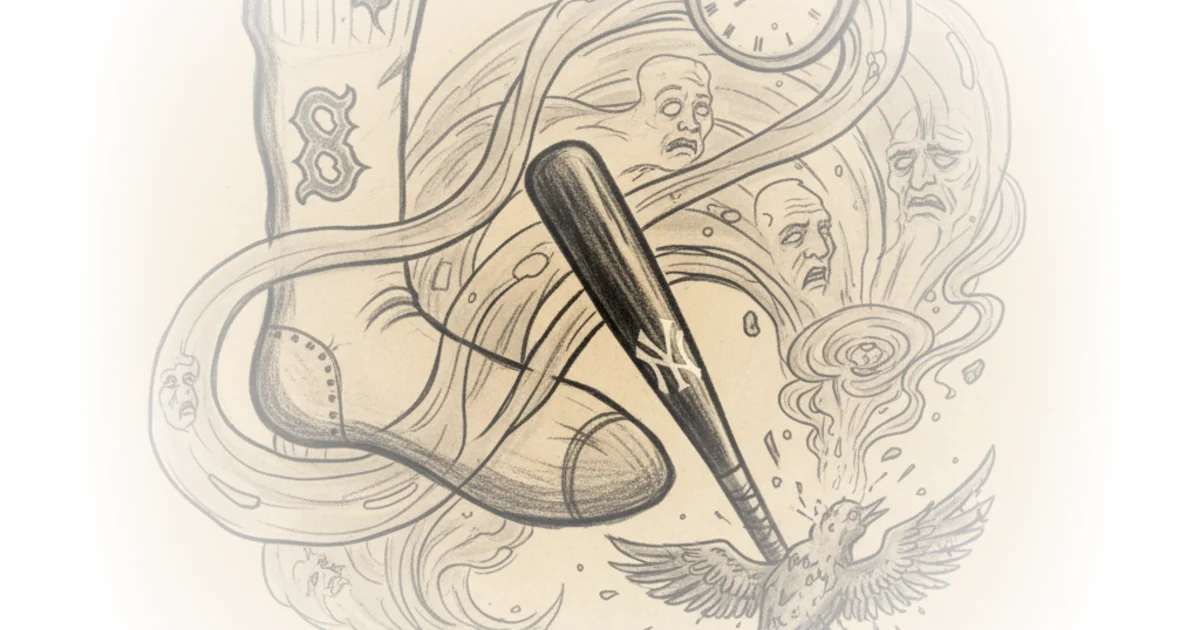
The author's central thesis is that the intensity of the suffering is directly proportional to the proximity of the victory. He notes that the Blue Jays were up 5–4 in the top of the ninth, needing only three outs to secure their first title since 1992. "If you are, say, a Charlotte Hornets fan, you will never experience the shockingly painful aftermath of a gut-punch loss, because your team is rarely, if ever, in a game that matters," Singal observes. This distinction is crucial; it reframes the loss not as a failure of the team, but as a specific type of emotional trauma reserved for those who have invested deeply in a rare opportunity. The argument holds weight because it acknowledges the irrationality of fandom while validating the very real human cost of that irrationality.
"They say it's better to have loved and lost than to never have loved at all, but... meh, I'm actually not so sure!"
Singal's use of Bill Simmons' "Levels of Losing" framework adds a layer of analytical rigor to what could otherwise be a purely emotional rant. He identifies the Blue Jays' defeat as a "Level III: The Stomach Punch," defined by a pivotal, improbable play that leaves fans in "stunned disbelief." He details the sequence of events with cinematic precision: the solo home run by Miguel Rojas that tied the game, the miraculous catch by Dodgers outfielder Andy Pages after colliding with a teammate, and the final, anticlimactic double play. "In this universe, a frequently cruel one, the throw gets there on time," he writes, capturing the randomness that makes sports so devastating. The commentary effectively highlights how a single, split-second decision or a lucky bounce can erase years of anticipation.
The Cruelty of the Knuckleball
The piece also weaves in historical context to deepen the sense of tragedy. Singal references the 2003 series where the Red Sox were one game away from the World Series, only to be stopped by the Yankees. He mentions the role of Tim Wakefield, the "beloved knuckleballer," whose unique pitching style added a layer of unpredictability to the game. "Wakefield faced Hideki Matsui, Jorge Posada, and Jason Giambi in the tenth. Didn't matter: strikeout, flyout, flyout," Singal recalls, noting how the knuckleball's erratic nature can turn a routine play into a nightmare. This historical parallel serves to remind the reader that the pain of the Blue Jays is not unique; it is part of a long lineage of sports heartbreak that transcends individual teams.
Critics might argue that Singal's focus on the emotional toll of sports trivializes more serious societal issues, or that he romanticizes a form of suffering that is ultimately self-inflicted. However, the author anticipates this by acknowledging the irrationality of the fan's investment. "Simply by dint of the fact that there's one champion only at the end of every season in every sport, there's basically always going to be more heartbreak than triumph," he concedes. By admitting that the pain is a necessary byproduct of the joy, he strengthens his argument that the suffering is meaningful, not just masochistic.
Singal's description of the final out is particularly striking. He describes Alejandro Kirk, a large catcher known for grounding into double plays, hitting a "broken bat, weak grounder, perhaps the easiest double play you'll ever see." "Game over. Series over. Hopefully, you'll get back to the World Series... at some point? Or not," he writes. The uncertainty of the "or not" captures the lingering dread that follows a devastating loss. It is a moment of silence that speaks volumes about the fragility of hope.
Bottom Line
Singal's commentary succeeds because it refuses to treat sports as a mere diversion; instead, it treats the fan's emotional journey as a legitimate subject of analysis. The strongest part of the argument is its ability to articulate the specific, crushing weight of being so close to a dream, only to have it snatched away by a random play. Its biggest vulnerability is its reliance on the reader's own capacity for empathy with sports fans, which may not resonate with those who view the game as purely entertainment. However, for those who understand the stakes, this piece offers a powerful, if painful, validation of their experience.
"In this universe, a frequently cruel one, the throw gets there on time."
The piece leaves the reader with a sobering realization: the beauty of the game is inextricably linked to its capacity for cruelty. As Singal puts it, "The point is that it sucks and it's crazy we subject ourselves to this." It is a reminder that the most profound human experiences often come wrapped in the most absurd packages.