Scott Alexander doesn't just ask if miracles happen; he asks why one specific phenomenon—the spinning sun—appears to be the only mass hallucination in human history that thousands of people witness simultaneously under identical conditions. In a piece that reads like an investigative thriller, the author travels from the archives of 1917 Fatima to the modern-day pilgrimage site of Medjugorje, armed with a notebook and a skeptical mind, to determine if the "natural law of the universe" is actually being violated in real time.
The Anomaly of the Spinning Sun
Alexander begins by isolating a statistical outlier that defies standard explanations for mass delusion. While ghosts are corner-of-the-eye tricks and Bigfoot sightings are solitary events, he notes, "Of all the countries and outposts in the vast empire of the unexplained, it's only this one phenomenon - the spinning, multicolored sun - that regularly gets seen by thousands of people at once, in broad daylight." This framing is crucial; it shifts the inquiry from "are these people crazy?" to "what explains a shared visual event on this scale?"
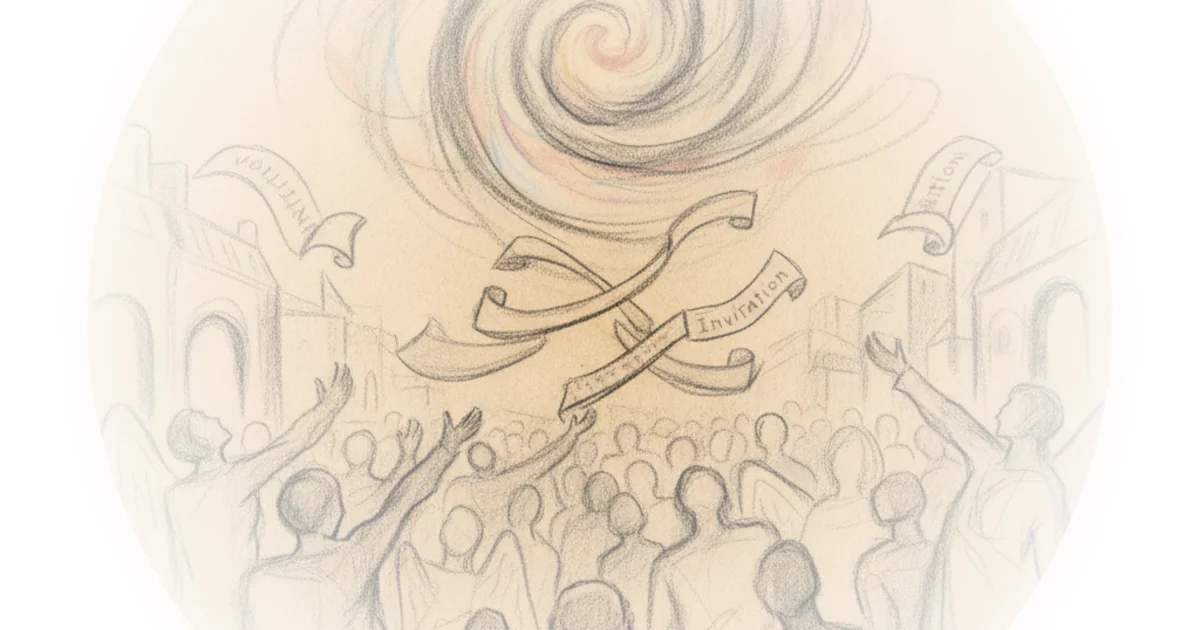
The author draws a sharp parallel between the 1917 Fatima apparition and the ongoing events in Bosnia. He notes that while Fatima had its moment, "Fifty years ago, the Virgin Mary appeared to six children in Medjugorje, Bosnia... she continues to come." This continuity is what makes the site unique compared to other historical claims. Alexander's investigation into the history of these visions reveals a pattern where the phenomenon persists regardless of political upheaval or skepticism.
"People take vacations to the Bahamas for the beaches, when they could go instead to Medjugorje and see the natural law of the universe get violated in real time? Seems crazy!"
This rhetorical question highlights the sheer absurdity of the claim from a secular perspective, yet Alexander treats it with rigorous curiosity. He doesn't dismiss the possibility; he tests it by going to the source. The historical context here is deepened by the fact that similar sun miracles were reported at least ten times in history, often linked to Marian apparitions but occasionally appearing elsewhere, such as at a Buddhist temple. This suggests the phenomenon is not tied exclusively to one cultural narrative, a point Alexander leverages to strengthen his inquiry.
The Human Cost of Faith Under Fire
The narrative takes a darker turn as Alexander details the intersection of divine claims and state power during the collapse of Yugoslav communism. He describes how authorities, viewing the movement as a threat, moved from blocking roads to psychological warfare against the visionaries. "'Confess your deception immediately, or we'll lock us up and throw away the key!' the bad cop would say."
The author focuses heavily on Mirjana, one of the original six children, whose life became a case study in endurance. Alexander recounts how the state attempted to break her spirit by expelling her from school and forcing her family into a "sham divorce" to starve them out. "The Communists never did figure out why she wasn't starving, and failed to come up with any more schemes to force her compliance."
This section is particularly compelling because it centers the human cost of institutional repression without reducing the religious aspect to mere political maneuvering. The visionaries weren't just pawns; they were children subjected to interrogations and mental hospitalization. Alexander notes that despite this, "the revival continued apace without any clergy," suggesting a resilience that transcended organizational structures.
Critics might argue that focusing on the "miraculous" aspects of these events risks validating state propaganda or ignoring the complex socio-political drivers of religious fervor in post-communist societies. However, Alexander balances this by showing how the movement eventually became a revenue generator for the very regime that tried to crush it, illustrating the unpredictable nature of mass belief.
"If you can't beat 'em, join 'em. Eventually the Communists decided that the role of Medjugorje in the global revolution was as a revenue-generating tourist trap, and they relaxed restrictions on the site."
The Modern Pilgrimage: Disneyland or Divine?
Upon arriving in Medjugorje today, Alexander's tone shifts from historical analysis to observational satire. He finds not a sleepy village of pure-hearted peasants, but "a giant Virgin-Mary-themed Disneyland, 90% souvenir shops by weight." This contrast serves his central investigation: if the miracle is real, why does it feel so commercialized?
He attempts to gather data through direct interviews, a process he describes with painful honesty. "People hate being accosted by someone with a notebook asking if they have a few minutes to answer some questions. Bosnians hate it even more than the ordinary cross-cultural background of hating this." This admission of failure is refreshing; it grounds the piece in the reality of fieldwork rather than a polished narrative of discovery.
The data he does collect is mixed but intriguing. He finds a shopkeeper who witnessed a physical healing—a disabled woman walking down crutches—but never saw the sun miracle. Conversely, pilgrims report visions that locals do not. Alexander hypothesizes that if the sun spinning were a hallucination triggered by religious enthusiasm, frequent visitors (shopkeepers) should see it more often than tourists. The fact that long-term residents rarely report seeing the sun, while some short-term visitors do, challenges the "mass hysteria" theory.
"If you're squeezed for information, that's when you've got to play it dumb."
This line captures Alexander's methodological pivot: acknowledging that the most profound truths might be inaccessible through standard journalistic inquiry. He notes that even skeptics sometimes report seeing the phenomenon, writing, "Certainly this is true of those whose hearts are pure. But even the atheists get lucky sometimes." This detail undermines the idea that the experience is purely a product of belief, suggesting an external trigger that operates independently of faith.
Bottom Line
Alexander's piece succeeds because it refuses to settle for easy answers, treating the "spinning sun" not as a religious dogma but as a unique data point in human history that demands explanation. The strongest part of his argument is the statistical anomaly he identifies: no other unexplained phenomenon consistently manifests before thousands of witnesses simultaneously. However, the piece's biggest vulnerability lies in its inability to definitively rule out subtle psychological contagion or environmental factors that might explain the shared visual experience without invoking the supernatural. Readers should watch for future attempts by scientists to measure atmospheric conditions at these sites during reported events, as that could finally bridge the gap between faith and physics.