Caroline Chambers does not offer a sanitized, sentimental ode to motherhood; instead, she delivers a raw, unvarnished eulogy for a biological process that was equal parts profound connection and physical ordeal. In a cultural landscape often obsessed with the "perfect" feeding journey, Chambers boldly reframes breastfeeding as a complex negotiation of pain, utility, and escape, arguing that its value lies not in moral superiority but in the specific, chaotic intimacy it forced upon her.
The Cost of Intimacy
Chambers immediately dismantles the expectation of glorification, grounding her argument in the visceral reality of the physical toll. She writes, "Breastfeeding: You made my boobs resemble empty wind socks, you made me question every single food or drink I had consumed in a 48-hour period whenever my baby wiggled slightly too much in his sleep." This blunt inventory of discomfort serves as a necessary counterweight to the often-idealized imagery of motherhood. By quantifying the experience—citing "roughly 2,400 hours, aka 99 entire days" of her life consumed—she transforms abstract maternal devotion into a tangible metric of sacrifice. This framing is effective because it validates the exhaustion that many parents feel but rarely articulate, suggesting that the "good" moments are inextricably linked to the "bad" ones.
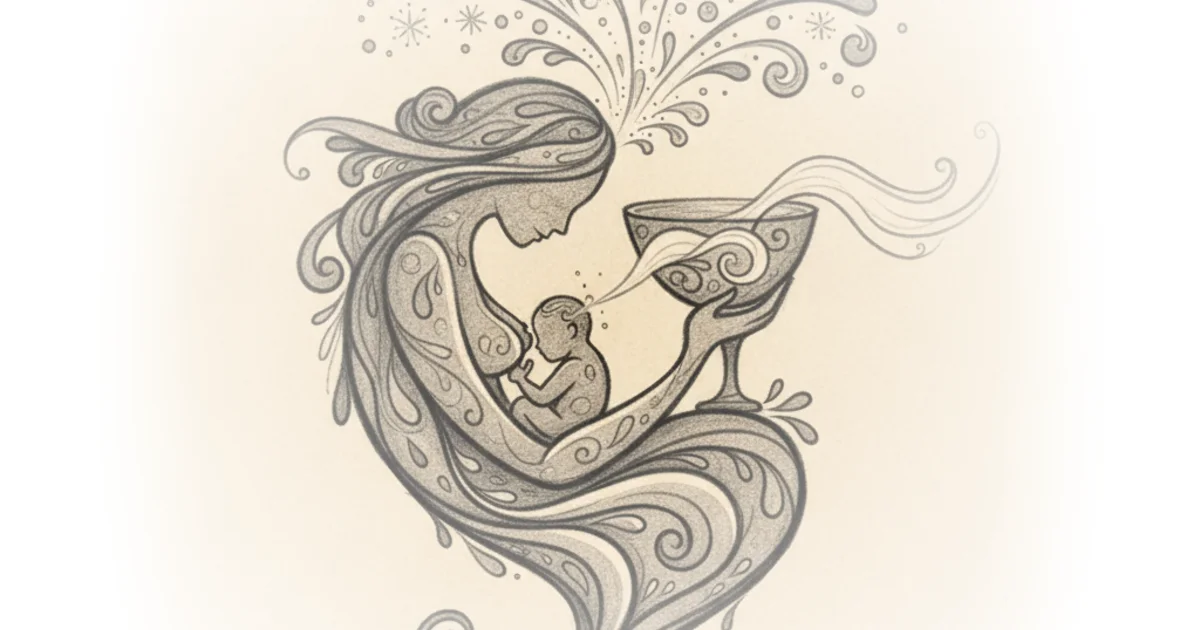
The author's honesty extends to the physiological and emotional volatility of the process. She notes, "I have loved you, I have hated you, and I have felt pretty whatever about you, sometimes all in the same minute." This admission of ambivalence is crucial; it acknowledges that the hormonal surges associated with lactation, such as the oxytocin spikes that can feel like "drugs," do not guarantee a constant state of bliss. In fact, the biological imperative can sometimes clash with the mother's mental state, a phenomenon clinically recognized as dysphoric milk ejection reflex, where the very act of feeding triggers anxiety or dread rather than calm. Chambers captures this duality perfectly, noting how the body's "super power" to instantly calm a baby coexisted with the feeling of being "pinned under a sleeping child, oscillating between feeling trapped and feeling like I was exactly where I was meant to be."
To the thousands of hours of anxiety, joy, pain, and overwhelming contentment.
The Architecture of Escape
Beyond the physical sensations, Chambers identifies a more subtle, perhaps unexpected benefit: the utility of breastfeeding as a social and psychological "escape hatch." She describes how the necessity of feeding "allowed me to spend precious hours alone with my tiny, perfect babies, to escape countless boring conversations, to get out of so many tedious obligations, and to hide in dark rooms at parties." This is a pragmatic observation that reframes the act from a purely nurturing duty to a strategic tool for managing a busy life. It suggests that the "quiet pockets of time" created by the biological need to feed provided a rare sanctuary in a loud, demanding world.
However, this sanctuary was not without its absurdities. Chambers details the chaotic reality of multitasking, from "flipping the pages of so many books with my chin because I didn't have any free hands" to "kissing toddler boo boos" while feeding an infant. The narrative acknowledges that the "peaceful time" often devolved into a high-wire act of survival. Critics might argue that this focus on the logistical burdens risks overshadowing the biological benefits of breastfeeding, such as the immune protection it offers. Yet, Chambers preempts this by explicitly stating, "Any way you feed your baby is absolutely perfect," ensuring her critique of the experience does not become a critique of the choice.
The historical context of this struggle is often overlooked in modern discourse. While Chambers focuses on her personal timeline, the sheer duration of her commitment—three years and three months across four children—echoes the historical norm where lactation was a primary method of birth control, a concept known as lactational amenorrhea. For centuries, this biological mechanism dictated family spacing, yet modern mothers often face pressure to extend this timeline for reasons of bonding rather than necessity. Chambers' "toast" feels like a closing of a chapter that was once a lifetime sentence, marking a shift from a biological imperative to a chosen, finite period of connection.
The End of an Era
As the piece moves toward its conclusion, the tone shifts from the chaotic middle years to a sense of finality and gratitude. Chambers lists the specific rituals she will miss: "To the 1 a.m. feeds... when the whole house was silent except for the rhythmic, baby-piglet snorts and gulps." She celebrates the "milk drunk faces" and the "sugariness" of the milk, acknowledging the sensory details that will soon fade. The farewell is not just to the act, but to the specific version of herself that existed during those years. "No more nursing bras. No more leaky boobs. No more pumping!" she declares, marking the transition to a new phase of life where her body is no longer defined by this singular function.
The commentary concludes with a nod to the broader cultural conversation, noting that while the physical chapter is closed, the emotional imprint remains. "Thank you for allowing me to feed another human with my body, how cool," she writes, a simple statement that carries the weight of the preceding pages. It is a reminder that the value of the experience lies not in the duration or the method, but in the unique, unrepeatable moments of connection that occurred within the "mama's nest."
Bottom Line
Caroline Chambers' essay succeeds by refusing to romanticize the reality of breastfeeding, offering instead a nuanced portrait that honors both the profound joy and the grueling exhaustion of the experience. Its greatest strength is the unflinching honesty regarding the ambivalence mothers feel, a perspective that resonates deeply in a culture that often demands perfection. The piece's only vulnerability is its reliance on a specific, privileged context of a busy professional mother, which may not fully capture the struggles of those for whom breastfeeding is a matter of survival rather than a "wild few weeks of travel."