In a week defined by heavy snowfall, David Smith delivers a roundup that cuts through the weather to expose the chilling reality of hybrid warfare, financial evasion, and political decay in Moldova. This is not merely a news digest; it is a forensic mapping of how external aggression and internal corruption converge to threaten a small nation's sovereignty, offering evidence that the battlefield has shifted from trenches to algorithms and private hangars.
The Diplomatic Shift and the Shadow of Hybrid Threats
Smith frames the 2026 Munich Security Conference not as a moment of shock, but as a grim normalization of a new geopolitical order. He notes that the event was "far less shocking to participants" than the previous year, a shift he attributes to the "shock of the recent Greenland Crisis" being internalized by European leaders. This observation is crucial: it suggests that the administration's aggressive posturing has moved from a novelty to an accepted, if unsettling, baseline of international relations.
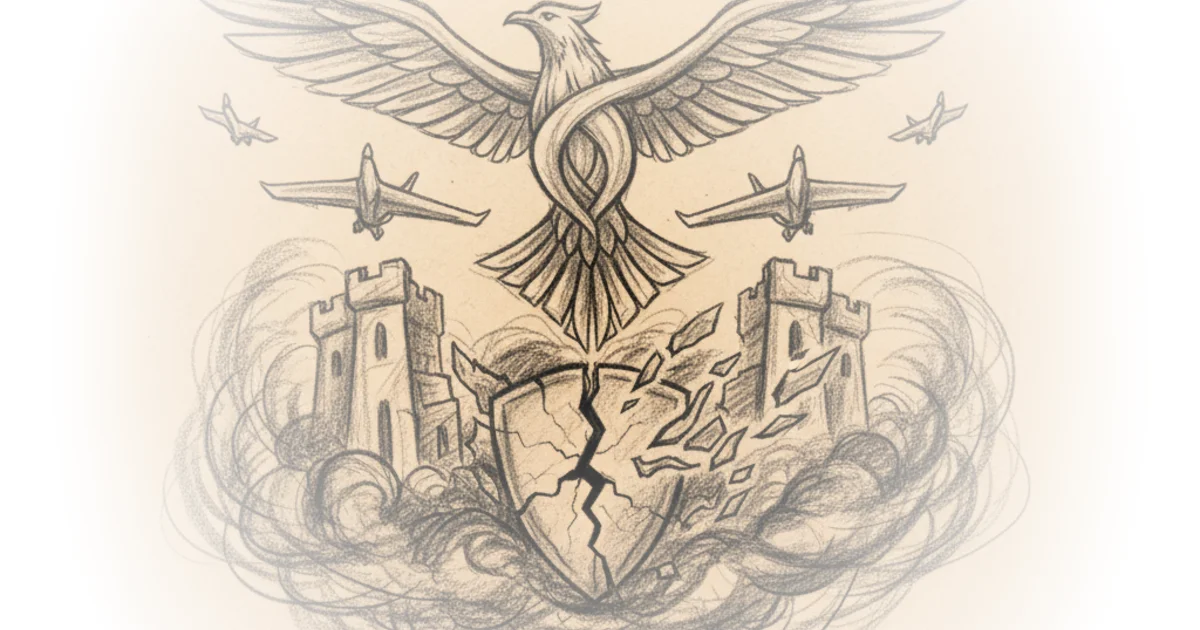
President Maia Sandu's intervention at the conference highlights the specific nature of this new threat. Smith quotes her warning that "hybrid attacks affect all countries now - big and small," but it is her focus on the digital realm that carries the most weight. She identifies "cognitive warfare" as the most dangerous threat to democracies, arguing that social media platforms hold unchecked power over public opinion. As Smith reports, Sandu told the press: "The Republic of Moldova is too small a country to be able to impose rules on platforms. And platforms must have a degree of responsibility, because they decide which algorithms they use. These algorithms bring information to our screen thousands of times to form an opinion. But that is not freedom of expression."
This framing is effective because it moves the debate from state-sponsored hacking to the structural vulnerability of democratic discourse itself. The author captures the nuance of Sandu's bilateral meetings, particularly her gratitude to the United States for energy support, while also noting the administration's contradictory outreach to Hungary, where Secretary of State Marco Rubio spoke of a "golden era of relations" with Viktor Orban. Smith's inclusion of the Congressional Delegation's visit adds a layer of complexity; while the senators praised Moldova's "commitment to democracy," they also downplayed the absence of a US Ambassador, with Senator Chris Coons stating, "We lack ambassadors in many countries." This creates a tension between the rhetorical support for Moldova and the bureaucratic reality of its diplomatic isolation.
These algorithms bring information to our screen thousands of times to form an opinion. But that is not freedom of expression.
Critics might argue that focusing on platform algorithms distracts from the more immediate, kinetic threats posed by state actors, but Smith's integration of the Greenland crisis context suggests that the psychological dimension of these conflicts is now inseparable from the physical.
The Aviation Network of Sanction Evasion
Perhaps the most startling revelation in Smith's coverage is the detailed investigation by RISE Moldova into Ilan Shor's private aviation fleet. The evidence presented is not just about luxury; it is a blueprint for how sanctioned oligarchs maintain global mobility and political influence. Smith details how Shor, starting in Spring 2024, began acquiring a fleet including Gulfstream jets and an AgustaWestland helicopter, using a complex loan structure with a Turkish rental company to evade sanctions.
The scale of this operation is staggering. Smith writes that the planes were tracked flying to Moscow, Ankara, and Tel Aviv, but the most egregious detail involves the use of state symbols for private gain: "Intriguingly, for many of these flights the planes were painted with the official name and symbols of the Kyrgyz Republic and used to ferry the President of Kyrgyzstan Sadyr Japarov to official visits." This blurring of state and private interests underscores the fragility of international norms when powerful individuals operate with impunity.
The financial trail is equally damning. Smith reports on data leaks from Russia's sanctioned PSB bank, revealing that Shor's lieutenant, Marina Tauber, held over $500,000 in cash equivalents, earning a "healthy yearly return" on a 21% interest rate. This is not merely corruption; it is a sophisticated financial infrastructure designed to outlast legal judgments. The author notes that Tauber fled ahead of a 7-year prison sentence, yet her assets continue to grow, protected by the very sanctions regime meant to dismantle her network.
The Kuliok Case and the Architecture of Federalization
The coverage of the "Kuliok" (bag) trial offers a rare glimpse into the clandestine mechanics of Moldovan politics, specifically the 2019 coalition negotiations between Vladimir Plahotniuc and Igor Dodon. Smith's reporting on the secretly recorded video is chilling in its specificity. The video reveals a negotiation where Plahotniuc passes a bag to Dodon, with the implication of a massive bribe, and discusses a "Secret Agreement" to be signed at the Russian Embassy.
The core of this agreement, as Smith paraphrases the video's content, involved the "Federalization" of Moldova, a term the participants softened to "special status." This directly echoes the Kozak Memorandum, a historical reference to the 2003 Russian-backed plan that would have effectively frozen the Transnistria conflict and given the breakaway region veto power over Moldovan foreign policy. Smith quotes Dodon's chilling admission: "The word federalization is a problem for us too. I explained it to Putin and Putin agreed." The implication is clear: the political survival of these figures was contingent on selling out the country's territorial integrity to Moscow.
Furthermore, the discussion on party financing reveals the depth of foreign influence. Dodon insists that changing political terms requires him to "consult with Moscow," and Plahotniuc seeks assurances that criminal cases against him in Russia would be dropped. This is not just a domestic scandal; it is evidence of a foreign power's direct hand in shaping Moldova's governing coalition. The author notes that Plahotniuc's refusal to testify is a legal maneuver, but the video evidence speaks volumes about the transactional nature of power in the region.
The Human Cost of Disinformation and Violence
Smith does not shy away from the human toll of these political machinations. The report on the Beriozchi serial killer investigation serves as a grim reminder of the violence festering beneath the political surface. The police are processing a "sprawling pig farm" linked to crimes from 2005 to 2018, with the Chief of Police warning that the investigation will "undoubtedly further shock society." This is not abstract; it is the reality of unresolved trauma and the failure of the justice system to protect its citizens.
Similarly, the conflict over the Dereneu Church illustrates how religious institutions are weaponized in the information war. Smith describes how the dispute has been amplified by Russian disinformation networks, with claims of a "Ukrainian scenario" being spread to justify mob violence. The involvement of "organized outside agitators" and the intervention of police to prevent the forcible removal of a priest highlight the volatility of the situation. As Smith notes, Russian Foreign Ministry spokesperson Maria Zakharova has framed this as an "attack on Orthodoxy," turning a local property dispute into a geopolitical flashpoint.
The political corruption extends to the highest levels of the legislature, with Smith reporting that PPDA MPs stole a car from a police impound lot, only to have it returned hours later. The leader of the party praised their "courage," a statement that Smith presents with a tone of incredulity, highlighting the normalization of lawlessness within the political class.
The word federalization is a problem for us too. I explained it to Putin and Putin agreed.
Bottom Line
David Smith's coverage succeeds by weaving together disparate threads of diplomacy, finance, and crime into a cohesive narrative of a nation under siege from both within and without. The strongest element of his argument is the exposure of the "Kuliok" video, which provides irrefutable evidence of the transactional nature of Moldovan politics and the direct influence of Moscow on domestic coalition building. However, the piece's vulnerability lies in its reliance on the assumption that the international community will act on this evidence; the continued presence of Shor's fleet and the lack of an ambassador suggest that the geopolitical inertia is strong. Readers should watch for the outcome of the high-speed rail feasibility study and the resolution of the church conflict, as these will serve as early indicators of whether Moldova can successfully pivot toward European integration or remain trapped in a cycle of hybrid warfare and internal decay.