In a landscape often dominated by cynical takes on sports as mere entertainment or political battlegrounds, this piece from Reason offers a surprisingly optimistic, data-driven thesis: human history's greatest athletic feats are not just biological miracles, but the direct products of market competition and technological innovation. It reframes the breaking of the two-hour marathon barrier not as a solitary triumph of will, but as the culmination of decades of corporate R&D, turning a record-breaking run into a case study for how capitalism accelerates human potential.
The Engine of Innovation
The article opens with a bold claim that challenges the romantic notion of the lone athlete. "Sawe's name will go down in history for being the first person to run an official marathon in under two hours, as well it should—but he owes gratitude to humanity and capitalism for helping him get there," the editors argue. This framing is crucial because it shifts the narrative from individual grit to systemic progress. The piece details how Sabastian Sawe and Yomif Kejelcha, who finished just 11 seconds behind him, relied on equipment that simply did not exist a decade ago. The technology in question is the "super shoe," a piece of footwear containing carbon fiber plates and super-light foam that has revolutionized running times.
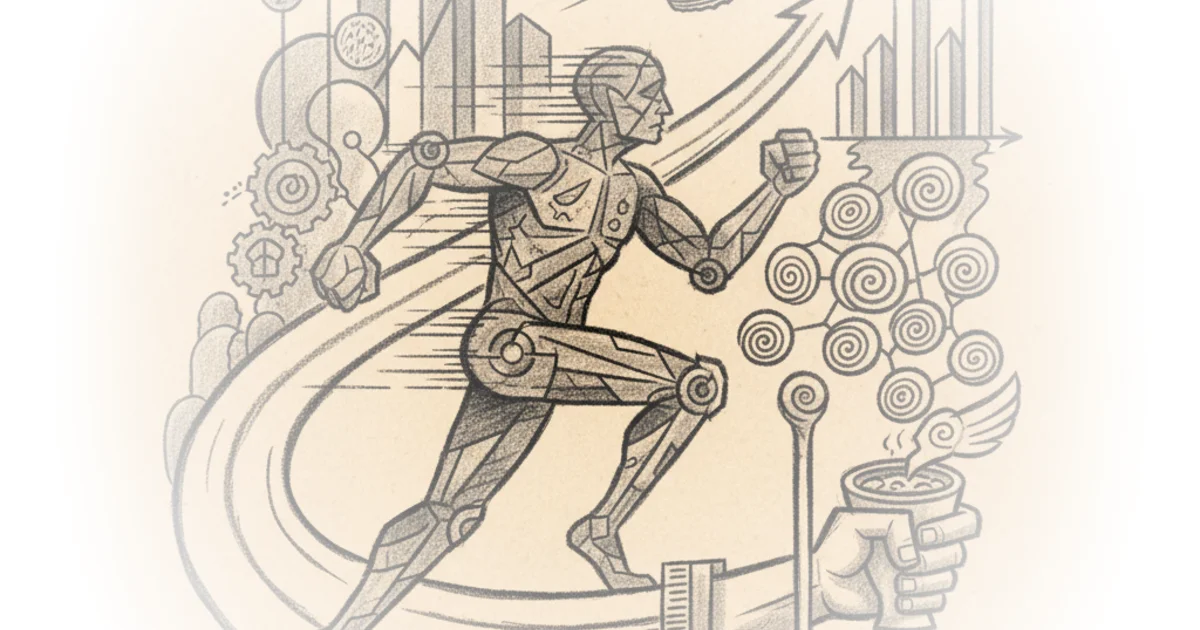
The coverage highlights the intense, profit-driven competition between giants like Nike and Adidas that made this possible. "Adidas wasn't trying to make the fastest running shoe just for the thrill of it—it wants to make money, of course," the text notes, pointing out that the very shoes Sawe wore, the Adidas Adizero Adios Pro Evo 3, weigh less than a McDonald's quarter-pounder. This is a compelling argument because it acknowledges the messy, commercial reality behind the pristine image of the marathon. The drive for market share forced companies to "measure things down to the nearest nanogram," as an Adidas manager quoted in the piece explained. This relentless pursuit of efficiency, born of profit motives, trickled down to create the conditions for a sub-two-hour finish.
"Sawe is awfully lucky that his running abilities are peaking at a time when decades of scientific advancement have made a sub-2-hour marathon possible."
Critics might argue that this view overstates the role of equipment and understates the sheer physiological genius of the runners themselves. After all, the shoes did not run the race; the athletes did. However, the piece effectively counters this by noting that the "detailed planning that went into this fueling plan" and the data from wearables tracking lactate thresholds and sleep hygiene are equally products of a commercial ecosystem. Just as the Ineos 1:59 Challenge in 2019 proved the feat was possible under controlled conditions, today's achievement in a regulation race shows how those innovations have become standardized tools for the elite.
The Subsidy Swindle
The commentary then pivots sharply from the free-market success of running to the government failure in horse racing and stadium financing. Here, the tone shifts from celebratory to critical, exposing a hypocrisy in political rhetoric. The piece notes that "Horse racing must be one of the most subsidized sports in the country," pointing out the absurdity of state governments owning and operating racetracks. In Maryland, the state now owns Pimlico, the home of the Preakness Stakes, and is purchasing Laurel Park to keep the sport afloat. This stands in stark contrast to the private ownership model that fueled the running shoe boom.
The argument extends to the broader issue of stadium subsidies, where the piece observes that "Republican politicians love to talk a good fiscal conservatism game, but they've been quick to throw out their penny-pinching playbooks when pro sports team owners come calling." The editors cite specific examples, such as Indiana preparing to spend up to $1 billion to lure the Chicago Bears, funded by tax hikes. This creates a jarring disconnect between the ideology of limited government and the reality of corporate welfare. The piece asks a pointed question: "Is any sports franchise less deserving?" regarding the Cleveland Browns, highlighting the emotional toll on taxpayers who fund these projects.
"The obvious solution here is also the simplest: Just stop. Let the sport stand on its own and dwindle to whatever size its fan base supports."
While the argument against subsidies is logically sound and aligns with free-market principles, a counterargument worth considering is the economic multiplier effect that proponents of stadium deals often cite. They argue that these venues generate tourism and local spending that offsets the initial public cost. The piece dismisses this by noting that cost estimates often balloon and that the funds are diverted from other essential services, but it does not fully engage with the complex urban planning debates surrounding these projects. Nevertheless, the contrast between the self-sustaining, competitive market of professional running and the state-dependent model of horse racing is a powerful rhetorical device.
The Doom Spiral of Spectacle
Finally, the coverage turns to the media landscape of professional golf, specifically the Netflix docuseries Full Swing. The editors express concern that the show is entering a "doom spiral," where fewer viewers lead to less access, which in turn leads to fewer viewers. The fourth season is criticized for being too short and for over-indexing on the Ryder Cup, a team event that doesn't always resonate with casual fans. The piece suggests that the show may be failing to replicate the success of Drive to Survive, which transformed Formula 1 into a global phenomenon.
"If it gets fewer and fewer viewers, then fewer and fewer golfers will believe it's worthwhile to give privacy-invading access to Netflix's cameras," the editors warn. This creates a vicious cycle that threatens the show's existence. The commentary notes that while golf is on the rise, a show with viewership falling to about 4 million people is likely not the driver of that growth. The editors even suggest that viewers might be better off watching Rooster, a different show, rather than the current iteration of Full Swing. This section serves as a cautionary tale about the fragility of media narratives when they fail to adapt to audience interests, contrasting sharply with the robust, evolving nature of the running market discussed earlier.
Bottom Line
The strongest part of this argument is its ability to link the breaking of a 200-year-old athletic barrier directly to the competitive pressures of the free market, offering a refreshing counter-narrative to the idea that progress requires government intervention. Its biggest vulnerability lies in the somewhat binary treatment of subsidies; while the horse racing example is damning, the stadium debate is more nuanced than the piece allows. Readers should watch for how the running shoe market evolves next, as the line between performance enhancement and competitive advantage continues to blur.
"Sawe's name will go down in history for being the first person to run an official marathon in under two hours, as well it should—but he owes gratitude to humanity and capitalism for helping him get there."
Ultimately, this piece succeeds in reminding us that the most spectacular human achievements are often the byproducts of a system designed for profit, not just a system designed for glory.