A Coalition Under Strain
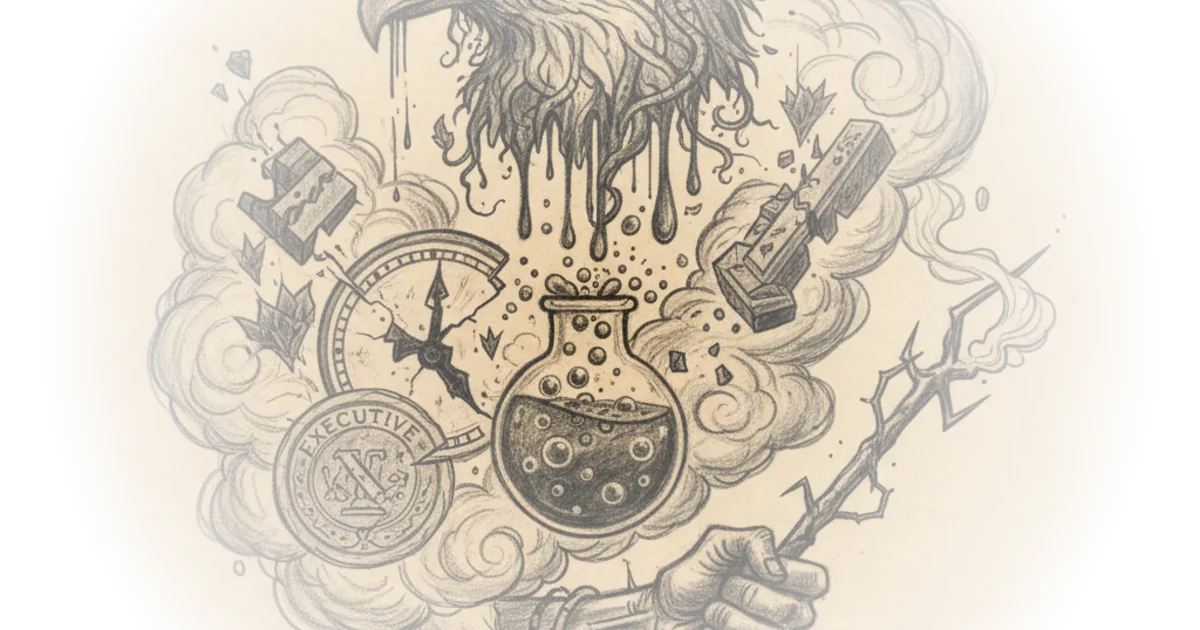
The Make America Healthy Again movement was supposed to be the connective tissue binding wellness-minded swing voters to the Trump coalition. Health-conscious influencers, skeptical-of-industry moms, and Robert F. Kennedy Jr. devotees all climbed aboard with the understanding that this administration would take on Big Ag and Big Pharma. Then Donald Trump signed an executive order invoking the Defense Production Act to boost production of glyphosate, the most widely used herbicide in American history, and the coalition began to fracture in public.
The Bulwark's Jonathan Cohn chronicles this unraveling with precision, documenting the whiplash that MAHA supporters experienced over the course of a single week in February 2026. The sequence matters: first the White House overruled the FDA's refusal to review Moderna's flu shot application, enraging the anti-vaccine wing. Hours later came the glyphosate order, enraging the anti-pesticide wing. It was a one-two punch that left almost no faction of MAHA feeling heard.
The Pesticide Paradox
Kennedy himself had once vowed to ban glyphosate outright. As an environmental lawyer, he represented a groundskeeper with cancer who won a $289 million judgment against Monsanto. Yet when the executive order dropped, Kennedy issued a statement supporting it. The gap between campaign rhetoric and governing reality could not have been wider.
"Secretary Kennedy has done everything he said he's going to do. He has upheld his commitment to the American people. Now, whether his boss is doing that is another story."
That assessment from Vani Hari, the prominent "Food Babe" influencer, captures a clever bit of blame-shifting. Kennedy's allies are trying to preserve his credibility by painting him as a hostage of White House priorities rather than a willing participant. Whether that framing survives scrutiny is another matter. Kennedy's silence on the rollback of mercury emission limits, a cause he spent much of his pre-government career championing, suggests something more than quiet disagreement.
The Influencer Threat
The political potency of MAHA was never really about policy papers or legislative proposals. It was about narrative control through a network of trusted voices who had built followings precisely by telling their audiences not to trust official institutions.
"These influencers are really able to drive a narrative."
Marissa Padilla of Global Strategies Group makes the point plainly. The MAHA movement's power lies in its storytellers, not its policy apparatus. When those storytellers turn against the administration, the effect is not like losing a think tank's endorsement. It is like losing a megaphone that speaks directly into the ears of persuadable voters who already distrust mainstream sources.
"If the Moderna mRNA flu shot is approved, the medical freedom movement will abandon the Republican Party in the midterm elections. That's not a threat, that's a promise."
Toby Rogers of the Brownstone Institute addressed that warning directly to White House Chief of Staff Susie Wiles. The timing was notable. He posted it on Wednesday afternoon. The glyphosate order came three hours later, as though the White House had anticipated the backlash and decided to rip off both bandages at once.
Where Popularity Ends
One of the more revealing details in Cohn's piece is the polling data from Trump's own pollster, Tony Fabrizio. His firm found that the broadly popular parts of MAHA, the eat-better and exercise-more messaging, are a political asset. The vaccine skepticism is not.
"While the MAHA agenda is broadly popular in the area [of] food and agriculture, vaccine skepticism stands as an outlier, rejected by most voters even within the MAHA movement."
This is a fundamental strategic problem. The influencers who are most passionate, most online, and most willing to threaten electoral consequences are concentrated in the vaccine-skeptic wing, the very wing that repels the broader electorate. The administration cannot satisfy them without alienating everyone else.
"The food and pesticide piece is the most compelling part of the MAHA narrative -- that is what appeals to the vast majority of folks, even across some political lines. Where it gets more split and divided is on the vaccine front. . . . That's where we've seen some of the MAHA movement lose credibility."
Padilla's analysis from the Democratic side lines up almost exactly with Fabrizio's from the Republican side. When strategists from opposing parties reach the same conclusion, it is usually worth paying attention to.
The Populism Gap
The deeper tension Cohn identifies is between Trump's populist branding and his governing record. The MAHA movement gave that branding its most emotionally resonant vehicle: mothers worried about what their children eat, families skeptical of corporate motives, communities suspicious of regulatory capture. But the administration's actual policy choices, backing Bayer's effort to limit Roundup liability, rolling back mercury emission standards, dismantling consumer protection agencies, tell a different story.
"Have we ever lost the midterms this early or is this a new record?"
Alex Clark's rhetorical question captures the mood among MAHA-adjacent conservatives. It is hyperbolic, of course. Midterm elections are not won or lost in February. But the underlying anxiety is real. A coalition built on promises of health freedom is watching those promises dissolve into executive orders that protect the very industries it was organized to fight.
A Counterpoint Worth Noting
It is possible to read this episode more charitably for the administration. Glyphosate is embedded so deeply in American agriculture that abruptly restricting it could create genuine food supply disruptions. Kennedy himself acknowledged the need for an "off-ramp." And the FDA reversal on Moderna's flu shot could be seen as the White House course-correcting away from its most extreme anti-vaccine posture rather than capitulating to pharma. These are not unreasonable positions, even if the execution was politically clumsy.
The question is whether MAHA's leaders and followers are capable of accepting incremental progress on some fronts while absorbing defeats on others. Movements built on purity and distrust of compromise tend to have a hard time with that kind of calculation.
"Absolutely disgusting and shameful."
That was one of the milder reactions from MAHA influencers to the glyphosate order. The language does not sound like a movement preparing to accept half-measures.
Bottom Line
The MAHA meltdown is a case study in what happens when a populist coalition meets the compromises of actual governance. The movement's value to Trump was always as a narrative engine, a way to make corporate deregulation look like a crusade for family health. That engine runs on trust, and the fuel is running low. Whether the resulting anger translates into midterm consequences or simply dissipates into the next news cycle depends on whether MAHA influencers stay mad long enough to matter. Given the speed at which outrage cycles move, the White House may be betting they will not. It is a risky wager. Movements that were organized around distrust do not easily forgive the feeling of being played.