Freddie deBoer delivers a stinging indictment not of the NFL's players or coaches, but of the very media ecosystem that claims to have evolved beyond them. While the industry prides itself on a revolution driven by data and skepticism, deBoer argues that the new guard has simply swapped old-school intuition for a more sophisticated, yet equally reckless, form of hype. This is a crucial intervention for anyone tired of the weekly cycle of premature coronations and unearned condemnations that define modern sports coverage.
The Analytics Paradox
The core of deBoer's argument is that the "analytics revolution" has failed to deliver on its promise of rationality. He notes that while front offices have genuinely embraced statistical clarity, the media has not. "The analytics revolution promised to graft rationality and context onto our game-day commentary, but when it comes to the most common and pernicious trend in NFL analysis - overreacting to small samples and short runs of good or bad performance - nothing has really changed." This observation cuts deep because it exposes a hypocrisy that fans are increasingly aware of but rarely see articulated so plainly.
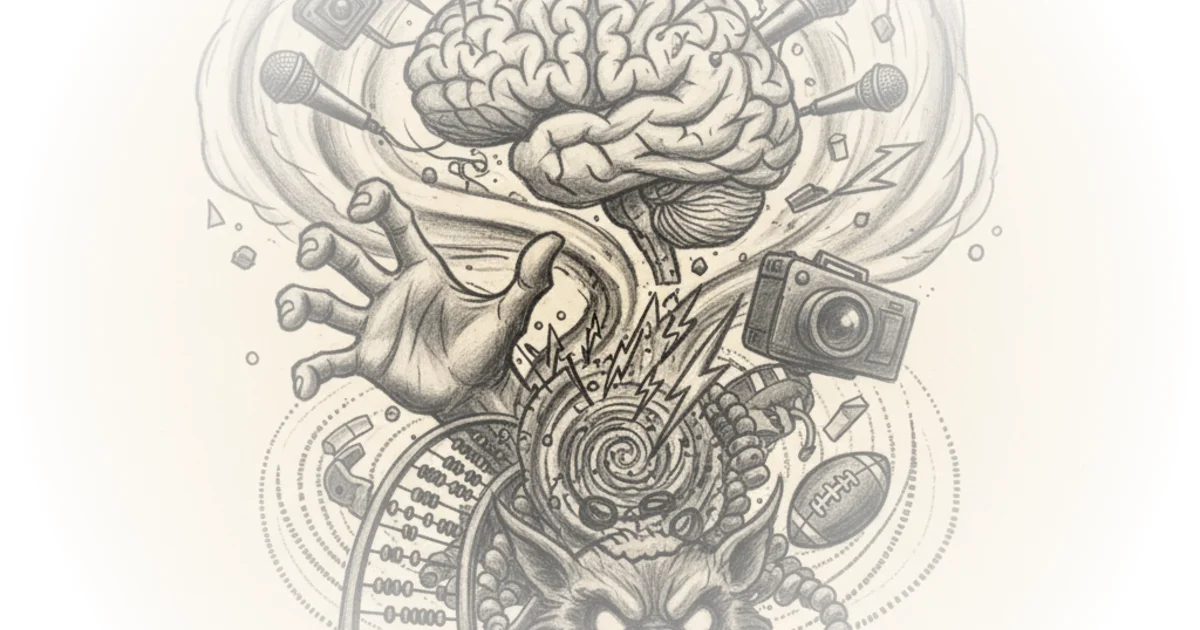
DeBoer points out that the media treats football as if it were baseball, ignoring the fundamental structural differences between the sports. He cites a 2018 Ringer article that correctly noted, "football will likely never be baseball, where statistics can basically explain anything... there are too few games and too many variables." This is a vital distinction. In sabermetrics, the sheer volume of plate appearances allows for a clearer signal-to-noise ratio. In football, where a single play can be negated by a penalty or a bad bounce, the variance is inherent. Yet, as deBoer writes, "You'd think that message would temper the beat writers. Instead, it seems the analytics evangelists and talking heads don't trust their own analytic philosophy."
The result is a media landscape where the "small sample size" warning is used as a rhetorical shield rather than a methodological tool. Analysts will scold fans for overreacting to a single game, only to immediately construct a season-long narrative based on that same single game. As deBoer puts it, "They invoke 'small sample size' as a scolding cliché if you dare overreact, but shamelessly turn right around and do it themselves." This behavior isn't just annoying; it actively degrades the quality of discourse, turning complex athletic performance into a series of viral, fleeting headlines.
They invoke "small sample size" as a scolding cliché if you dare overreact, but shamelessly turn right around and do it themselves.
Critics might argue that media professionals are simply reflecting audience demand; if fans want hot takes, pundits will provide them. However, deBoer suggests that the media is not a passive mirror but an active amplifier, conditioning the audience to accept noise as signal. The problem is systemic, driven by the 24/7 news cycle that demands constant content regardless of its evidentiary value.
The Quarterback Coronation Machine
Nowhere is this failure of judgment more evident than in the treatment of quarterbacks. DeBoer dissects the specific case of rookie Jaxson Dart, who was recently compared to Patrick Mahomes by analyst Steve Palazzolo based on five career starts. DeBoer dismantles this comparison with surgical precision, noting that while Dart may have moments of brilliance, the data simply isn't there. "Jaxson Dart, he of the five career starts, 142 pass attempts, and 43 carries does not have anything like the volume to establish that he's even a decent scrambler, let alone a very good one." This is a perfect example of the "sample size" fallacy in action: taking a tiny, potentially anomalous data point and treating it as a definitive trend.
The article then pivots to the broader pattern of anointing young quarterbacks as future Hall of Famers after a handful of games. DeBoer highlights the case of Jayden Daniels, whose sack rate was dismissed by analyst Sam Monson as a non-issue, only for Daniels to suffer significant injuries and sack totals shortly after. "Yes, but it was also the biggest concern with Jayden Daniels, and 10 months later nobody cares," Monson had tweeted, a sentiment deBoer rightly identifies as short-sighted. The reality, as deBoer notes, is that "Jayden Daniels has already taken sixty (60!) sacks in his brief twenty-two start career and is now regularly dealing with constant minor injuries."
This cycle of hype and bust is not new, but the media's refusal to learn from it is. DeBoer lists a litany of quarterbacks who were once hailed as saviors only to fade or falter: Robert Griffin III, Carson Wentz, CJ Stroud, and even the recent "reclamation projects" like Sam Darnold and Baker Mayfield. The pattern is so consistent that deBoer suggests, "'Which Quarterback Nominated as a Future Perennial MVP Candidate Will Be Marginal in a Year or Two?' could be an annual feature in NFL coverage." The media's collective amnesia is staggering. "Maybe that's why they've gone nuts with 'this QB is the future' every single year," deBoer writes. "Of course, the whole premise of sports media is that you never, ever look back at your old takes, so they're never in the position to have accountability."
The comparison to the "Hot Hand" fallacy is implicit here. Just as basketball analysts once believed a player could get "hot" and make shot after shot, football analysts believe a quarterback can be "anointed" and dominate indefinitely. But as the history of the sport shows, performance is volatile. The media's insistence on finding a narrative, even when the data suggests caution, is a failure of intellectual honesty. As deBoer bluntly states, "I don't understand what life must be like for people this perpetually excitable, bouncing endlessly from one breathless declaration to the next. Is there no room in NFL media, no room at all, for skepticism?"
The Business of Hype
Ultimately, deBoer argues that this behavior is not a bug but a feature of the modern sports media business model. The need to generate clicks and engagement drives analysts to take extreme positions. "This is not, to put it mildly, a new problem," he notes, referencing a 2007 ESPN article that described the league's media as "Overreaction Nation." The problem has only intensified with the rise of social media and the 24-hour news cycle. Even the NFL's own official media, deBoer points out, participates in this charade. "After Week 1 of this season, NFL.com's Kevin Patra rightly noted that opening weekend 'fabricates fictions based on faulty sample sizes and feeds them to the masses as truth.' Yet Patra then proceeded to unpack every one of these new narratives himself."
The irony is palpable. The media tells fans to "season everything with 'two tablespoons of salt'" while simultaneously serving up the most unsalted, hyperbolic takes possible. DeBoer suggests that the only way to break this cycle is for analysts to actually practice what they preach. "I suspect that there's a real big market opportunity for NFL analysts who just refuse to play this game and who insist on slowing damn, speaking soberly and with caution, and serving as NFL skeptics." This is a bold claim, but one that resonates with the growing fatigue among fans who are tired of being gaslit by the very people paid to analyze the game.
I suspect that there's a real big market opportunity for NFL analysts who just refuse to play this game and who insist on slowing damn, speaking soberly and with caution, and serving as NFL skeptics.
The article's strength lies in its refusal to let the "analytics" crowd off the hook. By showing that the new guard is just as prone to hype as the old guard, deBoer undermines the entire premise of the "smart" football media. It's not about being smarter; it's about being more honest about the limitations of the data and the volatility of the sport.
Bottom Line
DeBoer's critique is a necessary correction to the self-congratulatory narrative of the "analytics revolution" in sports media. His strongest point is the exposure of the hypocrisy inherent in a media landscape that preaches skepticism while practicing hyperbole. The biggest vulnerability in his argument is perhaps the assumption that a more sober, skeptical approach would be commercially viable in an attention economy that rewards outrage and certainty. However, the sheer volume of failed predictions he catalogs suggests that the current model is already failing its audience, making the case for change more urgent than ever. "