More Perfect Union uncovers a disturbing reality where the race for artificial intelligence dominance is being fueled by unregulated pollution in a vulnerable community. The author's most striking claim is that a billionaire's data center is operating as an illegal power plant, bypassing federal safety laws while the very agency tasked with enforcement is being dismantled to accommodate it. This is not just an environmental story; it is a case study in how speed and capital can override public health when institutional guardrails are removed.
The Speed of Destruction
The piece opens by challenging the narrative of technological inevitability. More Perfect Union writes, "Sometimes the most shocking corporate misconduct is hidden in plain sight, invisible to the naked eye." The author argues that the project in Memphis, dubbed "Colossus," was not a sudden accident but a calculated strategy to bypass the slow pace of traditional infrastructure development. By deploying 35 mobile gas turbines without permits, the company prioritized speed over legality.
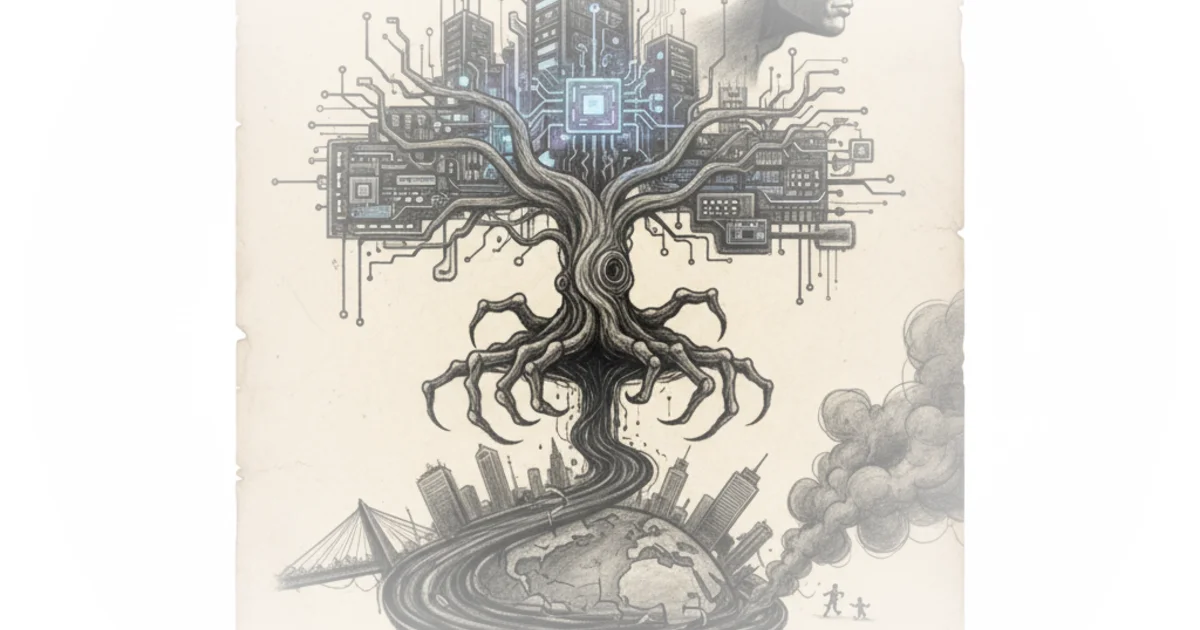
The author highlights the sheer scale of this operation, noting that the facility is burning enough methane to power a small city. This approach reflects a "go fast and break stuff" mentality that treats local regulations as optional. More Perfect Union puts it, "They built a power plant out there and they've done it overnight. No air pollution controls, quick and dirty, no permit." This evidence is compelling because it relies on thermal imaging and on-the-ground testimony rather than corporate press releases, revealing a gap between the company's public claims and their operational reality.
Critics might argue that the urgency of the AI race justifies temporary infrastructure solutions, but the author effectively counters this by showing that the lack of pollution controls is not a temporary glitch but a systemic feature of the project's design. The turbines were not just present; they were actively running, emitting nitrogen oxides and formaldehyde directly into a neighborhood already struggling with respiratory illness.
"For a company to do this, it's treating the people who live there as if they don't count."
The Human Cost of Computation
The commentary shifts powerfully from technical violations to human suffering. The author details how residents in South Memphis, including those with chronic obstructive pulmonary disease (COPD) and asthma, are bearing the brunt of this unregulated energy consumption. More Perfect Union writes, "It feels like you fixing to die." This visceral quote anchors the abstract concept of "emissions" in the terrifying reality of a family unable to breathe.
The author connects these health outcomes to the specific pollutants released by the gas turbines: nitrogen oxides, formaldehyde, and fine particulate matter. These are not harmless byproducts; they are known carcinogens and heart disease triggers. The piece notes that the area around the data center already leads the state in emergency department visits for asthma, suggesting that the new facility is exacerbating an existing crisis. The argument is strengthened by the testimony of residents who describe the smell of gas and the fear of waking up unable to breathe.
The author also points out the disparity in power dynamics. While the company operates with impunity, the local community feels silenced. More Perfect Union writes, "They don't have a problem with selling our land, selling our mom, selling our lives. But yet, here today, they are silent." This framing highlights the inequity of the situation, where the pursuit of global technological dominance is funded by the health of a local, marginalized population.
The Collapse of Oversight
Perhaps the most alarming aspect of the piece is the role of the federal government. The author argues that the Environmental Protection Agency (EPA) has failed to act, not due to incompetence, but due to a deliberate policy shift. More Perfect Union writes, "As Musk helps dismantle the very federal agency that's supposed to protect us against pollution like this." The piece details how the executive branch has slashed the EPA's budget, eliminated offices dedicated to assisting polluted communities, and rolled back air quality standards.
The author connects the dots between the deregulation agenda and the specific situation in Memphis. The new leadership at the EPA has explicitly stated that promoting the AI industry is a core part of their mission, viewing regulations as obstacles to "energy dominance." More Perfect Union puts it, "Making America the world's AI capital means prioritizing a massive expansion of data centers... We can't be suffocating it." This quote reveals a fundamental shift in the agency's purpose: from protector of public health to facilitator of corporate expansion.
Critics might suggest that the EPA's hands are tied by legal constraints or that the data center's contribution to the national economy outweighs local environmental costs. However, the author's evidence of active violations of the Clean Air Act suggests that the agency is choosing not to enforce existing laws rather than being unable to do so. The piece implies that the regulatory framework has been intentionally weakened to allow such projects to proceed unchecked.
"A technocracy to be able to do whatever he wants, whatever he chooses to experiment, to kill, to destroy the environment at the behest of his machines."
Bottom Line
More Perfect Union delivers a damning indictment of a system where corporate speed and political deregulation have combined to endanger public health. The piece's greatest strength is its ability to link the abstract goals of artificial intelligence to the concrete suffering of a specific community, exposing the human cost of unbridled technological expansion. Its vulnerability lies in the fact that the political will to enforce the law appears to have evaporated, leaving residents with few legal avenues for recourse. Readers should watch for how this model of "permitless pollution" spreads as the AI industry continues to expand across the country.