This piece cuts through the political theater to reveal a stark economic reality: the administration has launched a trade war of unprecedented scale, not with a carefully calibrated strategy, but with a chaotic, "shoot first" approach that is already disrupting global supply chains. Joey Politano argues that while the rhetoric focuses on border security, the actual policy moves are a blunt instrument aimed at the entire global economy, with immediate, tangible costs for American consumers and manufacturers. The most alarming detail isn't the threat of future tariffs, but the immediate administrative collapse already visible as customs systems buckle under the weight of sudden, unprepared policy shifts.
The Architecture of Chaos
Politano's central thesis is that this administration is operating with a level of impulsivity that distinguishes it from even the turbulent trade policies of the past. He notes that the executive branch signed the largest tariff hike in a generation—a 25% universal tax on Canada and Mexico, plus a 10% levy on China—before the ink was even dry on the orders. "No exemptions of any kind were made—not even for specialty agricultural goods or raw minerals found only in the targeted countries," Politano writes, highlighting the sheer breadth of the initial assault. This lack of nuance suggests a strategy driven by maximum pressure rather than negotiation leverage.
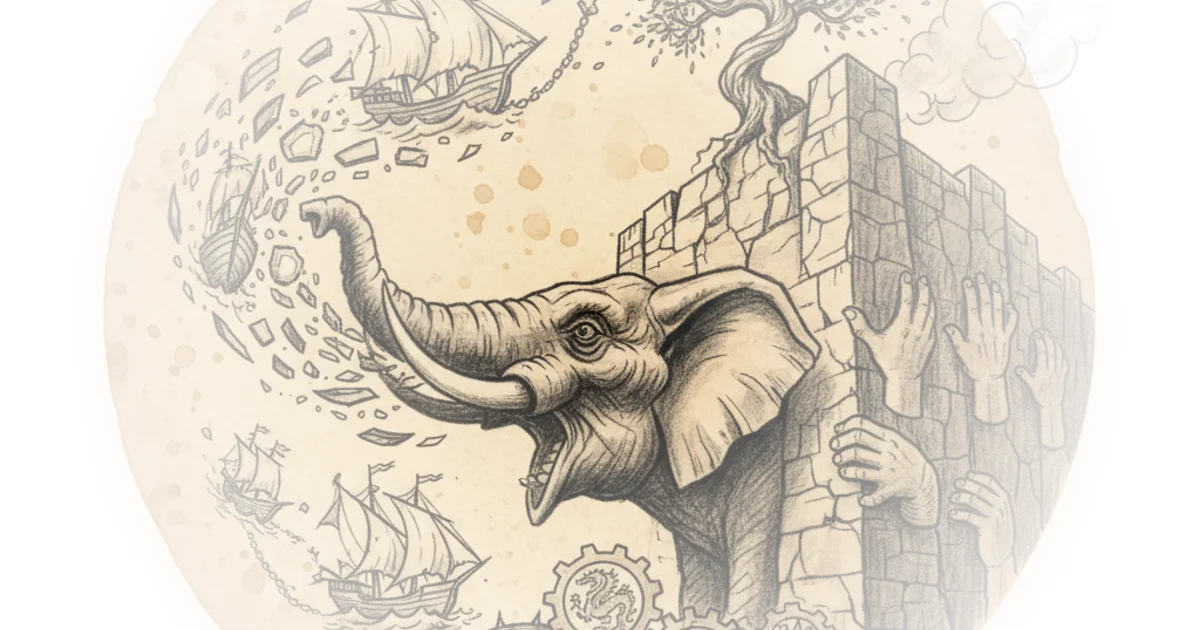
The author points out the absurdity of the stated justifications versus the economic reality. "The pretextual justification that this was about 'drug trafficking' and 'migration' rang hollow as Trump repeatedly made economic arguments about America's trade balance to justify the tariffs." This disconnect is critical for the reader to understand: the stated reasons are political cover, but the economic mechanics are the real driver. The result is a policy environment where the "nightmare scenario where tariffs actually come into force might yet occur," leaving the "sword of Damocles in place" for allies and adversaries alike.
Critics might argue that the administration is simply using the threat of tariffs as a negotiating tactic to force concessions, a strategy that has worked in the past. However, Politano counters this by noting that the damage is already done: "The possibility of tariffs alone has done large amounts of harm by increasing economic uncertainty while undermining confidence in the USMCA trade deal." The market reaction and the immediate diversification efforts by Canada and Mexico suggest that the credibility of the United States as a stable trading partner is eroding faster than any potential concession could repair.
The new White House is instead shooting first and asking questions later.
The Logistics of Failure
Perhaps the most damning evidence of a lack of planning comes from the administration's attempt to eliminate the "de minimis" exemption, which allows small packages under $800 to enter the US tax-free. Politano describes the immediate fallout: "US Customs & Border Protection (CBP) didn't have the capacity to process the millions of 'de minimus' packages through the new formal means required by the Trump Executive Order." The result was an administrative gridlock where the USPS had to abruptly stop accepting packages from China, causing millions of parcels to pile up at airports.
This is not a theoretical risk; it is a current operational failure. The author emphasizes that this was an "extremely predictable problem," yet the administration proceeded regardless. "The White House relented after just a couple of days, amending the executive order to restore 'de minimis' to Chinese imports," Politano notes, illustrating a pattern of rash decision-making followed by reactive damage control. This cycle undermines the very authority the administration seeks to project, showing that the executive branch is willing to disrupt global commerce without the bureaucratic machinery to enforce its will.
The impact on consumers is immediate and unavoidable. "Acer is hiking laptop prices by 10% and the CEO stated he expects many competitors will do the same," Politano writes, connecting the macro-policy directly to the price tag on the consumer's next purchase. The argument here is that the cost of this trade war is not abstract; it is being passed directly to households in the form of higher prices for electronics, batteries, and everyday goods.
The China Escalation
While the threats against Canada and Mexico were paused, the tariffs on China have moved forward with full force. Politano highlights that this is not a repeat of the first trade war, but an escalation that targets goods previously spared. "There are no exemptions, even for politically salient consumer goods like laptops, cell phones, and toys that were spared from Trump's first trade war." This shift signals a move away from targeted pressure on specific industries to a broad-based economic confrontation.
The author details how the US remains heavily dependent on Chinese manufacturing despite years of tariffs. "In 2024, the two largest US imports from China were phones ($50B) and computers ($36B)," Politano points out, noting that these categories were previously exempt. The administration's decision to hit these sectors now, without a viable alternative supply chain ready, guarantees inflation. The argument is reinforced by the data on batteries: "China is the world's largest producer of batteries by a wide margin," and the new tariffs are "additive on top of those increases, forcing EV makers and battery storage facilities to eat price hikes or find new battery sources even faster."
China's response has been measured but strategic. "Beijing appears content to wait out the initial wave of trade restrictions and is holding its ammo in case it's needed for further rounds of tariffs," Politano observes. The author notes that while China's retaliatory tariffs are smaller in dollar value, they are targeted at politically sensitive US exports like soybeans and aircraft. This suggests a long game where the US administration is risking a protracted conflict that could devastate American agriculture if Beijing decides to escalate.
The Reciprocal Trap
Looking ahead, the administration has proposed a "reciprocal" tariff policy that could expand the conflict to virtually every nation. "Ostensibly, this is just the US mass-retaliating against the existing tariffs imposed by places like India, Argentina, and the EU," Politano explains, but he warns that the definition of "unfair" trade barriers is so vague it could include value-added taxes and other standard fiscal policies. This creates a scenario where the US could find itself in a trade war with its closest allies simultaneously.
The author concludes that the administration's approach is less about a coherent economic plan and more about a series of proclamations. "Expect lots of proclamations, many of which will not be followed through on or will only happen after some can-kicking," Politano writes. This uncertainty is perhaps the most damaging aspect of the policy, as businesses cannot plan for a future where the rules change overnight.
The only carveout was a slightly lower 10% tariff for Canadian energy products, most of which consist of crude oil that travels by pipeline to key US refineries in the Midwest.
Bottom Line
Joey Politano's analysis is strongest in its documentation of the immediate administrative failures and the direct pass-through of costs to consumers, proving that this trade war is not a hypothetical future threat but a current economic disruption. The piece's biggest vulnerability is its focus on the chaos of implementation, which may understate the administration's potential to eventually force structural changes in global supply chains, even at a high short-term cost. Readers should watch for the March 4th deadline and the potential for the "reciprocal" tariff proposal to expand the conflict beyond China to include the European Union and other key allies. The administration's willingness to disrupt its own customs infrastructure suggests a level of risk tolerance that could lead to significant, unintended economic consequences.