Brad DeLong dismantles a popular narrative that the recent Davos gathering was a triumph of American dominance, arguing instead that the event revealed a chaotic administration flailing against a resilient international order. While some observers celebrate the spectacle as a masterclass in psychological warfare, DeLong insists that mistaking bluster for strategy is a dangerous error with real-world consequences for global stability.
The Illusion of Mastery
DeLong begins by challenging the very definition of power being applied to the situation. He critiques Niall Ferguson's claim that the administration "dominated" the event, pointing out that true domination implies control over the environment, not just the ability to disrupt it. "To dominate is not to posture or to bluster or command at home," DeLong writes. "It is to be the one who is at home, the one whose will is presumed to set the terms to which others must adapt—or leave." This distinction is crucial; it shifts the analysis from who shouted the loudest to who actually controlled the institutional plumbing.
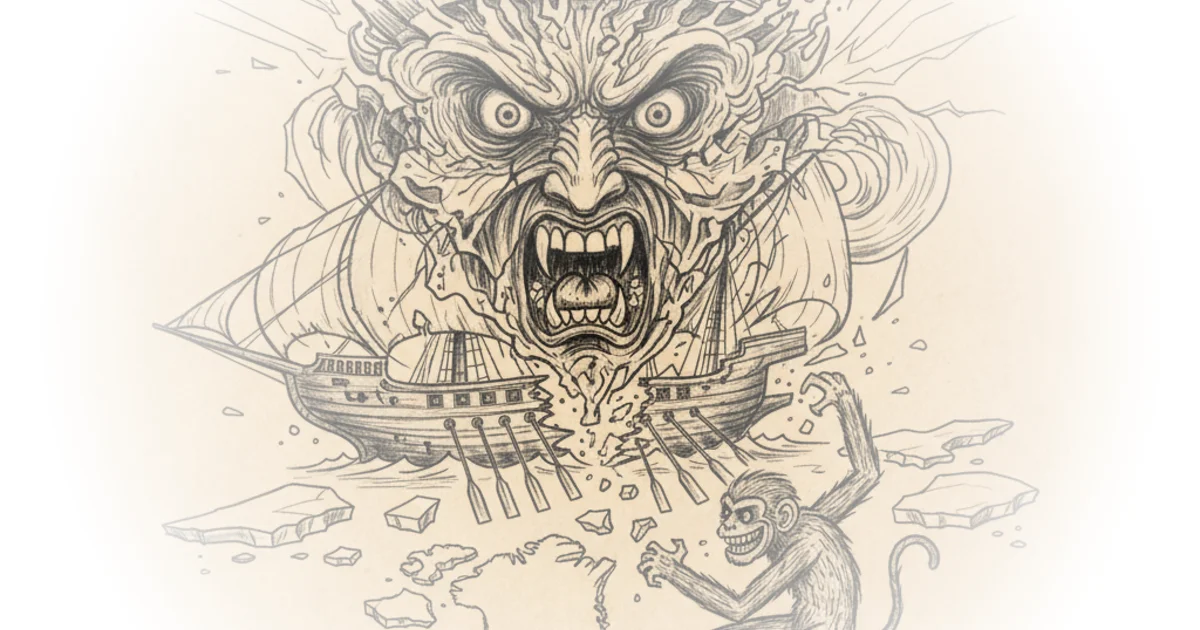
The author suggests that the administration's behavior—threatening tariffs, demanding the annexation of Greenland, and then abruptly retreating—signals fragility rather than strength. "Being fearful that the Europeans might band together to disrupt your plans for getting Ukraine and Iran to knuckle under? It that the posture of someone truly at home in his own house?" DeLong asks. The implication is clear: a genuine hegemon does not need to rely on theatrical distractions to protect its interests. Instead, the administration's erratic moves suggest a lack of a coherent theory of victory, relying instead on "improvisation, personal grievance, and performative toughness that never quite congeals into policy."
Critics might argue that unpredictability is a valid strategic tool that keeps adversaries off-balance. However, DeLong counters that without a clear endgame, such unpredictability merely erodes trust and invites coalitions to form against the aggressor.
A genuine dominus does not fret that the guests might unexpectedly organize a tenants' association. If you are worried that a coalition of medium-sized powers will frustrate your schemes, what you are signaling is not mastery but fragility.
The Historical Misreading
A significant portion of DeLong's commentary is dedicated to correcting a historical error made by proponents of the "dominance" narrative. He takes strong issue with the use of Thucydides' Melian Dialogue to justify the administration's tactics. Ferguson and others have framed the administration's aggression as a realistic application of the principle that "the strong do what they can and the weak suffer what they must." DeLong argues this is a profound misunderstanding of the ancient text.
"The Athenians' reply is indeed immortal, but not in the sense that Niall gives it," DeLong writes. He reminds readers that in Thucydides' history, Athens' imperial arrogance and its refusal to act as a benevolent hegemon led directly to its downfall. "Athens lost the Peloponnesian War in large part because those who ought to have been their allies defected to the Spartan and to the Haksamanishya cause." By ignoring this lesson, modern observers risk repeating the same fatal error: believing that sheer force guarantees success, when in reality, it often triggers a grand alliance against the aggressor.
This historical correction is not merely academic; it serves as a warning for current policy. If the administration believes it can act with impunity without regard for the reactions of allies and partners, it is walking a path that history shows leads to isolation and defeat. DeLong notes that "a rogue power that thinks and acts as though it is strong and able to 'do what it can' was seen as much more of a threat than the rather insular Spartans or Persian satraps."
The Reality of the Ritual
DeLong turns to Henry Farrell's analysis to provide a more grounded interpretation of the Davos proceedings. Farrell views the event not as a chess match where every move is calculated, but as a "rational ritual" where the administration attempted to create a new "common knowledge" that it was in charge. According to DeLong, this attempt failed because of pushback from European leaders and Canadian officials who refused to play along.
"What we have seen at Davos over the last few days was an effort by the Trump administration to create new common knowledge in the world, an agreement that Trump was in charge, and that politics revolved around him," DeLong summarizes Farrell's point. "That effort has failed because of pushback from politicians, both Europeans who were furious at Trump, and Canada's prime minister, Mark Carney who gave a quite extraordinary speech." This framing strips away the mystique of the "master plan" and reveals the reality: the administration tried to rewrite the rules of the room, but the room pushed back.
The evidence for this failure is found in the frantic backpedaling of administration officials. DeLong highlights the shifting rhetoric of officials like Scott Bessent, who first claimed Europe couldn't stop the US, and then urged countries to stick to existing deals to avoid escalation. "Act One: Europe Can't Do Nothing to Stop Us! ... Act Two: Actually, Europe, We Don't Want You to Escalate!" DeLong writes. This whiplash demonstrates that the administration is not executing a grand strategy but reacting to the constraints of a world it does not fully control.
The absence of a strategy is a rather large hole in any story about geopolitical 'domination.'
Bottom Line
DeLong's most compelling argument is that mistaking chaos for strategy is a dangerous delusion that ignores the structural realities of international relations. The piece's greatest strength lies in its rigorous application of historical context to debunk the "Xanatos Gambit" narrative that turns every failure into a hidden victory. The biggest vulnerability of the opposing view is its reliance on the assumption that the administration has a coherent plan where none is visible, a gap that history suggests will eventually lead to significant geopolitical costs.