Tom van der Linden challenges the modern perception of The Godfather not as a polished classic, but as a radical, subversive experiment that defied the very narrative rules it is now credited with establishing. While most viewers see a tight, traditional epic, van der Linden argues that the film's enduring power lies in its unconventional pacing and its refusal to follow a standard hero's journey, a structural bravery that modern cinema has largely abandoned.
The Unconventional Architecture
van der Linden begins by dissecting the film's strange rhythm, noting how it deliberately withholds its protagonist from the audience for nearly an hour. "Michael's transformation in this movie is the core of it," the author observes, highlighting the slow burn required to make his descent believable. "He's like, 'Oh, that's my family, that's not me' at the beginning, and then we watch him become that." This delayed entry is not a flaw but a deliberate choice to isolate Michael from the audience until the moment he chooses to cross the line.
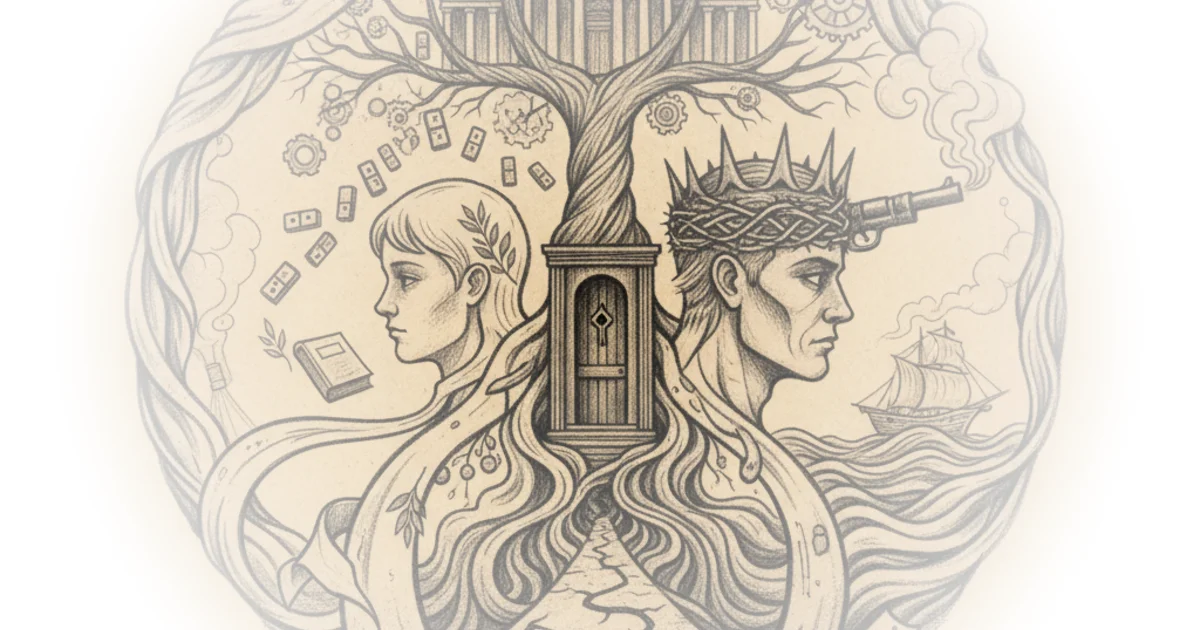
The commentary suggests that contemporary filmmakers would never risk such a slow start, yet it is precisely this patience that allows the tragedy to land. van der Linden points out that the film feels "almost like an episodic structure," where Michael retreats to Sicily for a marriage and a death that feels disconnected from the main plot, only to return and resume the bloodshed. "There are so many elements here on paper that should not work," van der Linden writes, "and for some reason there's a kind of magic to it that does make the whole thing chime together." This observation reframes the film's length not as a test of endurance, but as a necessary container for a psychological metamorphosis that cannot be rushed.
Critics might argue that this structural looseness is merely a byproduct of the era's filmmaking style rather than a calculated artistic choice, yet the specificity of the character arc suggests otherwise. The film works because it prioritizes the internal logic of a family over the external logic of a plot.
"We now tend to see it as this very classical film... whereas at the time it was actually kind of quite like subversive and new and part of this new wave that completely like subverted everything that had come before."
The Fantasy of Self-Made Power
Moving beyond structure, van der Linden explores the genre's psychological hook, identifying a potent mix of escapism and moral ambiguity. The gangster story, he argues, is fundamentally about the "self-made man" rising from nothing to a place of absolute power. "There's a very interesting escapist fantasy almost that lies at the heart of the gangster story," he posits, describing the allure of creating one's own universe where the rules of society do not apply.
This fantasy is not just about wealth, but about agency. The genre allows audiences to witness a character who gathers a crew, eliminates enemies, and builds an empire from scratch. van der Linden notes that this "microcosmic story" resonates because it mirrors the universal desire to build something of one's own, even if the methods are criminal. The violence, often criticized as gratuitous, serves a narrative function as a "narrative twist" that keeps the audience captivated through betrayal and double-crossing.
However, the author also raises a critical question about the genre's moral compass. "The question that always lingers in my mind when it comes to these stories is: is that a warning or is it a fantasy?" This ambiguity is the genre's greatest strength and its most dangerous flaw. If the audience is rooting for the rise to power without the inevitable fall, the story becomes a glorification of lawlessness rather than a cautionary tale.
The Evolution of a Genre
The piece contextualizes The Godfather within the broader history of American cinema, tracing the genre from the Prohibition era to the New Hollywood movement. van der Linden notes that the original gangster films of the 1930s were "relevant to the time," reflecting a public fascination with the news of the day. Yet, the Hays Code forced these stories into a moral box where criminals had to face justice, stripping them of their protagonist status.
When the code collapsed, filmmakers like Francis Ford Coppola and Martin Scorsese revived the tradition, but with a modern sophistication. "It's a turning point for kind of the craft of filmmaking," van der Linden argues, suggesting that the film's success was due to its technical mastery as much as its subject matter. He posits a fascinating counterfactual: "If instead of The Godfather it had been like a sports movie but it was just like made, crafted as well as this movie is crafted, maybe sports movies would be like the big thing." This highlights how the specific genre was less important than the quality of execution.
The author connects this legacy to modern television, noting that shows like Breaking Bad and Succession are direct descendants of this cinematic language. "We're endlessly fascinated with that," van der Linden says of the family dynamics and power games operating outside the rules. The genre has evolved from a simple crime story into a complex exploration of capitalism, family, and the American Dream.
Bottom Line
van der Linden's analysis succeeds in stripping away the reverence that often blinds viewers to The Godfather's radical nature, revealing a film that was structurally risky and morally ambiguous in a way few blockbusters dare to be today. The argument's greatest strength is its focus on the film's pacing as a deliberate tool for character development, though it slightly underplays the role of the era's specific cultural anxieties in shaping the story. For the busy reader, the takeaway is clear: the film's greatness lies not in its perfection, but in its willingness to break the rules of storytelling to tell a deeper truth about power and corruption.