Adam Tooze identifies a quiet but seismic shift in global influence: the deliberate uncoupling of European consumer desire from American branding, a move that signals the end of an era where "coca-colonization" was synonymous with soft power. By tracing the dark, wartime origins of Fanta to today's "Made in Germany" campaigns, Tooze offers a startling historical mirror to current geopolitical fractures, suggesting that the aura of American exceptionalism is not just dimming, but being actively replaced by local alternatives.
The Architecture of Influence
Tooze begins by dismantling the traditional view of American hegemony, arguing it was never solely about state power. "The most dynamic and vital element of that system were not agencies of the American state but private or public-private networks," he writes. He lists the usual suspects—financial giants like JP Morgan, the Gates Foundation, Hollywood, and the platform economy—as the true engines of this influence. This framing is crucial because it shifts the blame or credit from Washington to the marketplace, where the real cultural battles are now being fought. The argument holds weight because it acknowledges that soft power is a two-way street; it relies on the willingness of others to consume the American dream.
"Influence and money can run in different directions."
The author contrasts this fluidity with the visceral impact of the mid-20th century, recalling how the Marshall Plan was experienced by Europeans not as a policy document, but as a "visceral encounter with a better world." He notes that for his father in wartime Britain, the experience of begging GIs for gum was a tangible taste of that superiority. This historical anchor adds necessary depth, reminding us that the current "disturbance" is a departure from a time when American goods were inextricably linked to hope and survival. Critics might argue that this nostalgia overlooks the exploitation often inherent in these same networks, but Tooze's point is about the perception of power, which was undeniably potent then.
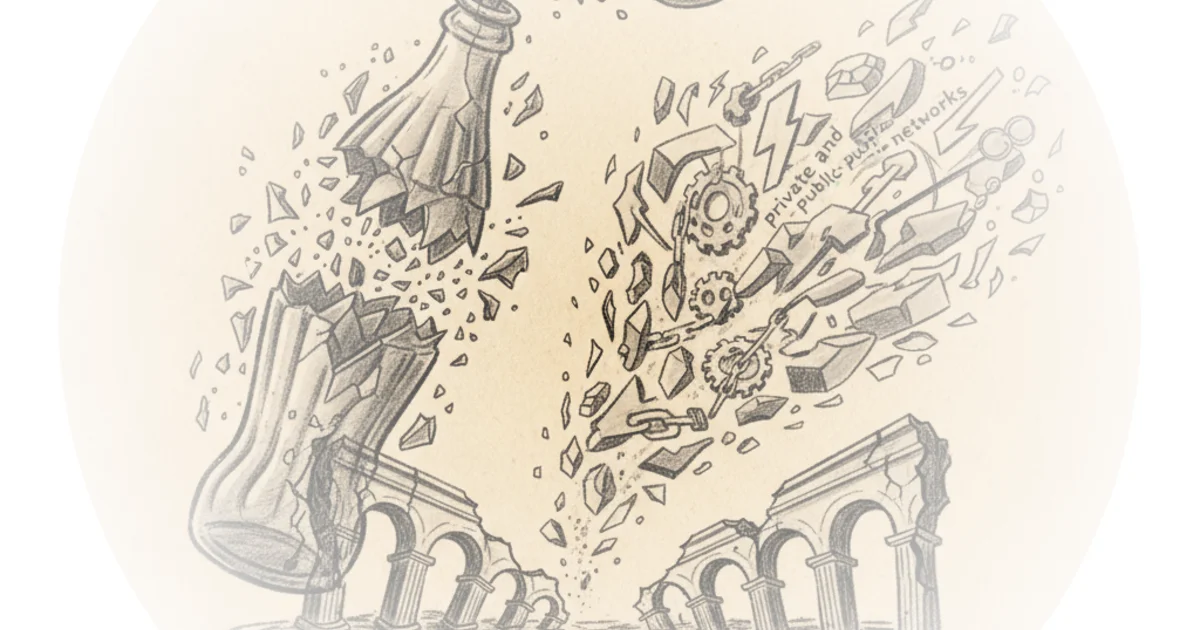
The Uncoupling of Brand and Nation
The piece pivots sharply to the present, highlighting a strategic retreat by US multinationals in Europe. Tooze points to McDonald's and Coca-Cola, which are now aggressively marketing their local roots to distance themselves from a tarnished American image. "Maybe the aura around America has dimmed a little bit," he quotes McDonald's CEO Chris Kempczinski admitting, noting that consumers are making choices to frequent American brands less. This admission from a corporate leader is the smoking gun of the article; it suggests that the decline in soft power is no longer a theoretical concern for academics but a bottom-line reality for CEOs.
"We are seeing in those surveys as well that consumers are making choices to not maybe frequent American brands as much."
Tooze dissects Coca-Cola's "Made in Germany" campaign, which claims 97% of its drinks are produced locally and highlights that €9.1 billion is contributed to the German economy. The campaign even leans into the invention of Fanta, a soda born out of necessity during World War II. This is where Tooze's historical deep dive becomes essential. He reveals that Fanta was not a wholesome invention but a product of "leftovers of the leftovers"—apple fibers, whey, and beet sugar—created when the US cut off syrup exports to Nazi Germany. The irony is palpable: a brand now celebrated for its German roots was originally a survival mechanism for a subsidiary operating under a genocidal regime.
"Fanta was invented in Germany... during World War II. Developed at the height of the Third Reich, the new soda ensured the brand's continued popularity."
The narrative details how Max Keith, the German subsidiary head, prioritized the company over his country, even ordering a mass salute to Hitler to secure his position. When the US severed ties after Pearl Harbor, Keith invented Fanta to keep the business alive. Tooze notes that after the war, the company revived the brand in 1955 largely because they held the copyright, ignoring its dark origins. This history serves as a powerful metaphor for the current moment: just as the brand had to mutate to survive a geopolitical rupture, it is now mutating again to survive a crisis of confidence. The argument is compelling because it shows that corporate survival often requires shedding national identity when that identity becomes a liability.
The Asymmetry of Disturbance
The core of Tooze's analysis lies in the asymmetry of this shift. He observes that while liberal Americans worry about the country's image, the broader US public remains indifferent. "America is no longer a society deeply and organically linked to Europe," he asserts. This disconnect is the true end of soft power. In Europe, the shift is felt on the street, in the "taste of soda in the mouth," whereas in the US, it is merely a topic of intellectual concern. The author draws a parallel to the 1977 release of Star Wars, noting that the film projected a WWII narrative to a "galaxy far, far away," symbolizing how America has become detached from the European reality it once shaped.
"This disturbance is highly one-sided. Liberal Americans worry about the country's image abroad. But in the broader public in the US no one cares very much."
Tooze concludes that the complex relationship between corporate capitalism and consumption is nested in a network of power woven from geopolitics and consumer desire. He suggests that while the specific configuration of this network changes, the desire for the product remains, even if the politics behind it shift. This is a sobering take: the end of American soft power doesn't mean the end of American products, but rather the end of their automatic association with American values. A counterargument worth considering is that this "localization" is merely a marketing tactic that will fade once the political climate stabilizes, but the depth of the historical precedent Tooze provides suggests these shifts are structural rather than cyclical.
"The complex and uneven relationship between corporate capitalism and consumption is nested in a network of power that is woven out of geopolitics, government regulations, money, technology and consumers desires."
Bottom Line
Tooze's most striking contribution is the realization that the decline of American soft power is not a sudden collapse but a gradual, corporate-led adaptation to a world where the American brand no longer guarantees success. The piece's greatest vulnerability is its heavy reliance on the beverage industry as a proxy for all geopolitical shifts, which may oversimplify the broader institutional dynamics at play. However, the historical parallel of Fanta serves as a potent reminder that in times of extreme geopolitical fracture, even the most iconic symbols of American power must be reinvented to survive.