Joshua Citarella
Joshua Citarella spent over a decade embedded in online communities most people have never heard of. He describes himself as an artist and internet culture writer, though many recognize him as a podcaster. His show, Doom Scroll, has transformed from a niche audience of around 10,000 dedicated readers to over 100,000 weekly listeners — a complete shift in how he reaches audiences.
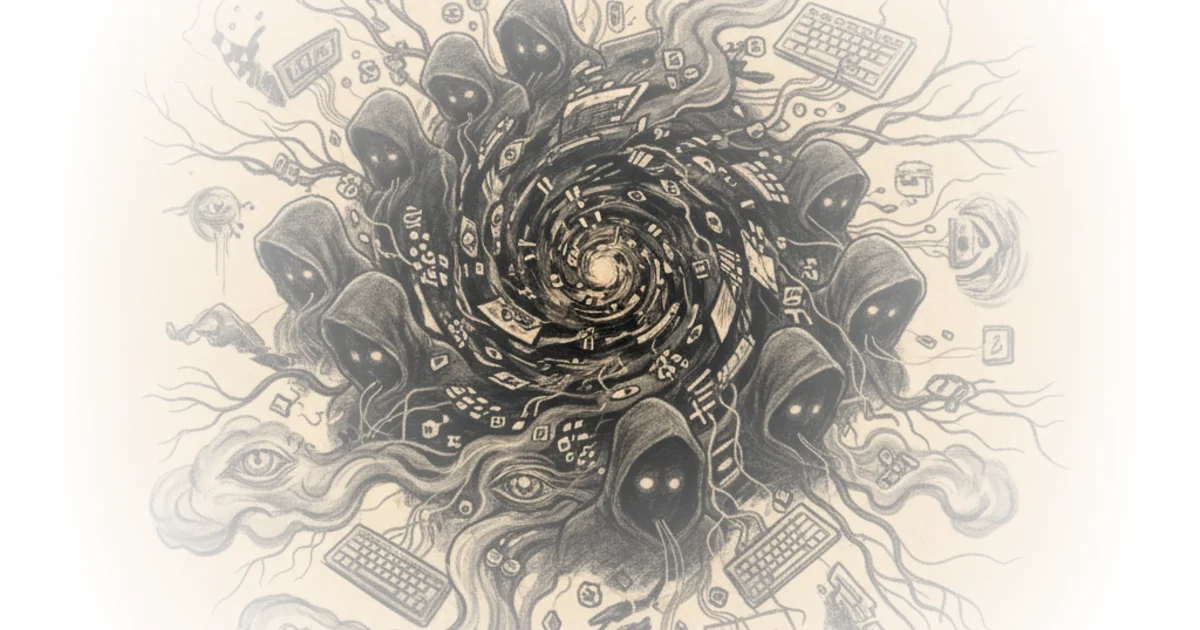
When people ask what he does at cocktail parties, he jokes that he avoids those gatherings entirely. But his work isn't trivial. He's spent years mapping the political pathways teenagers travel online, and what he's found challenges conventional wisdom about where politics is heading.
The 2018 Research
Around 2018, Citarella published a long-form essay called "The Post Left" — an ethnographic study of teenagers aged 12 to 17. He was tracking how young people entered political movements that seemed utterly foreign to mainstream culture.
These kids were posting memes on Instagram, running experiments with ideology, and building communities that would eventually reshape politics.
Back then, "post-left" meant eco-anarchism, green anarchism, primitivism — people rejecting industrial society at age 14. That research was extremely niche, reaching audiences of hundreds or thousands. But Citarella argues it laid groundwork for the ecosystem we live in now. The same narratives and sometimes literally the same memes now reach audiences of hundreds of thousands or millions.
He calls this early detection: finding what will get big before it explodes. How do you find something that becomes politically significant? It's like political trend casting.
What Predicts Political Movement?
The key to predicting which ideas gain traction, Citarella argues, is understanding what problems won't go away. Some trends follow a bell curve — early adopters, late adopters, then it dies off. But underlying problems like downward mobility in the United States for working people have been steady for 40 years.
He was watching teenagers in that Gen Z bracket who saw a life very different from millennials or Gen X. They don't have the same boomer upward mobility. The future they see is sometimes pretty grim, making rejection of technology and radical politics more understandable.
The biggest questions — de-industrialization, neoliberalization of the economy — aren't going anywhere. When narratives reach a point of no return, decisive transformation becomes necessary.
The Rise of Right-Wing Populism
From around 1980 through 2024, there was general consensus across both parties in the United States and advanced economies about running an advanced political economy. That consensus has been completely thrown out.
The rise is clear: right-wing populism across all advanced nations — Hungary, Poland, Italy, the United States. Constituencies that used to vote with labor interests now vote for right-wing populist candidates. This tracks with the neoliberal consensus over 40 years.
What surprised those on the left wasn't renewed trade unionism or strong social democracy. It was this new international nationalism — anti-austerity, anti-immigration politics.
When Citarella started talking about rise of right-wing populism around eight years ago, few people under 25 identified as libertarians. The traditional conservative party consensus was free market evangelism and economic libertarianism. Now, very few conservative parties are economically libertarian or globalist in orientation.
Why Kids Engage Differently With Politics
The transformation of our media environment means the infinite world of all text and history becomes accessible to everyone. Public libraries were substantially limited compared to everything on the internet.
Then there's historical grounding — previous generations believed there was no alternative to capitalism after the 1989 consensus. But Gen Z is born into a world with no political answers for them, given the complete archive of the internet to trudge through every possible meme and political text.
Thirdly, teenagers are freed from morality and tempted to post and exaggerate things. These factors combine into the most competitive insane media ecosystem where you have mega communism, narco primitivism, caliphatism, queer anarotranshumanism, libertarian neoarchism — running ad infinitum.
Critics might note that studying online subcultures deeply can sometimes miss broader political context or over-interpret fringe behavior as representative of entire generations. The methodology is observational rather than statistical.
Bottom Line
Citarella's core insight is strong: teenagers on internet platforms were the earliest indicators of political transformation that mainstream analysts missed. His biggest vulnerability is that predicting from subcultures is imprecise — not everything that starts in dark corners goes viral. But his early 2018 research correctly identified how young people would reject traditional politics and embrace radical alternatives, which has now become mainstream. The scale has changed dramatically, but the direction was correct.