Matthew Clayfield doesn't just review a classic sitcom; he dissects the very architecture of television confidence, arguing that Cheers succeeded not because it was instantly loved, but because its creators refused to compromise their vision despite the industry's pressure to quit. In an era where streaming algorithms dictate a show's lifespan after a single season, Clayfield's retrospective on a series that took years to find its audience offers a startling counter-narrative about the value of patience in creative work.
The Architecture of Confidence
Clayfield opens by dismantling the myth of the instant hit, pointing out that the show's creators operated with a "preternatural" self-assurance that defied the logic of modern television. He notes that director James Burrows "rarely shot things twice," trusting the writing and the actors to deliver perfection on the first take. This wasn't just a stylistic choice; it was a philosophical stance. Clayfield writes, "Burrows was so confident in both the writing and his style that he rarely shot things twice: 'I only reshot jokes that didn't work or I went back and picked up shots I missed.'" The author argues that this commitment extended to the medium itself, with Burrows insisting on shooting on film despite network demands to use cheaper video, a decision that preserved the "richness and warmth of the bar" against the "colour and texture of wet cement."
This level of artistic stubbornness is rare in the current landscape. Clayfield suggests that the show's longevity was a direct result of executives who were willing to "go into bat for shows they believed in, occasionally for several years," even when ratings were abysmal. The piece highlights a fundamental shift in the industry: "Given the times in which we now live, when network shows are told to succeed within a couple of episodes or die... it is strange to remember that executives used to go into bat for shows they believed in." The argument lands because it reframes the show's success not as a lucky break, but as a hard-fought victory of creative integrity over commercial expediency. Critics might note that this romanticizes a system that often discarded other worthy projects, but Clayfield's focus remains on the specific alchemy that allowed Cheers to survive.
In order to maintain a consistent style, Burrows remarkably (and I think uniquely in sitcom history?) directed all but thirty-eight of the series' two hundred and seventy-five episodes.
The Friction That Made the Fire
The core of Clayfield's analysis rests on the volatile chemistry between Ted Danson and Shelley Long, a pairing that the author describes as a collision of incompatible working styles that somehow produced magic. He observes that while Danson was "instinctive, open to the moment," Long was "particular to the point of persnickety." This tension wasn't a bug; it was the engine. Clayfield writes, "Danson is never as good, or as close to having a nervous breakdown, as he is when he's with Long." The author posits that the friction between the actors mirrored the characters' own dynamic, turning verbal sparring into a form of sexual tension that drove the first five seasons.
However, Clayfield is quick to point out the cost of this dynamic. He notes that the show eventually turned cruel toward the character of Diane, leaning into her worst qualities until she became a caricature. "Beginning in Cheers' fourth season and continuing through to her departure at the conclusion of its fifth, the show becomes increasingly cruel to Diane," he argues. This shift suggests a vulnerability in the show's structure: when the central conflict relied entirely on the will-they-or-won't-they dynamic, the writers had to escalate the behavior to maintain interest, often at the expense of the character's dignity. The author suggests that Long's departure was inevitable, not just because of career ambitions, but because the narrative had exhausted its capacity to treat her with nuance.
The Shift to Ensemble Farce
Once the central couple dissolved, Clayfield argues that the show didn't just survive; it transformed. The series pivoted from a "romantic comedy" to a "broader ensemble comedy," a shift he attributes to the influence of Fawlty Towers. The author describes how the show began to focus on the "warp and weft" of the community, where regulars helped one another run errands and became "acquaintances with benefits." This reintegration of the supporting cast allowed for more elaborate physical comedy and set pieces, such as the "ladder" sequences that echoed British farce.
Clayfield writes, "This is what I mean when I talk about different speeds: Cheers repeats itself, first as romcom, then as broader ensemble comedy." He finds this evolution fascinating, noting that the show eventually anticipated the high farce of its spin-off, Frasier. The author's observation that the show "paid scant attention to what it actually means to be a regular at a bar" until the second half of its run is a sharp critique of the early seasons' narrow focus. By expanding the scope, the show captured the true spirit of a community hub, even if it meant sacrificing the tight, two-person dynamic that defined its early years.
She certainly brought out the best in him, usually by bringing out the worst in Sam, the clash between their styles and temperaments mirroring the characters' own.
The Real Cost of the Bar
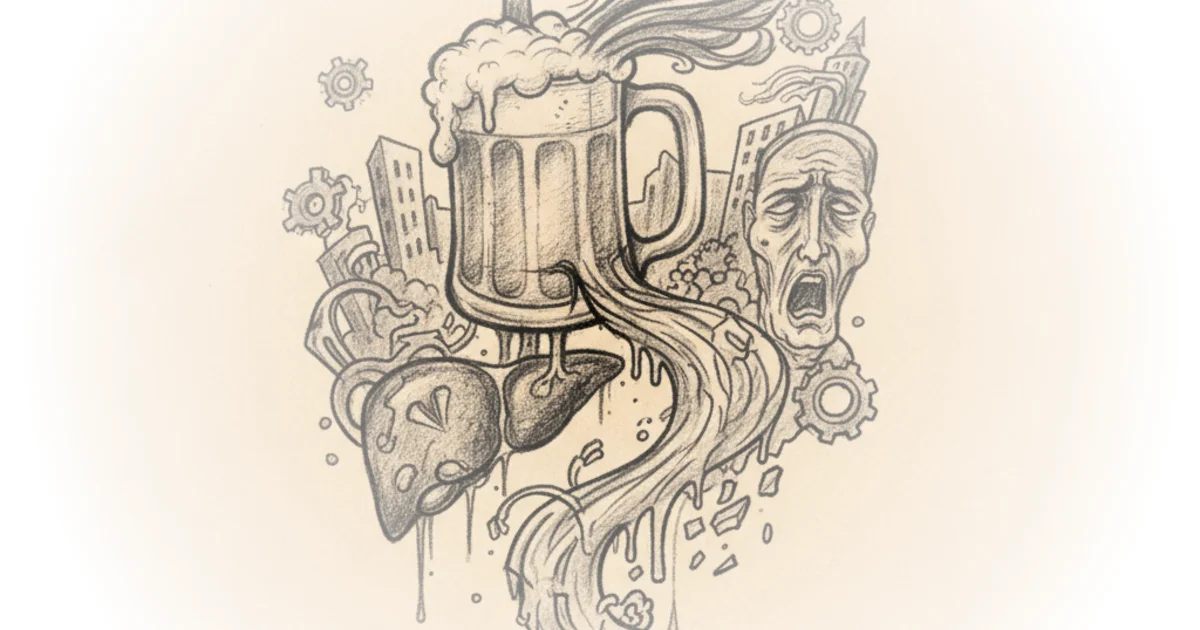
Clayfield concludes with a personal reflection that grounds the analysis in reality, acknowledging that while the show celebrates the idea of a place where "everybody knows your name," it glosses over the darker realities of the setting. As someone who has struggled with alcohol, the author admits that the show's portrayal of drinking can be jarring. He writes, "I'd be lying if I said that Cheers doesn't sometimes cause me to cock my eyebrow a bit." This admission adds a layer of depth to the critique, reminding readers that the "community" depicted is built on a foundation of escapism that doesn't always hold up in the real world.
The author argues that while the show captures the feeling of community, it often ignores the cost of the environment. "It is true that one's local can and often does foster a sense of community," he concedes, but the show's refusal to deal with alcohol abuse is a deliberate choice that prioritizes comedy over consequence. This tension between the idealized version of community and the messy reality of addiction is the piece's most poignant insight, suggesting that the show's enduring appeal lies in its ability to offer a fantasy of connection that the real world often fails to provide.
Bottom Line
Matthew Clayfield's analysis succeeds by treating Cheers not as a relic, but as a case study in creative resilience and the complex trade-offs of long-form storytelling. The piece's strongest asset is its willingness to critique the show's later cruelty toward its female lead while celebrating its structural evolution into an ensemble masterpiece. However, the argument's biggest vulnerability lies in its somewhat idealized view of the show's production history, which may overlook the sheer luck involved in a show surviving its early years. For the busy reader, the takeaway is clear: great art often requires the patience to let a vision mature, even when the world demands an instant result.