Jennifer Chowdhury captures a seismic shift in American literature: the moment a Muslim American memoir stops apologizing for its existence and starts celebrating the messy, contradictory reality of living it. In an interview with author Aymann Ismail, Chowdhury highlights how Becoming Baba rejects the decades-long demand for Muslim writers to soothe Islamophobia, offering instead a narrative where faith is questioned, rules are bent, and joy is found in the very spaces where trauma was expected. This is not just a book review; it is a manifesto for a new generation that refuses to be defined solely by the shadow of 9/11.
The Death of the Trauma Script
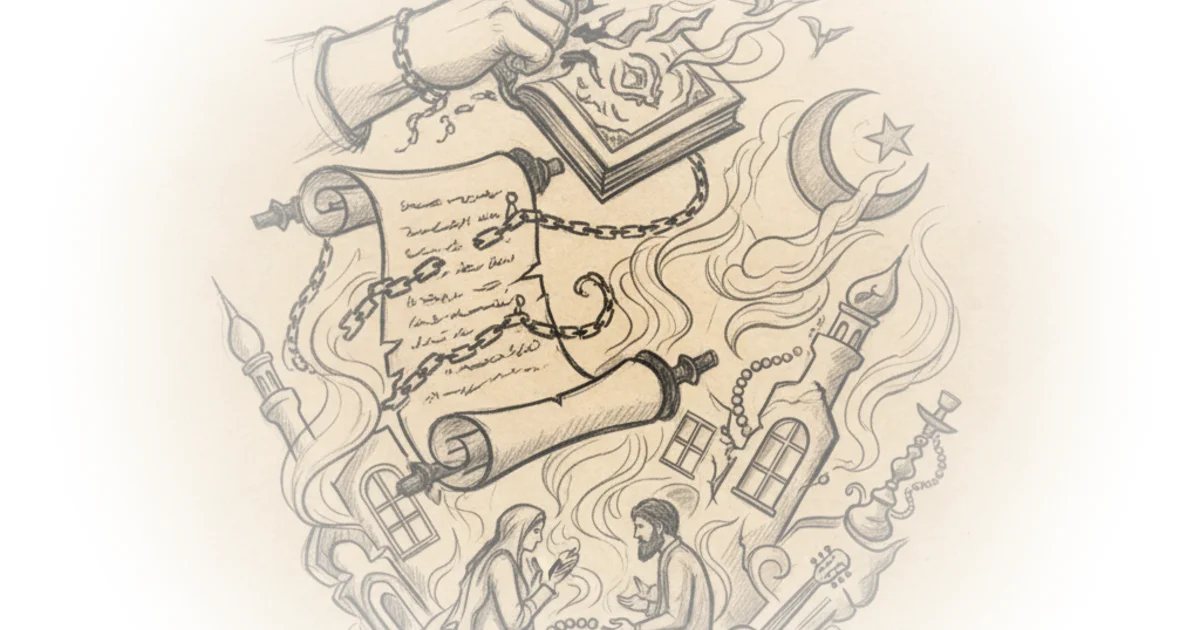
Chowdhury frames Ismail's work as a direct rebuttal to the "familiar script" that has governed Muslim American storytelling for years. The author notes that for too long, the community has been trapped in a cycle of "explain, defend, humanize, repeat." Ismail, however, pivots away from this defensive posture. As Chowdhury writes, "We're constantly trying to meet people where they are rather than being honest about what we're actually experiencing." This reframing is crucial. By refusing to rehash trauma, Ismail does not ignore the pain of the post-9/11 era; he simply refuses to let it be the sole architect of his identity. The argument lands with force because it acknowledges a real fatigue among readers who are tired of seeing their culture reduced to a case study in victimhood.
"What people were saying in defense of ourselves after 9/11 are the same things you'll hear someone say 25 years later."
Chowdhury effectively illustrates how Ismail's memoir moves from the rigid enforcement of gender segregation in Islamic schools to a more nuanced, personal faith. The interview details how Ismail's early education in New Jersey, where boys and girls were separated in third grade, planted the first seeds of doubt. He realized the logic was flawed, noting, "You don't have to be older to know this doesn't make sense—that they're projecting these false ideas where if you put two third graders in a room, they'll end up having sex." This critique of institutional rigidity resonates deeply, especially when contrasted with the historical context of Islamic schools in America, which often emerged in the 1970s and 80s as a reaction to assimilation fears, sometimes prioritizing protection over critical engagement. Ismail's journey suggests that true faith requires the freedom to question, not just the muscle memory of obedience.
Reclaiming Interpretation and Humanity
The conversation shifts to the role of women and the complexity of interpretation, a theme that Chowdhury handles with particular care. Ismail credits his wife, Mira, with helping him move from a rule-based faith to a seeker's faith. Chowdhury highlights a pivotal moment where Ismail grapples with a Quranic verse often used to justify domestic discipline. Mira challenges him to look beyond a singular, literalist reading. As Chowdhury puts it, "Are you going to assume that because it's in the Quran there's only one way to interpret everything?" This dialogue underscores a broader trend in American Islam, where second and third-generation believers are increasingly engaging with Tafsir (Quranic exegesis) to find meanings that align with their lived realities, rather than relying solely on inherited authority.
The author also praises Ismail's decision to center female characters who are fully realized, rather than serving as plot devices for the male protagonist. "I did a pass after the first draft to make sure all the women in the book didn't just exist for something to happen and then move on," Ismail tells Chowdhury. This is a significant literary choice that counters the historical tendency in some male-dominated religious narratives to relegate women to the background. By showing how the women in his life taught him how to be a man, Ismail expands the definition of masculinity within the Muslim American experience.
"It's not that you're going to find the answers right away—the process of going and looking for answers is what makes you a Muslim."
Critics might note that Ismail's candid admission of using marijuana while praying could alienate conservative readers who view such behavior as incompatible with religious devotion. However, Chowdhury presents this not as a rejection of faith, but as a complex, human moment of connection between a husband and wife. Ismail argues that his wife's genuine piety gave him the "bravery" to pray despite his altered state, suggesting that the spirit of the connection matters more than the strict adherence to ritual purity codes in that specific moment. This risks controversy, but it also humanizes the struggle of maintaining faith in a modern, imperfect world.
The City as a Spiritual Equalizer
Perhaps the most provocative argument Chowdhury draws out is Ismail's assertion that "the suburbs are haram." This is not a theological ruling in the traditional sense, but a sociological critique of how suburban sprawl enforces hierarchy and isolation. Ismail contrasts the suburban obsession with accumulation—"the biggest TVs, a bowling alley, a pool"—with the city's inherent equality, where "to your left is the janitor and to your right is the CEO." This perspective aligns with the historical role of urban centers in the development of American Muslim communities, where density and diversity have often fostered stronger, more integrated social fabrics than the segregated nature of modern suburbs.
Chowdhury captures the emotional weight of this choice when discussing Ismail's decision to raise his children in Newark, despite the environmental hazards and systemic neglect. The interview touches on the stark reality of living in a city with "the highest rates of asthma in the world," yet Ismail chooses to stay, arguing that the community bonds formed in the city are worth the risk. This challenges the prevailing narrative that success for minority families inevitably means fleeing to the suburbs.
"We're doing the thing our parents couldn't do—being human for our kids."
This final sentiment, highlighted by Chowdhury, serves as the emotional anchor of the piece. It suggests that the legacy of the immigrant generation was survival and defense, while the legacy of their children will be the freedom to simply exist as complex, flawed, and joyful human beings. The argument is compelling because it reframes the "success" of the next generation not as assimilation into a white norm, but as the ability to define their own relationship with their heritage.
Bottom Line
Chowdhury's coverage of Becoming Baba succeeds by moving beyond the standard "immigrant success story" to explore the messy, often contradictory interior life of a modern Muslim American. The piece's greatest strength is its focus on agency—how Ismail actively reinterprets his faith and community rather than passively accepting the roles assigned to him. The biggest vulnerability lies in the potential for his candid admissions regarding religious practice to be weaponized by critics, yet the interview's insistence on context and personal narrative largely mitigates this risk. Readers should watch for how this "new iteration" of American Islam continues to evolve as more voices reject the trauma script in favor of authentic, unvarnished storytelling.