This piece from Works in Progress makes a counterintuitive claim that will stop a busy reader in their tracks: the very mechanisms designed to ensure scientific rigor—peer review, specialized funding, and career ladders—are actively strangling the next great breakthrough. It argues that the modern scientific ecosystem has become so optimized for incremental refinement that it has lost the capacity for the radical "paradigm shifts" that actually move humanity forward. By weaving together historical case studies with hard data on grant demographics and replication failures, the editors present a damning indictment of how institutional gatekeeping favors safety over discovery.
The Outsider Advantage
The article opens by reframing the history of innovation, noting that "Many of the most important scientific advances came from unexpected people." It lists a draper who first saw bacteria, a clockmaker who solved longitude, and a Hollywood actress who helped invent secure wireless communication. These are not anomalies; they are the rule for transformative science. The piece defines these figures as "outsiders"—individuals who are either early in their careers, working outside established institutions, or coming from a different discipline entirely.
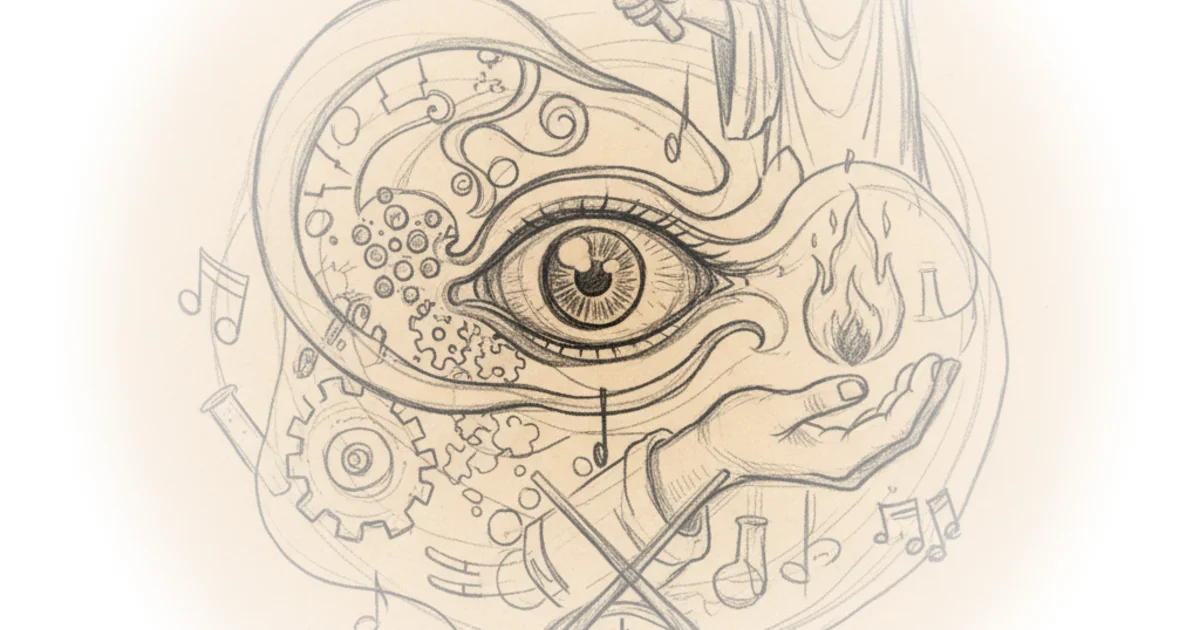
The core argument rests on a distinction between two types of scientific work. "Insiders are often better at fleshing out theories in detail," the editors note, but they become emotionally and professionally attached to their models. Outsiders, lacking that baggage, are "more willing to update them through 'paradigm shifts': creating new theories to predict facts and define research questions." This dynamic is crucial because science needs both refinement and revolution. The piece suggests that while industry has largely abandoned long-term, high-risk research, academia was supposed to fill that void. Instead, it has become hostile to the very people who could do that work.
"The specialist will always be able to nail the generalist by pointing out that [they] don't use the vocabulary quite right."
This quote, attributed to legal scholar Richard Posner in the text, perfectly captures the linguistic gatekeeping that keeps outsiders at bay. The article argues that this isn't just about politeness; it's a structural filter. When eminent scientists die, their direct collaborators' publication rates drop, while outsiders who challenge their work see their citations rise. This "natural experiment" suggests that powerful insiders create barriers that limit intellectual diversity. The Alzheimer's research field serves as a grim example, where the "amyloid beta" hypothesis held a near-monopoly on funding for decades, sidelining promising research into inflammation or blood vessel dysfunction simply because it didn't fit the dominant narrative.
The Mechanics of Exclusion
The coverage details exactly how the system filters out non-conformists. It points out that "Reviewers give higher ratings to studies that support dominant theories, even when methods are identical." This creates a feedback loop where challenging the status quo is punished, not rewarded. The piece highlights a startling statistic: "Peer reviewers fail to catch 70–75 percent of major methodological errors," yet the system remains obsessed with preventing outsiders from publishing negative replications, which account for only about one percent of papers.
The barriers are not just intellectual; they are bureaucratic. The article notes that "Many fellowships from the US National Institutes of Health are limited by age or time since degree and explicitly do not consider time away from research as an exception." This penalizes anyone who took a detour, worked in industry, or had a family break. The result is a narrowing of the pipeline: "Interdisciplinary scientists (with less than 50 percent of papers in a single field) represented 55 percent of researchers in the 1960s but fell to under 40 percent in the 2010s."
Critics might argue that specialization is necessary for modern science, given the sheer volume of knowledge in fields like molecular biology or particle physics. However, the piece counters that the lines between disciplines are often arbitrary and that the cost of this rigidity is a stagnation of progress. It points to the decline in breakthroughs, citing a survey where top scientists admit recent Nobel-winning discoveries are "less transformative than those of previous generations." In computing, the number of researchers required to maintain Moore's Law has had to increase eighteen-fold since the 1970s just to keep the same rate of progress.
"Stepping outside the system gave Mitchell and Betzig something insiders rarely get: uninterrupted time and social freedom."
The editors illustrate this with the stories of Peter Mitchell, who won a Nobel Prize after leaving academia to work in a manor house, and Eric Betzig, who built a revolutionary microscope in his living room using parts from eBay. These cases prove that independence can yield results, but the article admits this path requires "uncommon personal risk and considerable entrepreneurial effort – costs that few researchers, especially those in secure posts, are willing to shoulder." The historical context of Antonie van Leeuwenhoek, a draper who observed bacteria with handmade lenses, reinforces the idea that the tools of discovery have always been accessible to the curious, even if the institutions are not.
Reframing the Anomaly
The final section of the piece argues that outsiders win by "reframing, not refining." They are less bound by the "Einstellung effect," a cognitive bias where deep expertise leads people to fixate on familiar solutions and miss better ones. The article cites Alfred Wegener, a meteorologist with no geology background, who noticed the jigsaw-puzzle fit of continents and proposed the heretical idea of continental drift. It also highlights the cross-pollination between physics, psychology, and computer science that birthed modern artificial intelligence, noting that many Turing Award winners in AI came from non-CS backgrounds.
The piece reminds us that "Einstein the outsider" was a patent examiner in 1905 when he published his four groundbreaking papers. He was not a senior professor; he was a young man with no academic position, free to think differently. Similarly, Tu Youyou, who had no postgraduate training, discovered a life-saving malaria treatment while working in a state-run lab tied to a secret military program. These examples serve as a rebuke to the idea that you need to climb the academic ladder to change the world.
"Outsiders are often the ones to take anomalies – strange or inconsistent facts that insiders learn to overlook – seriously."
This is the piece's most compelling insight: the system is designed to smooth over anomalies, but anomalies are where the truth hides. By filtering out the people most likely to notice them, science risks becoming a self-referential loop of confirming what it already believes.
Bottom Line
The strongest part of this argument is its data-driven dismantling of the myth that peer review and specialization are purely protective mechanisms; the evidence shows they are often exclusionary filters that suppress innovation. Its biggest vulnerability is the lack of a concrete policy roadmap for how to fix a system that is deeply entrenched, beyond general calls for "more freedom." Readers should watch for whether major funding bodies like the NIH begin to adjust their age and experience limits, as that would be the first real test of whether this diagnosis can lead to a cure.