This piece transcends a standard book review to become a profound meditation on the ethics of memory, the geography of grief, and the heavy cost of silence within families. Jeannine Ouellette does not merely summarize Laurie Hertzel's memoir; she dissects the writer's moral architecture, forcing a confrontation with the question of whether a memoirist's duty is to the factual record or to the living relatives who demand oblivion.
The Geography of Memory
Ouellette immediately grounds the discussion in the physical reality of Duluth, Minnesota, arguing that the setting is not just a backdrop but an active agent in the narrative. She notes that "Duluth is not a place that loosens its grip on you," a sentiment that resonates with the themes found in companion deep dives on the North Shore, where the harsh winters and the Lake are often described as forces that shape the very bones of those who live there. The author posits that the "harshness of those winters" and the "glittering world" of deep snow are not merely atmospheric details but the bedrock upon which the narrator's identity is built.
"The geography of the North Shore runs beneath my book like bedrock."
This framing is effective because it elevates the memoir from a simple recounting of tragedy to a study of how place dictates behavior and memory. Ouellette suggests that the "triangle of neighborhood" described by Hertzel becomes a psychological container, a world so complete that it persists long after the physical departure. Critics might argue that focusing so heavily on the setting risks romanticizing a place that was, for many, defined by economic decline and isolation, but Ouellette's point is about the internal landscape of the child, not the external reality of the city.
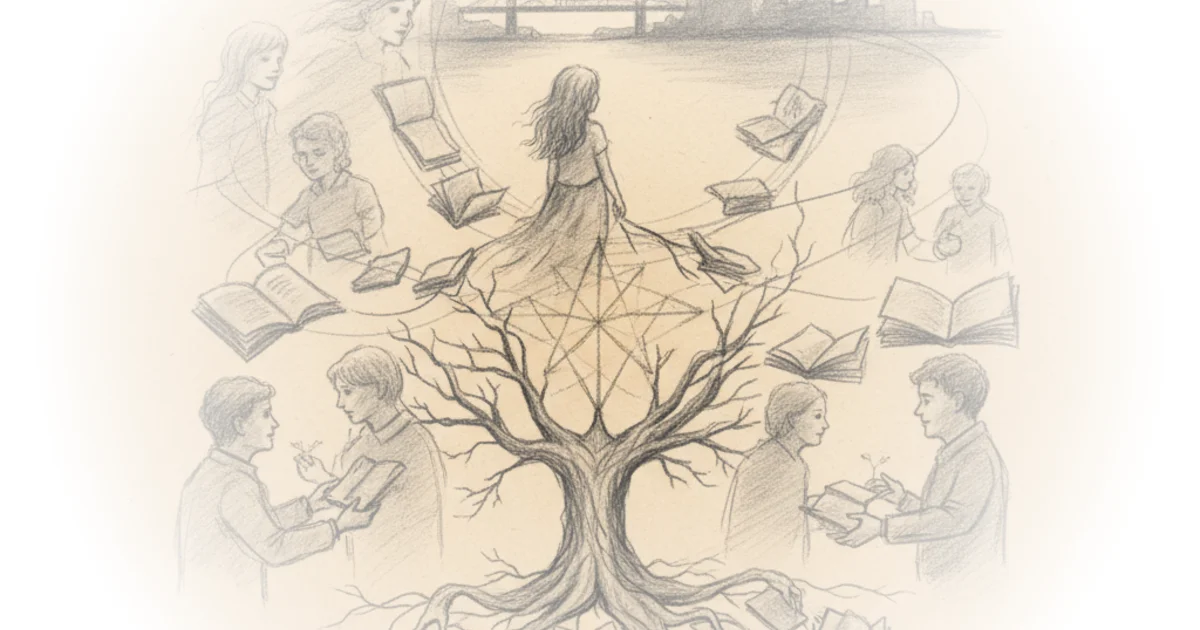
The Ethics of Silence and Truth
The core of the commentary shifts to the central tragedy: the drowning of Hertzel's brother, Bobby, and the family's subsequent "long silence." Ouellette highlights the tension between journalistic integrity and familial loyalty. Hertzel, a former journalist, adheres to a "hard line" regarding facts, refusing to invent dialogue or details that she cannot verify. Ouellette writes, "Deliberately making something up remains, in my judgment, wrong. It turns nonfiction into fiction."
This stance creates a fascinating friction with the memoir form itself, which often relies on reconstruction. Ouellette contrasts Hertzel's approach with writers like Pam Houston, who embrace "emotional truth" and allow for more latitude with details. The author argues that while both approaches have integrity, the crucial element is transparency. She notes that Hertzel changed the names of living siblings and omitted photographs to respect their wishes, a compromise that Ouellette views as a necessary negotiation rather than a betrayal of the truth.
"Readers deserve to know the code of ethics by which the writer has navigated her material."
This is the piece's most vital contribution to the conversation on memoir. It moves beyond the binary of "truth vs. lies" to ask what the writer owes the reader versus what they owe the subject. By detailing the "nasty emails" and the "one star" reviews from family members, Ouellette illustrates the high stakes of this ethical tightrope. The fact that Hertzel's mother disinherited her after reading an early essay underscores the danger of breaking the silence, a theme that echoes the broader cultural tendency to treat grief as a private matter to be managed rather than a shared history to be understood.
The Structure of Grief
Ouellette also dissects the structural choices Hertzel made, specifically the decision to announce the brother's death in the very first line. This is a bold narrative move that Ouellette praises for its honesty. Instead of building suspense, the book creates an "echo of his impending death" that colors every preceding scene.
"I wanted the reader to have that echo of his impending death in their head as they read, so that the events that came before were a little more resonant."
This structural decision transforms the memoir from a mystery into a tragedy, allowing the reader to view the family's interactions with the weight of the inevitable outcome. Ouellette points out that the book is not about the death itself, but about "stories, legend, family, books, a certain time and place." This reframing is crucial; it suggests that the silence surrounding the death was as damaging as the event itself. The author draws a parallel to the "Chronology of Water," another work dealing with drowning and memory, noting how both authors use the physical act of drowning as a metaphor for the way grief can submerge a family.
"Everybody dies, but Hertzels die especially well."
This quote, attributed to the father in the memoir, captures the family's fatalistic worldview. Ouellette uses it to illustrate how the family's narrative was shaped by a history of loss, including the death of the mother's brother in the war. The commentary suggests that the "silence" was a defense mechanism, a way to protect the family from the full weight of their history. By breaking that silence, Hertzel forces the family to confront the reality they had tried to bury.
Bottom Line
Jeannine Ouellette's commentary succeeds by treating the memoir not as a story to be consumed, but as an ethical act to be scrutinized. The strongest part of her argument is the insistence that transparency is the only bridge between the writer's truth and the reader's trust. The piece's vulnerability lies in its potential to alienate readers who prefer the emotional fluidity of "emotional truth" over the rigid constraints of journalistic fact-checking, but Ouellette makes a compelling case that in the face of family trauma, the facts are the only thing that can anchor the memory. As writers and readers, we must ask ourselves: what are we willing to sacrifice for the truth, and who pays the price when the silence is finally broken?