Most war reporting focuses on frontlines and strategy, but Tim Mak's coverage for The Counteroffensive forces a reckoning with the quiet, domestic apocalypse unfolding in Kyiv. By centering the narrative on a mother navigating a blackout while caring for a newborn, Mak argues that the true measure of this conflict isn't just territorial loss, but the systematic dismantling of the most basic human rhythms. This is not a story about energy grids; it is a story about the fragility of tenderness in the face of calculated darkness.
The Architecture of Survival
Mak's piece, written by Myroslava, a journalist returning from maternity leave, does not rely on abstract statistics to convey the severity of the Russian campaign against Ukraine's energy infrastructure. Instead, it grounds the devastation in the visceral reality of a 4-month-old infant. Mak writes, "Behind the dry reports about strikes on the energy system stand real families who manage to maintain a normal routine every day." This framing is crucial because it strips away the bureaucratic distance often found in geopolitical analysis. The author illustrates how the loss of electricity transforms a high-rise apartment into a survival camp, where preparing formula becomes a complex, temperature-sensitive operation performed by candlelight.
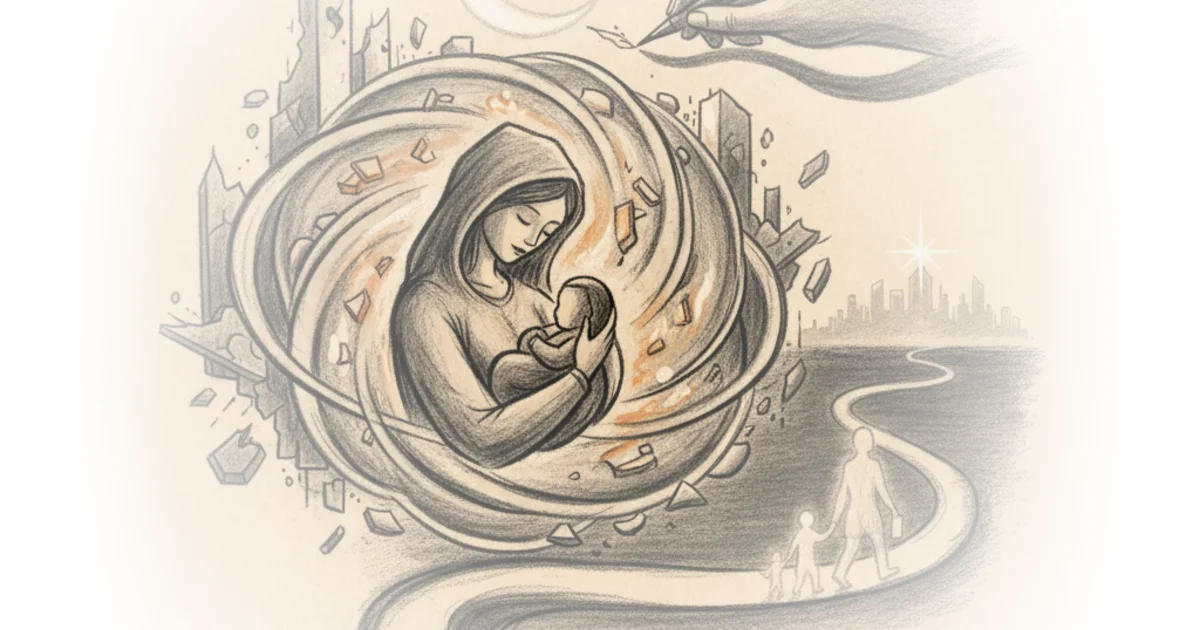
The narrative details the specific, grinding anxiety of modern urban life collapsing. When the lights go out, the water pumps stop, and families on the 14th floor must physically carry buckets to survive. Mak notes the psychological toll, quoting child psychologist Mariia Voloshyna: "People adapt to the new reality quite quickly, but in the background, it greatly raises the level of anxiety, problems with sleep appear, with rest in general." This observation is particularly potent when applied to infants, who cannot distinguish between day and night without the visual cues of sunlight or electric light. The mother must artificially signal the dawn with flashlights and bright toys, a surreal inversion of natural order that underscores the depth of the disruption.
"True resilience isn't a supply of batteries and candles; it's the ability to remain tender and warm when you're scared."
Mak draws a historical parallel to the New York City blackout of 1977, where darkness triggered a wave of looting and panic, to illustrate how fear of the unknown can destabilize society. However, the Ukrainian experience differs in a critical way: the darkness here is not a chaotic accident but a deliberate weapon. The author contrasts the panic of 1977 with the grim, practiced adaptation of Kyiv residents, yet acknowledges that the brain's ancient survival instincts still scream in the dark. This comparison adds necessary historical weight without minimizing the unique horror of a war where the enemy targets the very lights that keep civilization functioning.
The Invisible Wounds
While the physical hardships of cold and hunger are immediate, Mak's coverage shines a light on the intergenerational trauma being inflicted on children who will never remember the war but will carry its scars. The article argues that stress leaves a biological imprint on infants, manifesting later as anxiety and sensitivity. "Even if a child doesn't remember the darkness, the cold, or the sirens' sounds when they get older, their body will preserve these memories," Voloshyna is quoted as saying. This is a profound claim that shifts the debate from immediate survival to long-term societal health. The author suggests that the mother's calm presence is the only shield available, a fragile barrier against a world that has turned hostile.
The piece also touches on the guilt felt by parents for bringing children into a war zone, a sentiment the author pushes back against. "How can you feel guilty for being attacked?" asks another mother, Nadiia Samoilova, challenging the internalized burden of survival. This counter-narrative is essential; it reframes the act of parenting in wartime not as a mistake, but as an act of defiance. The author emphasizes that while the administration and the military focus on the strategic destruction of infrastructure, the human cost is measured in sleepless nights and the constant fear of getting trapped in an elevator.
Critics might argue that focusing so heavily on domestic struggles risks overshadowing the military necessity of defending the energy grid or the broader geopolitical implications of the conflict. However, Mak's approach suggests that ignoring the civilian reality renders any strategic discussion incomplete. The destruction of the energy system is not just a tactical victory for the aggressor; it is a humanitarian catastrophe that targets the most vulnerable first.
The Bottom Line
Tim Mak's coverage succeeds by refusing to let the reader look away from the intimate, daily horrors of war, proving that the destruction of a power grid is a destruction of humanity itself. The piece's greatest strength is its refusal to romanticize resilience, instead presenting it as a desperate, exhausting act of love that must be sustained against overwhelming odds. As the winter approaches and the attacks continue, the world must watch not just for the fall of cities, but for the endurance of the families trying to keep their children warm in the dark.