In a culture obsessed with the seamless perfection of artificial intelligence, Louisiana Channel presents a visceral counter-narrative: the most radical act of creation is the painful, biological reality of the human body. The piece does not merely profile Agnes Questionmark; it documents a ritual where the artist physically carves her way into a new identity, challenging the viewer to distinguish between a digital avatar and a flesh-and-blood transformation. This is not a standard artist interview; it is a raw account of how pain, biology, and performance collide to dismantle the rigid norms of gender and species.
The Architecture of Pain
Louisiana Channel captures Agnes Questionmark describing her work not as a simulation, but as a grueling physical necessity. "I'm condemned. I can't get out of my art practice," she states, establishing that the boundary between her life and her art is not just blurred, but non-existent. The author effectively frames her installations as extensions of her personal struggle, noting that while being trans can be tragic, it is also "very fun" and "a very beautiful experience." This duality is crucial; it refuses the singular narrative of suffering often imposed on queer stories, instead offering a complex view where joy and agony coexist.
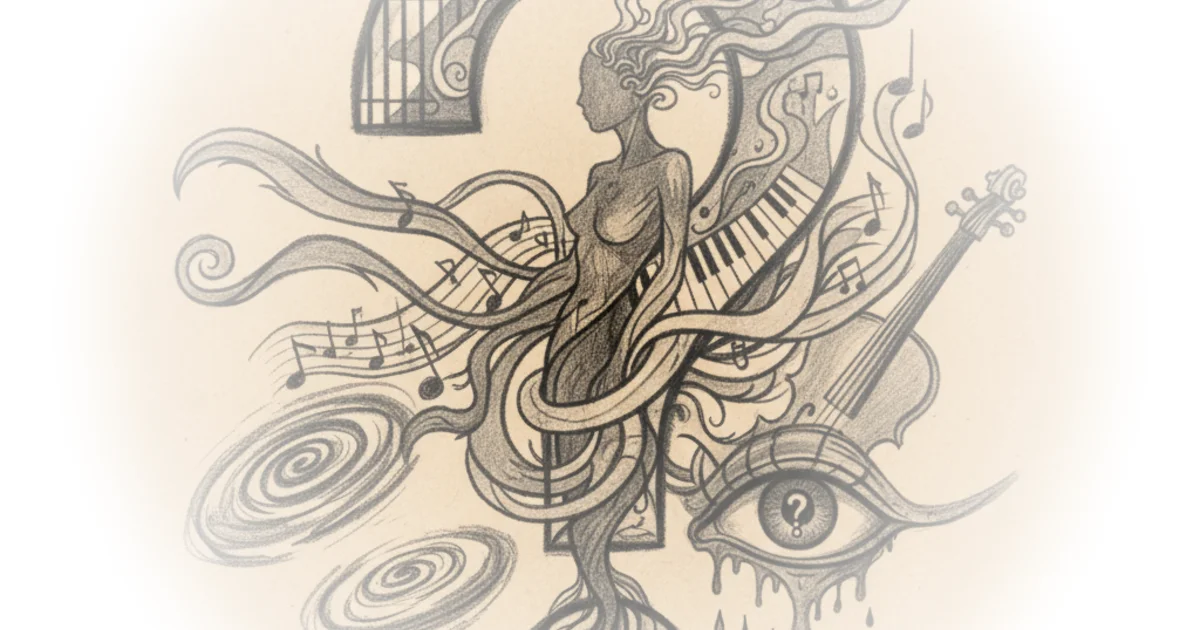
The coverage highlights the physical toll of Questionmark's process. She recounts performances where she sat in confined spaces for hours, "consume the the polyester with my feet until I started making holes inside slowly." The author uses this visceral imagery to argue that the artist's transformation is not metaphorical but literal. "To give life you have to go through pain to a very you have to wound yourself," Questionmark asserts, drawing a direct line between her artistic endurance and the medical realities of transition. This framing is powerful because it reclaims the narrative of bodily modification from the clinical gaze, presenting it instead as a self-inflicted, sacred ritual of birth.
Critics might argue that glorifying extreme physical pain as a prerequisite for authenticity risks alienating audiences who view transition as a medical necessity rather than a performance art piece. However, the author navigates this by grounding the pain in a specific, personal history of feeling "deemed as monsters" in a normative society, making the physical struggle a logical response to social erasure.
Tentacles and Transformation
The article pivots to the intellectual underpinnings of Questionmark's work, specifically her adoption of Donna Haraway's concept of "tentacular thinking." Louisiana Channel explains how the artist moved from a human identity to becoming a "posthuman transpecious creature," inspired by the octopus's ability to change and its role as a devoted mother. "I needed to develop some tentacles somehow," she explains, linking the biological metaphor to her own need to transform and let go of her past.
This section is particularly compelling because it connects high theory with bodily reality. The author details how Questionmark's 23-day performance was a "ritual to literally give birth to Agnes," where she took her first hormones on stage. "I really wanted the audience to experience something that was actually changing in real life, not just in their fantasy, but a body that was scientifically, biologically changing silently inside of me." This moves the work beyond mere costume or role-play; it becomes a documentation of a biological event. The author's inclusion of the artist's fear—"I always think I'm doing the wrong thing"—humanizes the grandiosity of the concept, reminding the reader that this transformation is fraught with uncertainty and vulnerability.
"The only moments I believe and I feel I am a creature is through my performances."
Questioning the Gaze
The final layer of the coverage explores how Questionmark turns the audience into participants in her interrogation of reality. The author describes a public performance in a train station where passersby were forced to confront their own assumptions. "The first question people asked was whether I was a man or a woman... Then the second question was more interesting was if I was a human or a doll or a mannequin," the artist recalls. Louisiana Channel notes that this interaction "turned the audience into doctors," forcing them to scrutinize her biology and identity.
This shift in perspective is the piece's most potent argument. By making the audience question whether she is a robot, a machine, or a human, Questionmark exposes the fragility of our own perceptions. "I decided to include question mark in my name because Agnes has always been a question for me," she says, suggesting that the uncertainty is the point. The author effectively argues that in an era of deepfakes and AI, the most subversive act is to present a body that is undeniably real, yet undeniably strange. The piece concludes with the artist's resolve: "I know what to do. I feel I have like I don't know if I would call it a mission, but a purpose maybe. And that gives you confidence."
Bottom Line
Louisiana Channel's coverage succeeds by refusing to treat Agnes Questionmark as a spectacle, instead presenting her work as a rigorous, painful, and necessary inquiry into the nature of existence. The strongest element is the seamless weaving of the artist's personal trauma with her intellectual framework, proving that the body is the ultimate site of political and philosophical resistance. The piece's vulnerability lies in its intensity; the graphic nature of the self-harm described may be difficult for some to reconcile with the concept of "fun," yet it remains a testament to the extreme lengths required to dismantle a normative reality.