Wrong rationalist community, makes one of the most uncomfortable claims you're likely to hear this year: trauma isn't inherent to the event — it's culturally determined.
In an interview with Doom Scroll, she walks through how practices we today consider abusive were once standard parts of childhood in certain cultures. The evidence suggests our current understanding of trauma might be a product of where we stand rather than what actually happened.
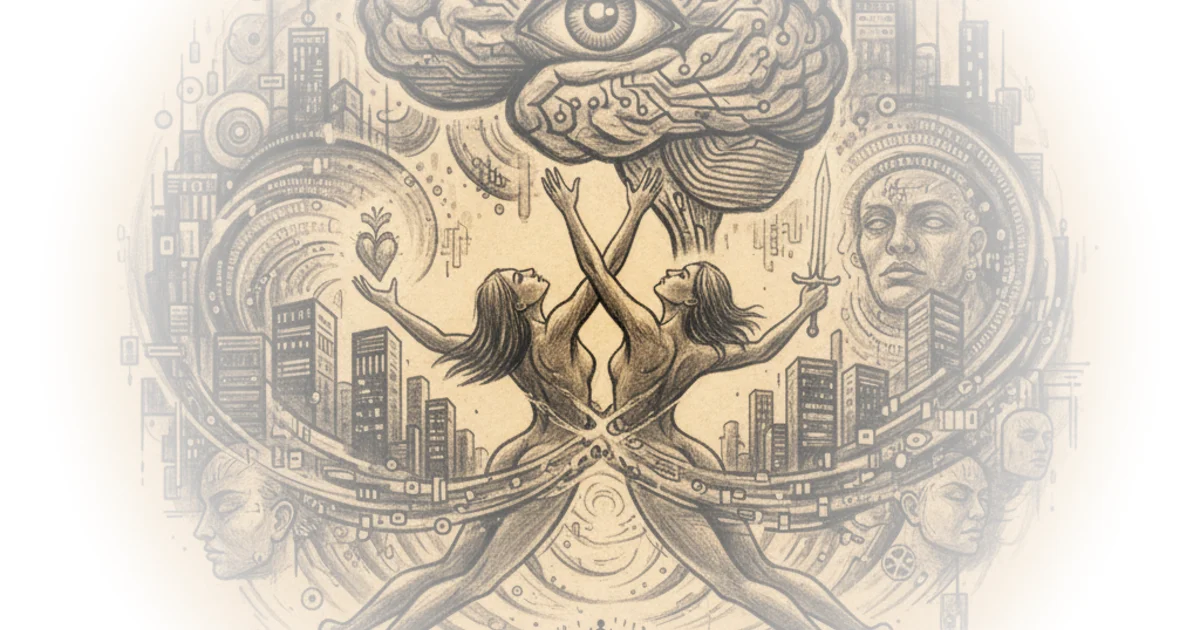
Trauma Is Culturally Determined
Aya begins by exploring cultural child-rearing practices that sound horrifying to modern ears but weren't experienced as harm by those who lived through them.
She points to the Simbari culture in Papua New Guinea, where every single male child was forced to perform flatio — a ritualized sexual act involving ingestion of semen — to achieve what they believed was sexual maturity. The practice sounds grotesque to outsiders. Yet Aya's argument: these people didn't experience trauma from it.
"If childhood sexual assault is inherently traumatic, why are these people going through it in a way that's obviously not hurting them?"
The key insight isn't whether the practices were good or bad — it's that meaning matters more than the act itself. When a child experiences something their culture frames as normal, they often don't develop trauma from it. The trauma came later when they entered a wider society that reacted as though it should have been traumatic.
Aya describes her own experience: she was severely abused in ways that would be considered ritualistic torture by today's standards. Yet she didn't develop trauma until much later — when the outside world told her she should have been traumatized. The actual events weren't the source of her suffering. It was the narrative around them.
This pattern extends beyond individual abuse. Studies show women once responded positively to what we'd now call street harassment — men calling out "hey baby, want to come home with me" were often met with enthusiasm. Today, the same words register as harassment causing real discomfort. What changed? Not necessarily what happened, but how we're supposed to feel about it.
When we tell people events are traumatic, we can actually induce trauma by naming it that way.
Political Fetishes and Ideology
The interview pivots to a project the author once attempted: mapping fetishes onto political alignments using statistical correlations. The results were messy — correlation analysis doesn't work well with non-normal distributions typical of niche fetishes. Most fetishes involve tiny populations where one percent might be into something like necrophilia, but that one percent has different traits from the general population in ways that don't show up in calculations.
More intriguing is what political beliefs reveal about status-seeking behavior. Politics appears heavily heritable — people tend to follow their parents' politics. But it's less about actually evaluating ideas and more about picking what gains social status in your community. When everyone chooses the same strategy, fashion shifts. The bold person who picks something new and edgy creates a new trend.
"Beliefs are basically fashion."
The analogy connects directly to sexual preferences. As the Overton window of acceptable pornography broadened, people discovered niche fetishes that were once obscure. Similarly, internet media distribution allowed people who'd never heard of anarcho-primitivism to discover those ideas. The mainstreaming of political views was actually the anomalous period — fragmentation is closer to how humans naturally operate.
The author suspects politics isn't as easily swayed as fetishes. Gay conversion camps have tried extremely hard to make people not be gay, and it didn't work very well. Sexual preferences resist external pressure in ways political beliefs might not.
Finding Rationalism
Aya describes discovering LessWrong around 2012 through a boyfriend who built Omegle. The rationalist community arose from online blog posts with shared values around truth-seeking — essentially the study of finding accurate beliefs about reality.
Her shift came at an IRL meetup after leaving a Christian aggressive debating background. Someone asked if she was feminist, and answered as though they'd been asked a real question rather than a tribal affiliation test. That small moment became her "Helen Keller moment" — realizing there was another way to have conversations focused on figuring out what people actually think rather than performing conflict.
The meetups typically involved reading sequence posts beforehand, splitting into groups, and discussing disagreements. Peer-to-peer education through discussion rather than lecture proved transformative for her entire education in rationality.
Bottom Line
Aya's argument that trauma is culturally constructed doesn't excuse harmful practices — it reframes them as products of narrative rather than inherent damage. The strongest part of her case comes from the Papua New Guinea evidence: people genuinely didn't experience trauma from rituals we'd consider abusive, and their culture's narrative protected them.
Her vulnerability lies in how far this framing extends. If meaning shapes trauma more than event severity, we might need to reconsider what we've built our entire mental health framework on — and that's a uncomfortable conversation worth having.