George Saunders tackles the most paralyzing dilemma in the creative process: how to maintain artistic integrity when every opinion feels equally valid. In a landscape often dominated by the tyranny of the loudest voice or the deepest wallet, Saunders offers a counter-intuitive solution that prioritizes solitude over consensus. He argues that the path to confidence isn't found in winning arguments, but in the quiet, repetitive act of listening to one's own internal gauge until it stabilizes.
Reframing Subjectivity
The piece begins by dismantling the binary of "right" and "wrong" in art. Saunders writes, "Might we modify 'everything is subjective' to 'everything is personal?'" This subtle linguistic shift is the foundation of his entire argument. By moving away from objective validity, he removes the need for an external arbiter. The author suggests that while there is no ultimate truth, the writer's specific preference is the only one that truly matters because the work will bear their name.
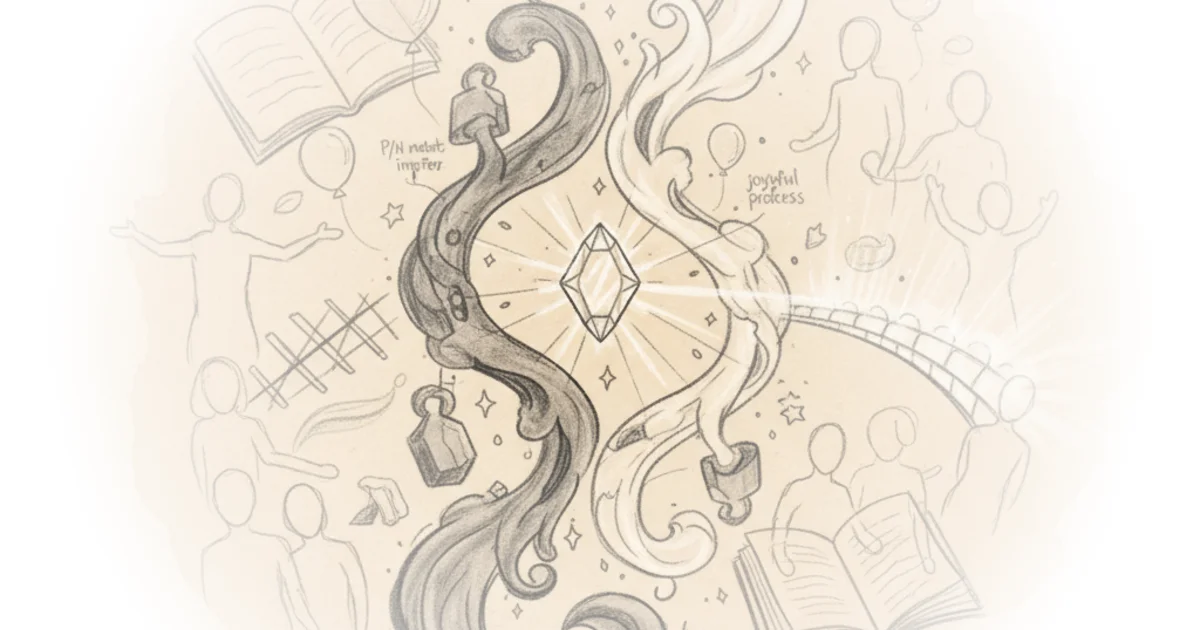
This reframing is particularly potent for those navigating the collaborative chaos of modern media production. Saunders acknowledges the reality of power dynamics, noting that it is easy to lose track of one's "P/N meter" when a "powerful movie producer [is] dangling lots of money in front of you." Yet, he insists that the editor's role is not to impose their will, but to help the writer find their "true, ultimate opinion." This aligns with the editorial philosophy often discussed in deep dives on The New Yorker, where the editor acts as a mirror rather than a sculptor. The goal is not to win a debate, but to locate the work that is "out there in the woods, longing to be found."
"The ultimate work is not the work in its current form; it's out there in the woods, longing to be found."
The Solitude of Confidence
Saunders identifies the root of creative conflict as a lack of preparation. He argues that the moment a writer introduces outside voices too early, they sacrifice their agency. "As soon as someone starts commenting on my work, I lose some part of my agency," he writes. The solution, he proposes, is radical isolation. By keeping a project to oneself for as long as possible, the writer allows their internal meter to recalibrate through countless drafts without the noise of external validation or criticism.
He uses the metaphor of redecorating an apartment to illustrate this process. Just as one replaces items one by one to find the right fit, the writer must make micro-decisions in solitude. "The longer you do this, the more sure you're going to be," Saunders notes. This approach builds what he calls "accrued confidence." When the writer finally enters the editorial conversation, they are not defending a fragile idea, but standing on a foundation of deep familiarity. This mirrors the concept of Gestalt psychology, where the whole is understood only after the mind has processed the interrelationships of the parts over time. A writer who has lived with a story for months understands its inner interdependencies in a way a fresh reader never can.
Critics might note that this advice assumes a level of privilege; not every writer has the luxury of time or the freedom to work in total isolation before facing market pressures. For many, the "garage" phase is a luxury they cannot afford.
Stubbornness vs. Vision
The commentary then addresses the reader's specific question: Is stubbornness a good measure of artistic vision? Saunders draws a sharp distinction between the two. He posits that if stubbornness comes from a "long connection with her story," it is actually confidence. However, if it is merely a desire to retain control without strong internal feelings, it is "blindness."
As George Saunders puts it, "If the stubbornness emanates from the writer's long connection with her story, then it's really not stubbornness, but confidence - it is a form of artistic vision." This is a crucial nuance for anyone in a collaborative environment. It suggests that the most effective way to handle conflict is not to argue louder, but to have done the work so thoroughly that the answer is self-evident. He admits that in the final moments, when time is running out, he will insist on his way, but only because he has already exhausted the alternatives in his own mind.
"We're like a doctor who's had this patient for many years and our anxiety is somewhat reduced by that familiarity, and our diagnoses are colored by curiosity, rather than the fear of failure."
Bottom Line
Saunders' most compelling argument is that confidence in art is not a personality trait, but a byproduct of solitary, iterative work. His biggest vulnerability lies in the practical application of this advice for writers operating under tight deadlines or within rigid corporate structures where "time is running out" is a constant reality. Ultimately, the piece serves as a reminder that the most powerful defense of one's work is not a loud argument, but a quiet, deep familiarity with the story itself.
The Final Decision
The piece concludes with a humble admission that the question of how to resolve conflict remains partially open, yet the path forward is clear: trust the meter, but only after it has been tested in the silence of your own mind. Saunders writes, "I'm not positive I'm right, but I'm ready to start the discussion from a more solid place." This is the ultimate takeaway for any creator facing the noise of collaboration: find your signal before you try to amplify it.