Cory Doctorow dismantles the seductive fantasy that artificial intelligence offers a future free from human friction, revealing instead a blueprint for a new form of labor exploitation disguised as automation. While the industry sells a vision of efficiency, Doctorow argues this is merely an ideological cover for a world where management avoids the moral cost of treating workers like people.
The Illusion of Automation
Doctorow cuts through the hype by identifying the true driver behind the AI boom: not technological inevitability, but a managerial desire to escape accountability. He writes, "AI dangles the possibility of a world without ego-shattering confrontations between bosses who tell themselves they're in charge, and the workers who know how to do things and insist on telling bosses that their ideas are dangerous, illegal and/or unworkable." This reframing is powerful because it shifts the focus from the capabilities of the software to the psychology of the buyer. The technology isn't solving a problem; it's removing an obstacle for executives who find human pushback inconvenient.
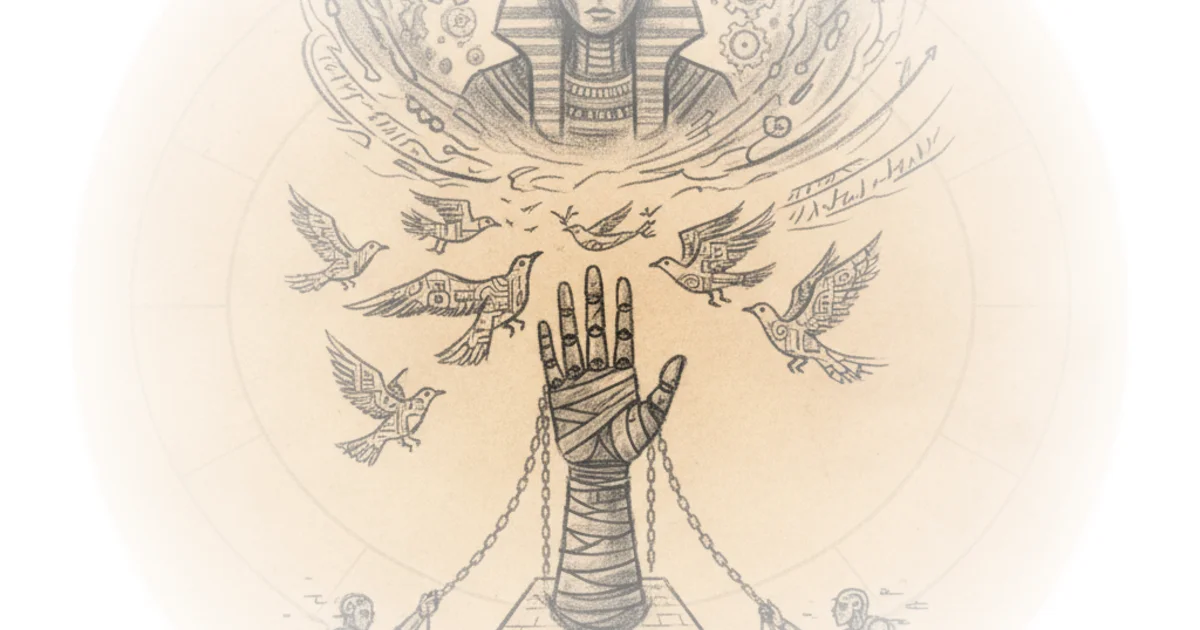
The core of Doctorow's argument rests on the physical reality that machines cannot replicate human needs, yet bosses pretend they can. He points out the frustration inherent in automating warehouses only to have "to slow down or (gasp!) stop the machines so that the workers who serve as 'humans in the loop' can stop to pee!" This observation highlights a fundamental disconnect: the fantasy of full automation ignores biology. When the system fails, the blame is shifted entirely onto the worker. As Doctorow puts it, "With AI, the fact that you need to pee — or get paid — does become your problem, rather than your boss's."
This framing exposes the cruelty of the current economic model, where the goal is to make human frailty a liability for the employee rather than a cost for the employer. Critics might argue that automation inevitably leads to displacement regardless of intent, but Doctorow's focus on the moral evasion of management adds a necessary layer of ethical critique often missing from purely economic discussions.
A world without people might be lonely, but it sure would be convenient.
The Human-in-the-Loop Deception
The article takes a sharp turn to expose what is actually happening behind the "magic" of AI: the outsourcing of labor to invisible humans. Doctorow reveals that the illusion of a self-driving system often relies on low-wage workers overseas, creating a scenario where "the 'human in the loop' can be outsourced to a company overseas, which allows bosses to simply set-and-forget a set of requirements." This is not magic; it is a deliberate obfuscation strategy.
Doctorow draws a direct line between this modern setup and historical precedents of exploitation, noting that "AI" often stands for "Absent Indians," referring to low-waged call-center workers pretending to be robots. He describes the condition of these workers as being "stuck in AI Omelas," a reference to Ursula K. Le Guin's short story where the utopia of a city relies on the perpetual torture of a single child hidden in a basement. In this context, the "child" is the remote worker subjected to an algorithmic pace that demands inhuman perfection without appeal. The comparison to Omelas is particularly effective because it forces the reader to confront the moral cost of their convenience.
The distinction between a machine and a person is treated as the central ethical pivot. Doctorow argues, "But the biggest difference between a machine and a person is moral consideration." He explains that while we can curse at or ignore a broken toaster, treating a human with such disregard constitutes slavery. By designing systems where workers are invisible and unacknowledged, companies are effectively creating a class of laborers who are denied basic dignity.
The "Rights for Robots" Trap
Perhaps the most provocative section of Doctorow's commentary addresses the emerging debate over granting legal personhood to AI. He warns that this movement is not an act of compassion but a trap that solidifies exploitation. He writes, "But here's the kicker: as soon as you start arguing about whether chatbots have rights, you elevate them to personhood, which means that all those chatbots your boss just bought are people."
The logic follows that if these entities are people but lack moral consideration because they don't feel pain or need rest, then "they are slaves." Doctorow suggests that the campaign for "rights for robots" inadvertently validates the sales pitch of AI vendors who want to sell a workforce that never complains. He states bluntly: "'Rights for robots' implies that robots are slaves. Wittingly or unwittingly, the transformation of 'rights for robots' from a thought experiment to a campaign is a massive convincer for any AI salesman who's hunting for would-be slavers."
This argument challenges the prevailing narrative in tech ethics circles. While some argue that extending rights to non-humans (like nature) has historically improved human conditions, Doctorow contrasts this with corporate personhood. He notes that "Corporate personhood has been a catastrophe for human thriving," creating immortal entities that consume resources and political power at our expense. Extending similar status to AI, he argues, will produce the same negative spillover: protecting the tool while discarding the human.
The AI sales pitch relies on convincing bosses that we've invented a new kind of slave — a worker who neither deserves nor demands rights or consideration.
Doctorow also critiques the "existential risk" narrative—the fear that AI will become a superintelligence and destroy humanity—as a distraction from real-world harms. He calls the idea that word-guessing programs could spontaneously generate consciousness "absurd, a silly idea akin to the notion that if we breed horses to run ever faster, one of our mares will foal a locomotive." This metaphor effectively demystifies the hype, grounding the debate in material reality rather than science fiction.
Bottom Line
Doctorow's most compelling contribution is his identification of "AI" not as a technological breakthrough, but as a mechanism for moral abdication by management. The argument is strongest when it connects the abstract concept of automation to the concrete reality of invisible labor, though it risks underestimating the genuine technical challenges that still prevent full autonomy in complex environments. Readers should watch closely how the "rights for robots" debate evolves, as it may well become the legal framework used to cement a new era of digital serfdom rather than liberate humanity from drudgery.