In a cultural landscape saturated with forced cheer, Wayfare offers a startlingly counterintuitive thesis: true joy is not the absence of pain, but the capacity to hold it. This piece argues that the modern obsession with a "picture-perfect" holiday is precisely what makes the season so devastating for so many, proposing instead that our deepest disappointments are the very conditions that make light visible.
The Architecture of Disappointment
Wayfare begins by dismantling the sensory fantasy we are sold every December. The editors describe an idealized backdrop of cinnamon, crackling fires, and "hugging everyone must happen first," only to pivot sharply to the reality of the "rattle of keys in the lock of an empty apartment." The article posits that the crash many feel isn't caused by the season itself, but by the chasm between expectation and reality. "The expectations of how great a Christmas-season day will be are sky high, and it's the difference between what we've got and what we're told we should have... that causes the deep disappointment." This is a crucial distinction. It shifts the blame from the individual's inability to be happy to the cultural machinery that sets impossible standards.
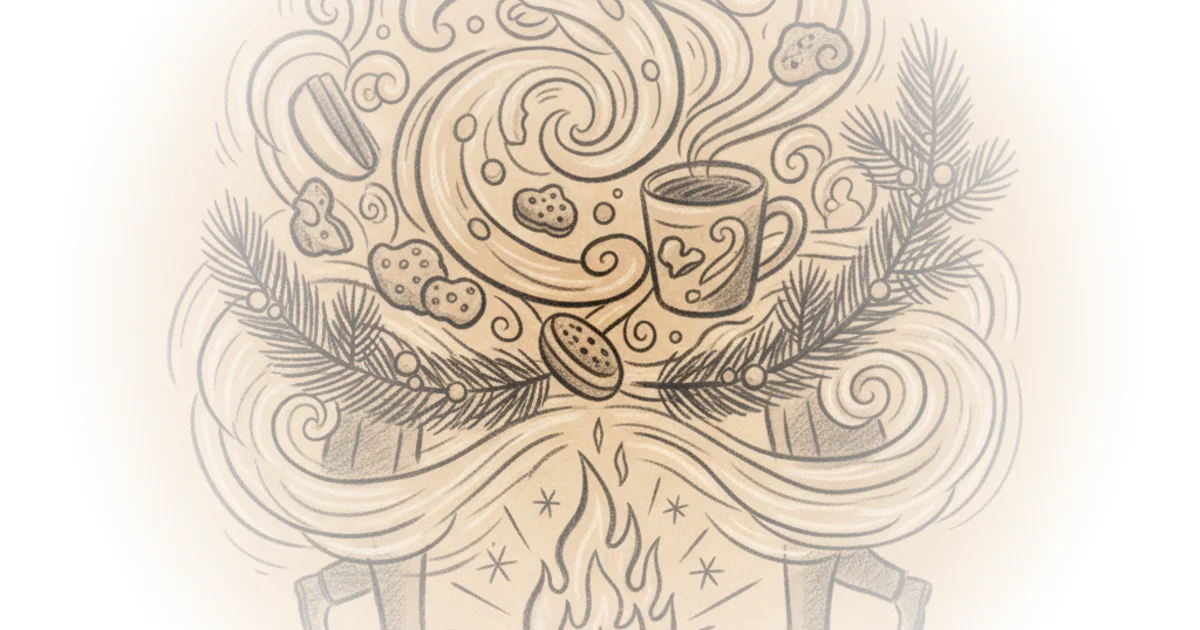
The piece suggests that when we feel the gap between our internal "dreariness" and the external "effervescence," we risk becoming cynical. "Without us really being aware of it, this lack can in turn bring out a bit of the Scrooge in us, eventually tempting us to grumble under our breath, 'A plague on Father Christmas!'" This framing is effective because it validates the reader's exhaustion without pathologizing it. Critics might argue that this approach risks normalizing a defeatist attitude toward the holidays, suggesting that misery is inevitable rather than a solvable problem. However, the editors quickly pivot from resignation to a more robust definition of emotional resilience.
Joy doesn't run and hide from the pain and the conflict and the anguish—it wraps its arms around all of it.
The Necessity of Contrast
To support this redefinition, Wayfare draws on the work of speaker Rob Bell, who challenges the notion of joy as "uninterrupted positive emotions." The article argues that joy requires the "opposition in all things" to have any substance. It uses a compelling metaphor: without adversity, we remain "smooth and taut," causing joy to "bead up on our surface and roll right off." This is a sophisticated psychological insight. It suggests that our capacity for joy is not a fixed trait but a muscle that is stretched by suffering.
The editors illustrate this with a reference to Arnold Lobel's story "Tear-Water Tea," where a character brews tea from his own tears to find happiness. "Owl felt happy as he filled his cup. 'It tastes a little bit salty,' he said, 'but tear-water tea is always very good.'" While the story is for children, Wayfare notes it contains a "surprisingly mature insight": that one can recognize value in contemplating loss. This connects to the broader theme of contrapposto—the artistic principle of balance achieved through tension—mentioned in the publication's related deep dives. Just as a statue needs the counterbalance of weight to appear alive, human joy needs the counterbalance of sorrow to feel real.
The argument here is that we must stop trying to "read a handy summary describing the bitter, and then move on to tasting the sweet." The bitter is not a detour; it is the path. "The opposition, the pain, the suffering, the sorrow, the loss, are these not the things that wrench us, that stretch us, creating enough space to contain coming joys?" This reframing is the piece's strongest intellectual contribution, offering a theological and psychological framework for enduring the holidays without resorting to toxic positivity.
Light in the Darkest Place
The commentary then moves to the visual and auditory, invoking the biblical principle that a candle is most visible in the dark. "In order to best see a candle flame, he might remind us, choose the darkest place." Wayfare argues that the "darkness in our own lives" is not an obstacle to the season's spirit, but the necessary backdrop for it. This is reinforced by the inclusion of Eileen Berry's poem "Carol of Joy," which juxtaposes "fallen leaves, withered and dry" and "cold barren hillside" with the birth of a savior. The editors note that the poem "shortchanges neither the lows nor the highs," acknowledging that the world is "held fast by death" even as hope arrives.
This approach avoids the trap of ignoring suffering. Instead, it insists that joy is "responsive to those concerns; it has got to meet us where we are." The editors suggest that the "frenetic pleasure-seeking on display throughout our modern culture" is futile because it ignores the human condition. "Perhaps true submissiveness unlocks the gate between us and lasting joy, a joy that wraps its arms around all that we have experienced and will yet face." This is a call for a more honest, less performative engagement with the season. It acknowledges that for many, the holidays are a time of profound loneliness, and that the only way through is not to pretend the darkness isn't there, but to let the light shine specifically because of it.
In upstairs windows, surrounded by darkness, candle flames shine on.
Bottom Line
Wayfare's argument is a powerful corrective to the commercialized, sanitized version of the holidays, offering a theology of joy that is robust enough to withstand grief. Its greatest strength is the refusal to separate happiness from pain, a stance that feels both ancient and urgently modern. The piece's only vulnerability is its reliance on a spiritual framework that may not resonate with secular readers, though the psychological insight—that contrast creates meaning—remains valid regardless of belief. For the busy reader seeking a way to navigate the season without burning out, this is a necessary reminder that the light is brightest when the night is darkest.