Fred Mills doesn't just report on a construction project; he reveals a high-stakes gamble where a $2.4 billion retrofit serves as a proxy for a city's entire identity. While most coverage of the Salt Lake City Temple focuses on its religious significance, Mills argues that the engineering feat required to save it exposes a rare moment of preservation in a city that has historically shrugged off its own history. This is not merely a story about stopping a building from falling over; it is a narrative about how a 19th-century experiment in urban planning is finally being forced to confront the seismic reality of the 21st century.
The Seismic Imperative
Mills immediately grounds the reader in the terrifying math of geology, noting that the Wasatch Fault runs directly beneath the valley. He writes, "A major earthquake of around magnitude 7 happens once in a millennia. That may sound like a lot of time, but the reality is there's a 57% probability of at least one earthquake of magnitude 6 or greater in the next 50 years." This statistic is the engine of the entire piece, transforming a routine maintenance issue into an existential threat. The author effectively uses the 1994 Los Angeles earthquake and the 2003 Iran disaster as benchmarks to illustrate the potential devastation, making the abstract threat of a "magnitude 6" quake feel viscerally real.
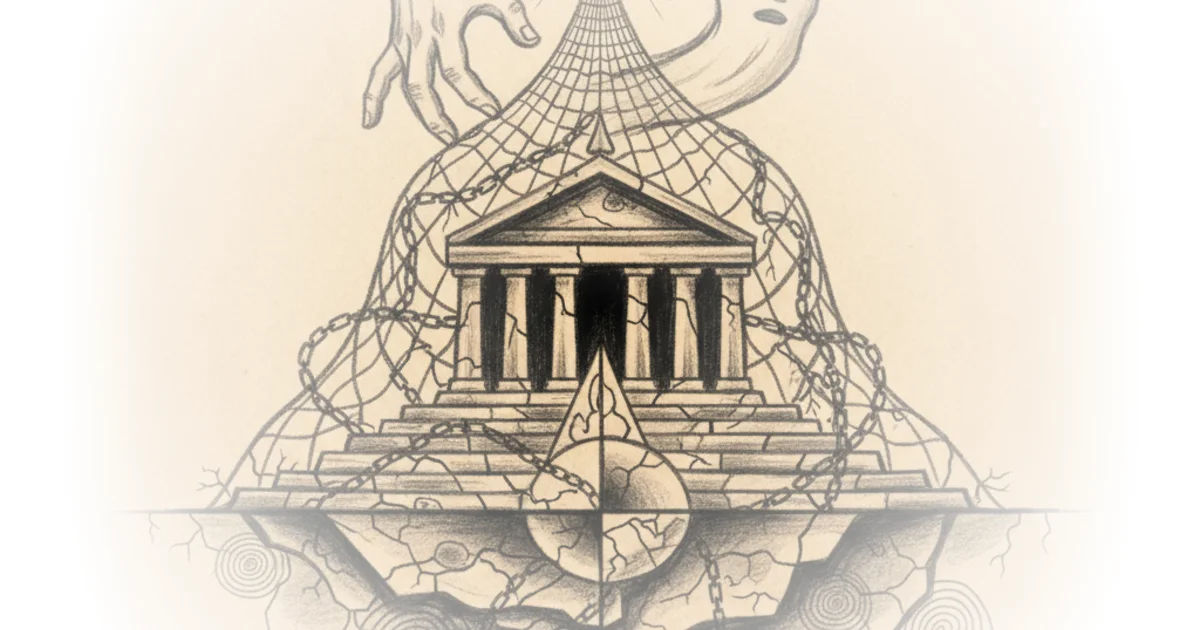
The coverage draws a compelling parallel to New Zealand's Christchurch Cathedral, where a similar magnitude 6.3 quake led to the destruction of a historic landmark. Mills observes, "In many ways, the Church of Latter-day Saints is trying to do exactly the same thing before disaster strikes." This comparison is crucial because it shifts the narrative from prevention to urgent necessity. Critics might note that the comparison to Christchurch is slightly imperfect, as the Utah temple is a fortress of granite while the cathedral was largely unreinforced masonry, but the structural vulnerability remains the same.
The plan to keep it standing is a remarkable U-turn from a city that's normally shrugged off its historic buildings.
Engineering the Impossible
The technical core of Mills' argument lies in the description of "base isolation," a process that sounds almost magical in its simplicity. He explains that the team is "decoupling the structure from any ground motion" to allow the building to move independently. The scale of this operation is staggering, with Mills detailing how they excavated 10.6 meters deep to install 98 massive isolators, each weighing 8,000 kilos. He writes, "Try and think of it like a raft made of concrete-filled steel pipes bored underneath the building structure." This analogy is a masterclass in simplifying complex engineering for a general audience, turning a technical specification into a mental image of a floating fortress.
The sheer physical effort required to retrofit a 19th-century stone structure without damaging it is emphasized through the description of the underpinning process. Mills notes that the team used "micro piles, secant piles, tieback anchors, tensioned tie rods, hand-constructed underpinning piers, plus consolidation grouting" to support the heavy stone walls while digging underneath. This level of detail serves a dual purpose: it highlights the difficulty of the task and underscores the immense value the Church places on the building. The argument here is that the cost is justified not just by the building's size, but by the impossibility of replicating its craftsmanship.
The Urban DNA of Salt Lake City
Perhaps the most distinctive part of Mills' coverage is the deep dive into the city's unique grid system, which he argues was engineered for a different era. He points out that "Salt Lake City isn't just another American grid. It's one of the most deliberately planned urban layouts in the world." The author contrasts the massive 200-by-200-meter blocks of Salt Lake City with the standard 80-by-200-meter blocks of New York, explaining that these "micro farms" allowed for a hybrid rural-urban lifestyle. This historical context is essential because it explains why the temple dominates the skyline; it was the anchor of a city designed around the idea of self-sufficiency.
Mills writes, "The temple really did become the anchor points of Salt Lake City's urban plan. Streets, public squares, and civic institutions aligned themselves around the temple block." This framing elevates the temple from a religious site to a civic linchpin. The author suggests that the wide streets, originally designed for ox teams, inadvertently saved the city from the gridlock that plagues other American metropolises, allowing for easier adaptation to cars and light rail. However, this success has come at a cost. Mills admits that "Skyrocketing land values and pressure from developers has meant the destruction of many heritage buildings," making the $2.4 billion investment in the temple a symbolic stand against the erasure of the city's past.
This building's going to go from being in danger of collapse in an earthquake to becoming one of the most seismically resilient historic structures in the world.
Bottom Line
Fred Mills' strongest asset is his ability to weave together geology, engineering, and urban history into a single, cohesive narrative about resilience. The piece's greatest vulnerability is its reliance on the assumption that the temple's survival will indeed catalyze a broader preservation movement in a city that has historically favored development over heritage. Yet, the sheer scale of the engineering feat described leaves little doubt that this project is a watershed moment for Salt Lake City, proving that even the most stubborn historic structures can be saved if the will and the resources align.