In a digital landscape where privacy is often treated as a luxury for the tech-obsessed, The Hated One argues that the most significant shift in the privacy movement isn't coming from niche forums, but from the world's most famous YouTuber. The piece leverages PewDiePie's recent pivot away from Google not merely as a celebrity endorsement, but as a critical inflection point that could finally break the echo chamber of privacy advocacy. This is not just a tutorial; it is a strategic analysis of how mainstream influence can democratize digital rights.
The Power of Mainstream Advocacy
The Hated One opens by contextualizing PewDiePie's journey, noting that Felix's move into open-source Linux and self-hosting is more than a hobbyist experiment. "Being tracked with literally everything I do just feels kind of odd," the author paraphrases Felix's sentiment, highlighting a growing public discomfort with surveillance capitalism. The core of the argument is that while privacy advocates have struggled for years to reach beyond their own communities, PewDiePie's massive platform offers a unique vehicle for this message. The Hated One writes, "It was really frustrating to see that I cannot actually reach the masses as widely as it is needed," before celebrating Felix's intervention as a "massive win for all of our communities."
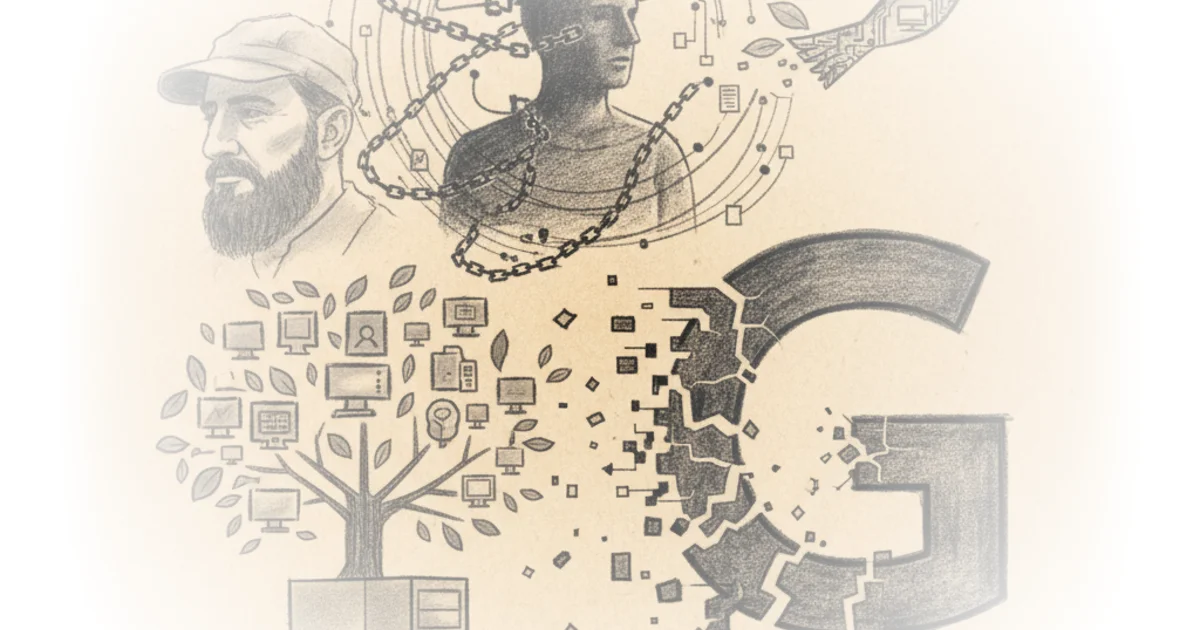
This framing is effective because it shifts the narrative from technical superiority to social necessity. The author acknowledges that while they have been preaching to the choir since 2016, the YouTube algorithm inherently limits the spread of these ideas to new audiences. By validating PewDiePie's efforts, The Hated One bridges the gap between the "normies" and the privacy underground. However, critics might note that relying on a single influencer to shift public consciousness is a fragile strategy; if the narrative shifts or the creator loses interest, the momentum could stall.
We are not moving away from Google for the sake of being deooled. We are doing it for privacy reasons because you can have a completely deooled device on an iPhone and you would still not be any reasonably more private.
A Pragmatic Roadmap for the Masses
Moving beyond theory, the commentary outlines a tiered approach to privacy that prioritizes accessibility over total decentralization. The Hated One emphasizes that while self-hosting is admirable, it is not a requirement for protection. "Felix is going this self-hosted I'm my own boss route, which is valid, and it's absolutely amazing," the author admits, but immediately pivots to offer "easier ways that you can achieve the same level of privacy protection." The strategy begins with the search engine, recommending DuckDuckGo as a solid entry point because it is the "easiest to change." The author notes that DuckDuckGo offers built-in privacy features like anti-trackers and history wiping, making it a functional browser in its own right.
The argument then tackles the web browser, a major vector for surveillance. While acknowledging Firefox as the "nonprofit open-source champion," The Hated One candidly admits its security shortcomings compared to Chromium-based alternatives. "Unfortunately, and this has been proven to be the case, Firefox is not as secure as Chromium-based browsers," they write. This honesty adds credibility to the piece, distinguishing it from dogmatic advocacy. Instead, the author suggests Brave or the ultra-secure Vivaldi on GrapheneOS as superior alternatives for those seeking robust protection without the complexity of compiling code.
The Email and Operating System Pivot
The most critical infrastructure changes discussed involve email and the mobile operating system. The Hated One praises the move to encrypted providers like Proton Mail and Tuta, noting that the primary benefit isn't just message encryption, but the removal of the "hidden Google Analytics and tracking pixels" that plague the Gmail ecosystem. "When you have Gmail, it's not just that you're giving up your emails to Google. You're also giving up all of your other activities across different apps and websites," the author explains. This insight reframes email not as a communication tool, but as a central hub for identity tracking.
Perhaps the most distinctive recommendation is the adoption of GrapheneOS on a Google Pixel device. The Hated One argues that this creates a paradox where the user supports Google hardware financially while stripping the company of its primary revenue stream: data. "If I'm not allowing Google to advertise on me and I'm not giving them any money for their services, then the fact that I bought their phone is actually probably losing them more money," the author asserts. The piece reassures readers that this technical leap is not as daunting as it sounds, describing the installation as "extremely simple" and noting that the risk of bricking the device is "very very close to zero."
Critics might argue that the reliance on a specific hardware brand like Pixel limits the accessibility of this advice, as not all users can afford or access these devices. Yet, The Hated One counters this by emphasizing that the software itself is the key, and the installation process is designed for the average user, not just command-line experts.
The Final Layer: Passwords and Notes
The commentary concludes by addressing the often-overlooked areas of password management and note-taking. The Hated One distinguishes between self-hosted solutions like Vaultwarden and user-friendly cloud services like Bitwarden, suggesting that for most people, the paid cloud version offers the best balance of security and convenience. "You will only have to remember your password to the Bitwarden itself," the author notes, highlighting the simplicity of modern encryption. Similarly, for note-taking, the author champions end-to-end encrypted services like Standard Notes and Notesnook, arguing that "I want any of my information especially my thoughts and ideas to be accessible to anyone except for me."
I want any of my information especially my thoughts and ideas to be accessible to anyone except for me.
The piece wraps up by touching on the future of artificial intelligence, suggesting that running local large language models on personal hardware is the next frontier for privacy. While the transcript cuts off mid-sentence regarding Jan.ai, the implication is clear: the ultimate goal is to keep data processing local, ensuring that even our interactions with AI remain private.
Bottom Line
The Hated One's piece succeeds by stripping away the elitism often associated with privacy advocacy, offering a pragmatic, step-by-step guide that leverages mainstream influence to drive real change. Its greatest strength is the willingness to admit that while self-hosting is ideal, user-friendly alternatives like GrapheneOS and Bitwarden are sufficient for the vast majority of people. The argument's only vulnerability lies in its heavy reliance on specific hardware ecosystems, but the underlying philosophy—that privacy is a fundamental right worth fighting for—is universally applicable and urgently needed.