The Real Story Behind Whale Conservation
Matthew Yglesias opens with an unexpected gateway to industrial history: a rereading of Herman Melville's whaling epic. What emerges is not a tale of environmental heroism, but a messy collision of economics, technology, and political intervention that challenges the comforting narrative many grew up with.
Kerosene Didn't Save the Whales
The popular story holds that whale oil became obsolete when petroleum kerosene arrived, making whaling unprofitable and sparing the species. Matthew Yglesias writes, "But having read more non-fiction about whaling after my 'Moby Dick' re-read, I now know this is not true." The American whaling industry did collapse in the 1860s, but not because whales were suddenly worthless.
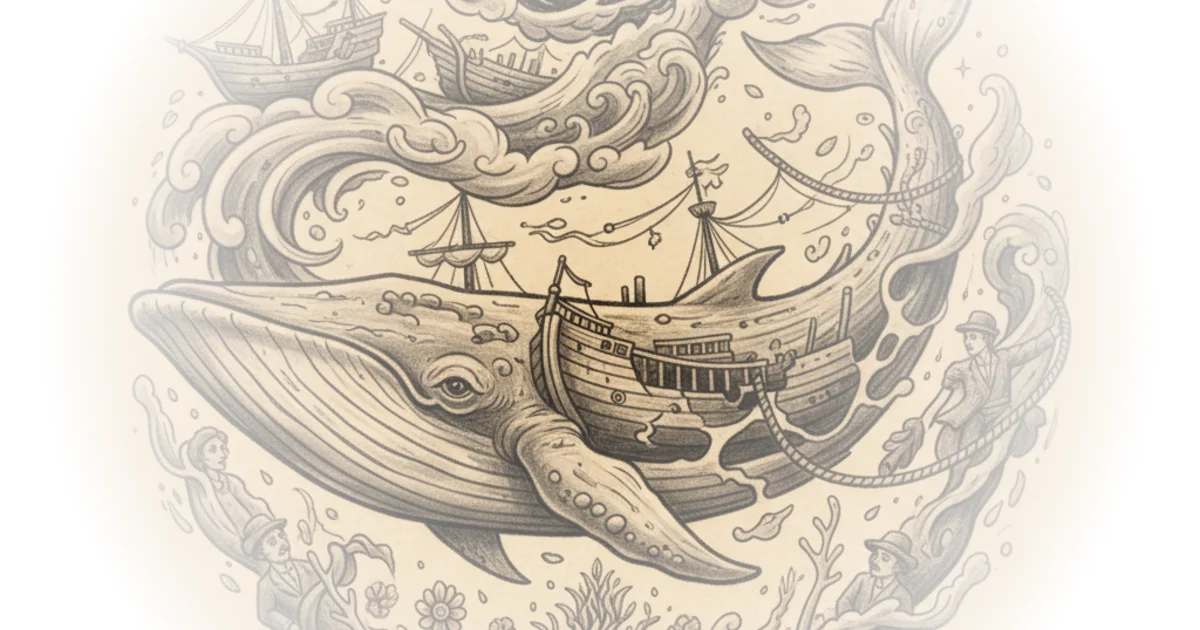
American whalers clung to centuries-old methods — sailing ships, hand-thrown harpoons, multi-year voyages. As Matthew Yglesias puts it, "You're on a years-long ocean voyage across the entire world (because the North Atlantic whale population has already been depleted) in miserable conditions, engaged in grotesque and brutal butchery, all so that people can have nicer candles." Meanwhile, Norwegian innovators developed steam-powered boats and harpoon cannons with explosive grenades. They could hunt faster whale species — humpback, blue, fin — that traditional methods couldn't catch.
"But a new set of Norwegian whalers — and later imitators from other countries — pioneered a more dynamic form of whaling with more modern equipment that was robust until well into the 20th century."
Whale killing didn't end. It became more efficient. The market found new uses: margarine production (Unilever's breakthrough), soap, and industrial lubricants. Matthew Yglesias notes that sperm whale oil "was being used in transmission fluid by American car companies until it was banned by Congress in 1972."
Technology Versus Politics
The deeper question is what actually stopped whaling. One view celebrates technological substitution — when better alternatives appear, destructive practices fade naturally. Matthew Yglesias writes, "There's no use scolding people into giving them up, and it's a mistake to overemphasize political activism relative to scientific and technological progress."
The competing view emphasizes political pressure. Whale killing peaked in the 1960s, decades after kerosene and margarine alternatives existed. The Soviet whaling fleet operated outside market logic entirely. As Matthew Yglesias explains, "In a non-market economy, if the government wants to pay people to kill whales, then whales will be killed whether or not killing whales is economically useful." Much of the meat went to waste or animal feed. The killing was ideological, not economic.
Critics might note that this framing understates how cultural shifts matter — the fact that most people don't want to eat whale meat is itself a political and cultural achievement, not just market preference. Japan's continued whaling proves the exception: where cultural demand persists, political bans face resistance.
The Uncomfortable Verdict
Matthew Yglesias concludes, "There was no time when most people were willing to make large economic sacrifices for the sake of whales." The environmental movement's origin story — that activism saved the whales — collides with a harder reality. Whale populations recovered because killing them stopped being profitable everywhere except niche cases, and because international political pressure finally targeted the irrational killing (Soviet waste, Japanese cultural consumption).
Bottom Line
The whales weren't saved by enlightenment or sacrifice. They survived because their economic utility collapsed and political pressure closed the loopholes where killing persisted without purpose. The lesson for climate change is sobering: technological alternatives matter, but without political enforcement, irrational destruction continues. Neither technology nor activism alone suffices — both are required.