Tim Mak's reporting cuts through the noise of political reshuffles to ask a devastatingly practical question: when the architect of a winning strategy is removed, does the strategy survive? This piece is notable not for cataloging the latest cabinet changes in Kyiv, but for grounding the fate of Ukraine's asymmetric warfare capabilities in the lived experience of the drone operators actually flying the missions. In a landscape often dominated by high-level diplomatic maneuvering, Mak forces us to confront the human cost of bureaucratic instability, revealing that the 37% rise in civilian casualties is not just a statistic, but a direct consequence of the friction between political optics and battlefield necessity.
The Human Cost of Bureaucracy
Mak frames the dismissal of Defense Minister Mykhailo Fedorov not as a routine personnel change, but as a potential rupture in Ukraine's ability to strike deep into Russian territory. He introduces us to "Oleksii," a drone operator whose unit has been pivotal in targeting Russian logistics, to illustrate the disconnect between the front lines and the capital. Mak writes, "Fedorov's dismissal would not cause middle strikes to disappear overnight. Most units and military commanders recognize them as an effective capability," but immediately pivots to the real danger: "But would they have been scaled at the same pace without the minister's support? I reckon they would not."
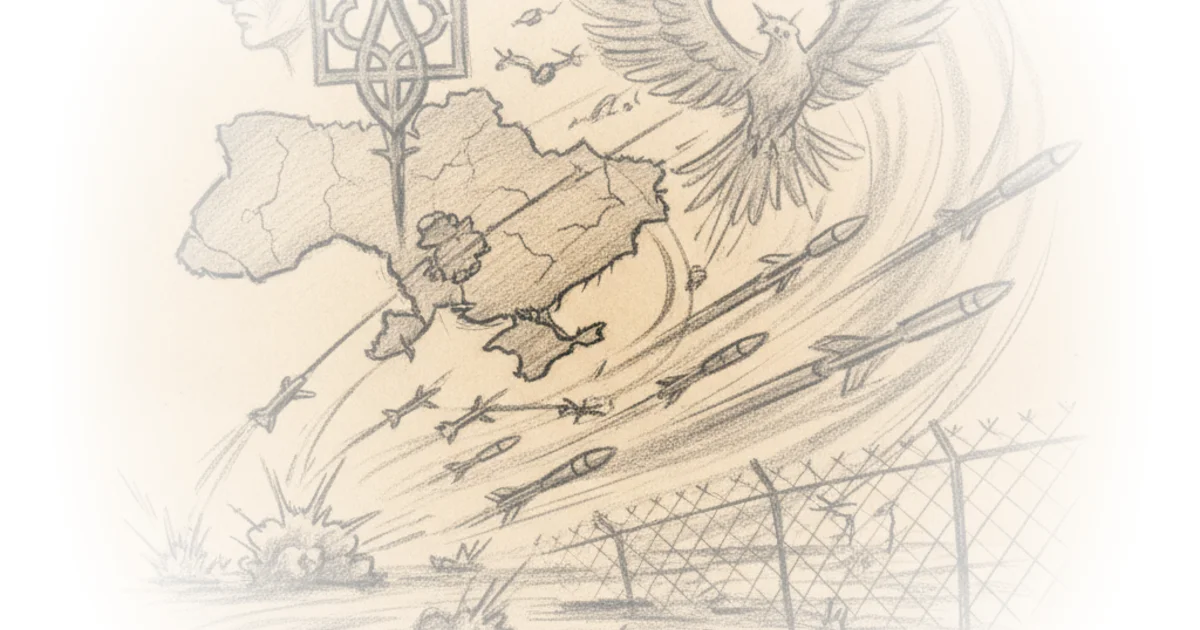
This distinction is crucial. The article argues that while the technology exists, the institutional will and the specific procurement mechanisms—like the "ePoints" system that rewards units with equipment—were Fedorov's brainchild. By focusing on Oleksii's frustration, Mak highlights a terrifying reality for a nation under siege: the war is being fought by soldiers who are now uncertain if their leadership will continue to prioritize the very tactics that are keeping them alive. The narrative suggests that the removal of a key figure is not just a political loss, but a tactical gamble with civilian lives hanging in the balance.
The issue isn't just quantity. The ministry also planned to introduce competitive procurement, which would reduce the cost of existing platforms.
Critics might argue that in a total war, no single minister is indispensable and that the military bureaucracy is designed to function regardless of personnel changes. However, Mak's reporting on the "Logistics Lockdown" program suggests that the momentum was fragile, dependent on a specific vision that may not be easily replicated by a successor coming from a different background, such as the new acting minister's roots in special operations rather than defense procurement.
The Mechanics of Asymmetric Warfare
The piece excels in demystifying the difference between "middle strikes" and "deep strikes," a distinction often blurred in Western media. Mak explains that middle strikes, ranging from 30 to 200 kilometers, are the workhorses of disrupting Russian logistics, often utilizing Starlink for real-time control. He quotes Oleksii describing the visceral nature of the work: "[Launching the drone] sounds like a Shahed. It's incredibly loud, so we wear the headset to protect our ears." This sensory detail grounds the high-tech discussion in physical reality.
Mak further details the strategic impact of these operations, noting that they have brought the critical highway linking Crimea to occupied Donbas under sustained fire control. The scale is staggering, with the article noting a campaign against Russia's shadow fleet in the Sea of Azov that has surpassed the pace of vessel losses seen during the Iran-Iraq Tanker War of the 1980s. Yet, Mak does not let the reader get lost in the triumphalism of these numbers. He weaves in the grim context that these strikes are a response to Russia's "effectively unlimited manpower" and that any delay in scaling them up could prove fatal.
The author's choice to highlight the 37% rise in civilian casualties serves as a sobering counterweight to the tactical successes. It reminds the reader that every delay in striking Russian infrastructure or command hubs translates directly into more suffering for the population. As Mak puts it, "Any tactic or technology that allows Ukraine to move closer to victory is absolutely critical in a war against one of the world's most powerful, highly centralized militaries." The implication is clear: hesitation is not a neutral act; it is a choice with consequences.
The Uncertainty of Transition
The article's most poignant moment comes when Mak describes Oleksii's personal trajectory. The soldier, who had been preparing to move to Kyiv to help "launch even more bombs at Russia," found his path blocked by the political shakeup. "For two months, he was going through bureaucratic procedures to move from the combat zone to the capital and 'become more effective.' However, this process stopped at the finish line, when Fedorov left office." This narrative arc encapsulates the broader anxiety of the military: the fear that political maneuvering is actively dismantling the very mechanisms of defense.
Mak also brings in the perspective of analysts like Roman Pohorilyi, who acknowledges that while the new leadership is technically capable, "when the founder of the entire effort, the person who shaped its vision, is at the helm, that's when it works best." This admission from a military analyst carries significant weight, suggesting that the loss of institutional memory and strategic vision is a tangible risk. The article does not shy away from the fact that the government met some protesters' demands by replacing the Commander-in-Chief, yet left the core question of the Defense Ministry's direction unanswered.
When political leadership changes at a ministry, it is common for deputy ministers to be replaced as well. Those reshuffles often cascade down, bringing new department heads and new teams.
This observation from weapons analyst Bohdan Dolintse underscores the fragility of the situation. While the core civil servants may remain, the cascade of new leadership can stall critical initiatives. The article leaves the reader with a sense of precariousness: Ukraine's ability to strike back is not guaranteed by the technology alone, but by the continuity of the people who understand how to wield it.
Bottom Line
Tim Mak's reporting delivers a stark verdict: the dismissal of a key defense architect is a strategic gamble that risks stalling Ukraine's most effective asymmetric tactics. The piece's greatest strength is its refusal to separate political drama from battlefield reality, showing how cabinet reshuffles directly impact the lives of soldiers and civilians alike. The biggest vulnerability in the administration's current approach is the assumption that institutional momentum can survive the loss of its primary driver, a risk that Oleksii and his comrades are already paying for in uncertainty and danger.