BobbyBroccoli reframes the 1989 cold fusion announcement not as a scientific blunder, but as a desperate political theater designed to save a struggling university. The author's most striking claim is that the University of Utah's administration, driven by a fear of being perceived as an "intellectual backwater," deliberately rushed a premature discovery to the public eye to secure funding and prestige. This narrative transforms a famous scientific failure into a cautionary tale about the collision of academic ambition and state-level identity politics.
The Utah Effect
The piece opens by drawing a parallel between the 1869 golden spike ceremony and the 1989 press conference, suggesting both were staged moments of triumph masking underlying fragility. BobbyBroccoli writes, "It's the moment that made it into the history books because it made one hell of a photo." This observation sets the stage for a story where optics matter more than substance. The author argues that Utah, despite its high education rates, suffered from a deep-seated insecurity about its reputation, fearing it would be laughed at by the rest of the nation.
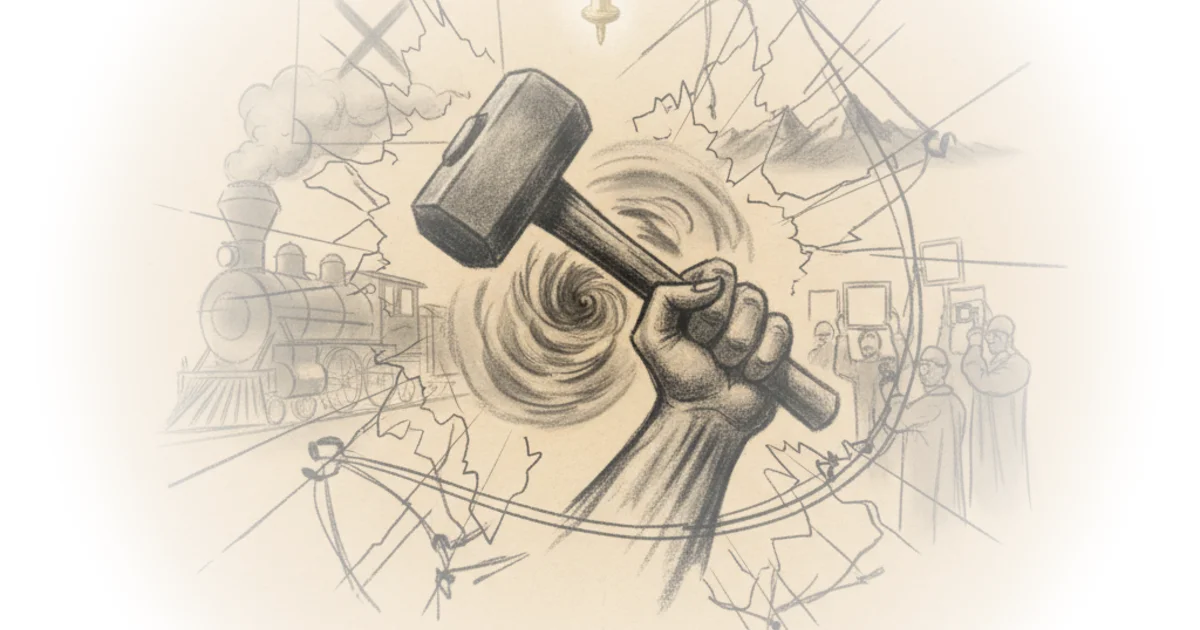
The commentary highlights how this cultural anxiety drove Chase Peterson, the university president, to seek a headline-grabbing breakthrough. BobbyBroccoli notes that Peterson had already faced the "Utah effect" with the failed artificial heart implant, where a groundbreaking procedure ended in the patient's death. The author suggests that Peterson needed a win to justify his political ambitions and secure the university's future. "If you ask a lot of people in Utah what they fear, it's that everyone is going to laugh at us," the text quotes a local pundit, capturing the emotional stakes. This framing is effective because it humanizes the institutional pressure, showing that the drive for cold fusion wasn't just about science; it was about dignity.
Critics might note that attributing the entire scandal to state insecurity overlooks the genuine, albeit misguided, enthusiasm of the scientists involved. Stanley Pons and Martin Fleischmann were not merely pawns; they were believers in their own data. However, the author's focus on the administration's role provides a necessary counterbalance to the typical narrative that blames only the researchers.
"The people he's waiting for right now had no interest in playing pretend nice for the media. This was war now."
The Rush to the Podium
The narrative shifts to the chaotic days leading up to the announcement, where the university locked down the lab and referred to the discovery simply as the "F-word." BobbyBroccoli describes the tension, noting that the administration pushed for a press conference before the science was peer-reviewed. "Peterson and the lawyers were in agreement. The time was now. If they waited any longer, it would jeopardize the patent applications." This detail is crucial; it reveals that the decision to go public was driven by legal and financial strategy rather than scientific readiness.
The author vividly portrays the scientists' reluctance, with one reportedly on the verge of tears during the meeting. BobbyBroccoli writes, "Years later, Peterson will argue that if they had stood their ground, he wouldn't have forced them to hold the press conference." This quote underscores the power dynamic at play, where the institution's need for a headline overrode the researchers' caution. The commentary suggests that the "war" mentioned earlier was not just against skeptics, but a battle within the university itself between scientific rigor and administrative ambition.
The piece details the press conference itself, where Pons and Fleischmann claimed to have achieved "sustained nuclear fusion reaction" with a device that was "considerably simpler than conventional techniques." BobbyBroccoli highlights the simplicity of their claim: "You drive the neutrons into the latis. You compress the neutrons in the latis." This simplicity, the author implies, was both the allure and the fatal flaw of the announcement. It was too good to be true, yet presented with such confidence that it captivated the world.
The Cost of a Photo
The final section of the text reflects on the aftermath, where the initial excitement turned to ridicule as other labs failed to replicate the results. BobbyBroccoli points out the irony that the event, intended to bring respect to Utah, ultimately cemented its reputation for the "Utah effect." The author writes, "It was a celebration of rival companies and the backbreaking labor of thousands of immigrants. It's the moment that made it into the history books because it made one hell of a photo." This repetition of the "photo" motif serves as a powerful critique of the entire endeavor.
The commentary notes that while the science failed, the story of the scandal reveals a deeper truth about the pressure on public institutions to perform. BobbyBroccoli concludes that the real cost was not just the wasted money, but the erosion of trust in scientific institutions. "The timing was almost prophetic," the author writes regarding the Exxon Valdez spill, suggesting that the world was desperate for a solution, making them vulnerable to the university's overreach.
Bottom Line
BobbyBroccoli's strongest argument is the reframing of the cold fusion scandal as a symptom of institutional insecurity rather than mere scientific hubris. The piece's biggest vulnerability is its slight tendency to portray the scientists as passive victims, potentially downplaying their own agency in the rush to publish. Readers should watch for how this narrative of "performative science" continues to influence modern research funding and media relations.
The real cost was not just the wasted money, but the erosion of trust in scientific institutions.