Ida Nikou cuts through the noise of geopolitical posturing to reveal a brutal truth: the current wave of unrest in Iran is not a foreign plot, but the inevitable result of a domestic political economy that weaponizes scarcity. While official narratives blame external enemies and Western commentators fixate on regime change theater, Nikou argues that the real story is how sanctions have been absorbed into the system to enrich a connected elite while crushing the working class. This is essential listening for anyone who wants to understand why the streets are burning, beyond the headlines of currency collapse.
The Mechanics of Austerity
Nikou's analysis begins by dismantling the state's preferred explanation for the December 2025 protests. She notes that President Masoud Pezeshkian claimed the unrest was a "coordinated effort by the US and European leaders who 'provoke, create division, and supplied resources, drawing some innocent people into this movement.'" This framing, she argues, is a deliberate obfuscation. The catalyst was not a foreign conspiracy, but a specific policy move: the removal of preferential foreign exchange rates for essential goods.
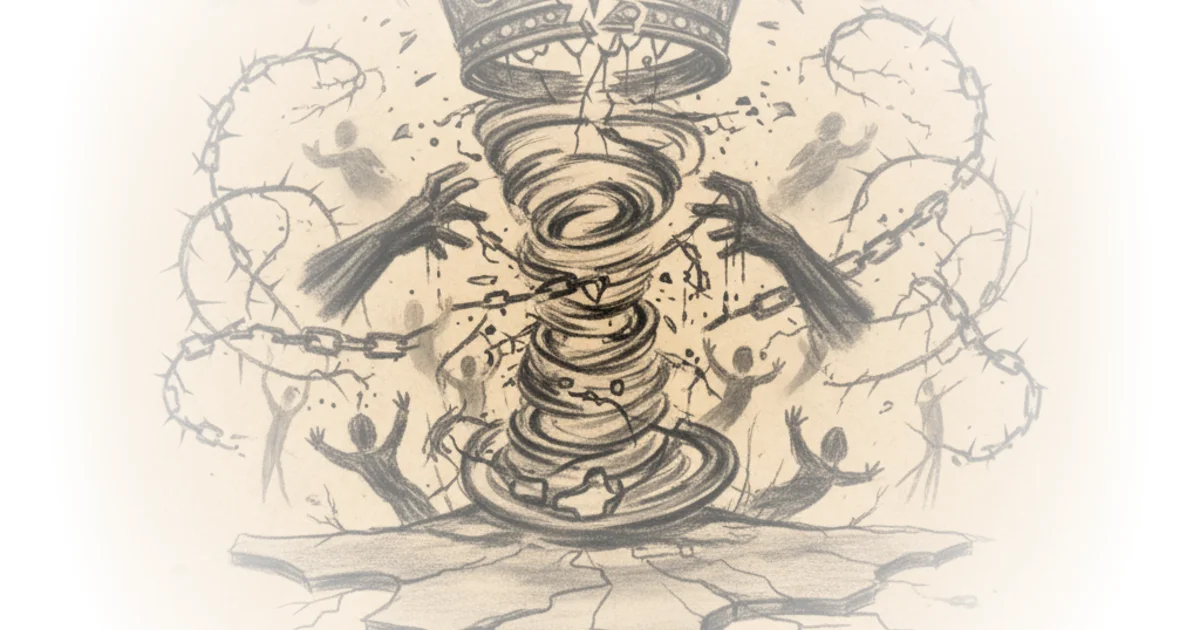
The author details how this decision, presented as an anti-corruption reform, acted as a shock therapy that accelerated inflation. "Official inflation in December was reported to be around 42 percent, but the cost of basic groceries rose much faster at 72 percent compared to a year earlier," Nikou writes. This discrepancy reveals the gap between official statistics and the lived reality of households. The state's solution—shifting welfare from services to cash transfers—failed because the transfers could not keep pace with the very inflation the policy exacerbated.
This is not a new phenomenon. Nikou draws a direct line to the 2019 fuel price hikes, which similarly fomented a mass uprising before being met with lethal force. The pattern is clear: successive governments have used "shock politics" to implement austerity under the guise of necessary reform. "In practice, these policies have functioned as austerity measures, transforming service-based welfare programs into cash-based handouts that quickly lose value amid chronic inflation," she observes. The result is a cycle where economic pain is manufactured to serve a political narrative of external threat, while the internal machinery of corruption remains untouched.
Sanctions have not suspended market-oriented restructuring in Iran. They have reshaped it by widening the state's discretionary power over who gets access to dollars, permits and contracts.
The Political Economy of Scarcity
The piece's most compelling contribution is its rejection of the binary debate between "mismanagement" and "sanctions." Nikou argues that both narratives are reductive. Instead, she posits that sanctions have been integrated into the domestic economy in a way that benefits the ruling class. "The more useful question is how sanctions have been absorbed into Iran's political economy in ways that serve the interests of the ruling class," she asserts.
By creating hard-currency shortages, the state has expanded its role as a gatekeeper. This has given rise to what insiders call the "trustee economy," a network of intermediaries who profit from routing payments around banking restrictions. Nikou highlights the Debsh Tea company scandal, where billions in subsidized currency were diverted for personal profit rather than essential imports. "The sums reported—upwards of $3 billion—was large enough to cover years of national tea demand or finance major public investment," she notes.
Critics might argue that focusing on internal corruption lets the sanctioning powers off the hook for the humanitarian toll. However, Nikou's point is precisely that the internal response to sanctions has been the primary driver of the current crisis. The state has chosen to protect elite interests through "opaque channels" and "discretionary import permissions" rather than stabilizing the market for ordinary citizens. The mechanism is familiar: when the resulting legitimacy crisis becomes intolerable, the state rolls out corrective packages that are, in reality, just new rounds of austerity.
The Cost of External Signaling
The human cost of this dynamic is staggering. Nikou reports that by mid-January, the government had killed thousands and imposed an indefinite communication blackout, marking "one of the deadliest episodes in the Islamic Republic's history since the purges of political dissent in the 1980s." The tragedy is compounded by the interplay between internal repression and external posturing. When US and Israeli officials frame the protests as a theater of war, it provides the state with the perfect pretext for counterinsurgency-style repression.
Nikou points out that Iranians did not need outside encouragement to revolt; the economic conditions were sufficient. Yet, external actors have raised the stakes. "Their posturing only serves to strengthen the state's claim that dissent is a foreign operation," she writes. This creates a deadly feedback loop where the state treats citizens as terrorists and external powers treat the crisis as a proxy battlefield. "In this sense, the response of the Iranian state and the politics of external powers share a core feature: both treat Iranian lives as expendable for the needs of power and profit," Nikou concludes.
The imagery of protesters in western Iran tearing open bags of rice and scattering them in the street is not a sign of theft, but of refusal. "The gesture was not theft so much as refusal and a public rejection of a system that turns a basic staple into a luxury while demanding that people accept humiliation as everyday submission," she explains. This act of defiance underscores the depth of the crisis: when a 10kg bag of rice costs a month's minimum wage, the social contract is irrevocably broken.
Bottom Line
Ida Nikou's strongest argument is her refusal to let the narrative of foreign interference obscure the reality of domestic policy choices that have turned scarcity into a profit center for the elite. The piece's vulnerability lies in the near-total lack of agency for the opposition beyond the streets, as the path forward remains blocked by both internal repression and the geopolitical interests of external powers. For the listener, the takeaway is stark: as long as crisis is managed through austerity and bullets, and as long as external powers treat Iranian lives as instruments of pressure, the cycle of violence will only deepen.
As long as crisis is managed through austerity and bullets, and as long as external powers treat Iranian lives as instruments of pressure and regime change, the costs will keep rising and more will die.