What happens when a real-world criminal defense attorney sits down to dissect a courtroom anime that has defined legal drama for millions? Devin Stone, the legal commentator behind LegalEagle, doesn't just poke fun at the absurdity; he uses the fictional chaos of Ace Attorney to illuminate the stark, often rigid realities of the Japanese and American legal systems. By pairing Stone with Kichiro Matsui, a practicing Japanese criminal lawyer, the piece transcends a simple reaction video to become a fascinating comparative study of procedure, evidence, and the very human desire for justice.
The Myth of the Dramatic Courtroom
Stone immediately dismantles the theatricality that defines the source material, contrasting the animated chaos with the quiet dignity of actual proceedings. He notes that the visual language of the show is fundamentally at odds with reality, stating, "that is nothing like what an American courtroom looks like... the audience they they're looking from like you know from the top we don't have audience looking from the top that's ridiculous." This observation sets the tone for the entire analysis: the show prioritizes narrative tension over procedural accuracy.
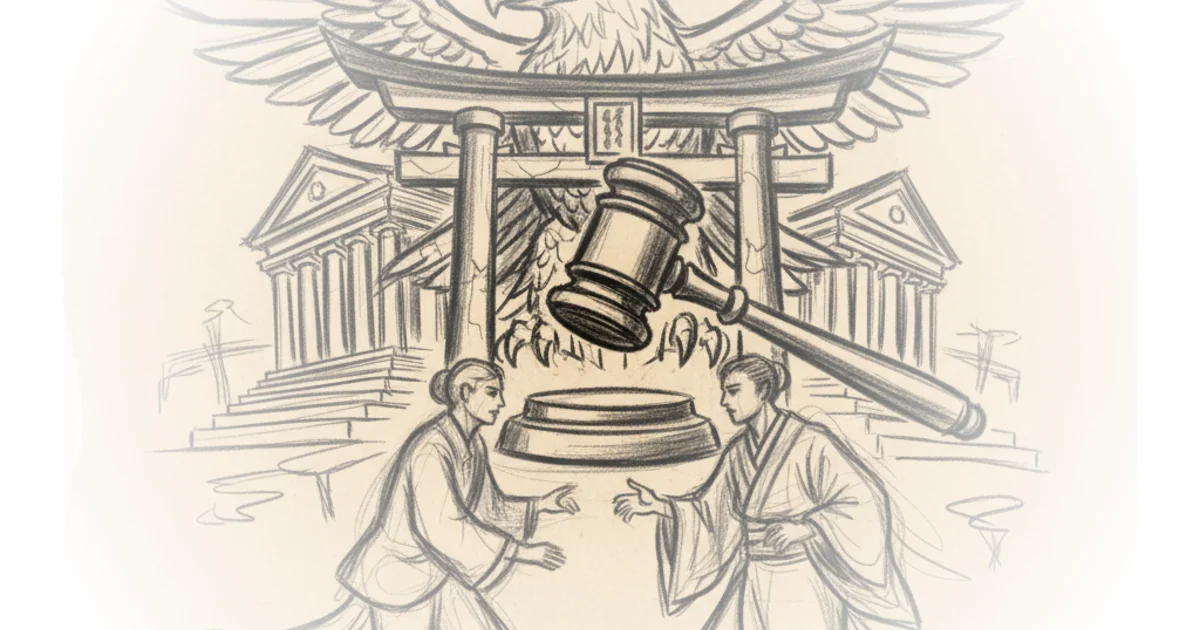
The discussion quickly moves to the behavior of the participants. In the anime, lawyers scream objections and move freely around the room. Stone and Matsui agree this is impossible. "You don't scream in a courtroom," Stone emphasizes, noting that in Japan, such behavior would result in immediate removal. The commentary highlights a key difference in legal culture: the American and Japanese systems both demand a level of decorum that the show completely ignores. Stone points out that while lawyers in movies "just walk around like they own the place," in reality, they must ask permission to enter the well of the court. This framing effectively strips away the glamour of the fictional profession, replacing it with a more grounded, albeit less exciting, reality.
"A lawyer who represents himself has a fool for a client."
Procedural Realities vs. Narrative Convenience
The core of the argument shifts to the mechanics of a trial, specifically the rules governing evidence and the roles of the judge and jury. Stone and Matsui tackle the show's central plot device: the sudden accusation of murder without an indictment. Stone is blunt about the impossibility of this scenario, explaining that "you have to start a new trial first of all if you're an accused from some other person." This highlights a critical flaw in the show's storytelling: it bypasses the due process that protects the accused in both the US and Japan.
The conversation also delves into the standard of proof. While the show often treats evidence as a puzzle to be solved in real-time, Stone reminds listeners that the legal threshold is incredibly high. "In the US the standard is a very very high bar you have to prove your case Beyond A Reasonable Doubt," he explains. Matsui confirms this is similar in Japan, though the conviction mechanism differs. In Japanese murder cases, a mixed panel of three judges and six citizens decides the verdict by majority vote, rather than the unanimous jury requirement common in the US. Stone finds this distinction particularly interesting, noting that "five votes can make a decision" in the Japanese system, a nuance often lost in Western adaptations.
Critics might note that focusing on these procedural discrepancies risks missing the point of Ace Attorney as a work of fiction designed to explore themes of truth and justice rather than to serve as a legal textbook. However, Stone's analysis remains valuable because it clarifies what is actually possible in a real courtroom, grounding the viewer's understanding of the legal system.
The Rules of Evidence and the "Brady" Problem
Perhaps the most significant legal critique Stone offers concerns the handling of evidence. In the anime, the prosecutor frequently withholds evidence until the last possible moment to spring a trap on the defense. Stone identifies this as a direct violation of the "Brady rule" in the United States, which mandates that "any evidence that would be helpful to the defense must be turned over to the defense long before the trial starts." Matsui confirms that while Japanese prosecutors have some discretion, the evidence is generally disclosed before the trial begins, making the show's dramatic reveals legally impossible.
Stone also critiques the show's portrayal of cross-examination. The characters often interrupt each other or object to their own questioning, behaviors that Stone dismisses as "totally objectionable." He explains that in a real trial, "you don't get to question them at the same time" and that one cannot object to a witness's testimony while conducting the cross-examination. "He can't object to himself," Stone notes, pointing out that the show's signature "Hold it!" mechanic has no basis in actual procedure. This section of the commentary serves as a powerful reminder that the drama of the courtroom comes from the clash of ideas, not the shouting of objections.
"The prosecutor brings all the evidence in the first place and they have to present all of them at the beginning of the trial."
Bottom Line
Devin Stone's commentary succeeds by using the absurdity of Ace Attorney as a lens to examine the serious, often invisible structures that govern real justice. The strongest part of the argument is the detailed comparison of evidence disclosure rules, which exposes a fundamental misunderstanding of how trials work in both the US and Japan. The piece's biggest vulnerability is its occasional reliance on the assumption that procedural accuracy is the only metric of value, potentially underestimating the cultural impact of the show's dramatization. For the busy reader, the takeaway is clear: while the anime offers a thrilling narrative, the real legal system is defined by patience, procedure, and a strict adherence to rules that allow no room for dramatic interruptions. Watch for how these procedural realities play out in actual high-profile cases, where the stakes are real and the rules are unforgiving.