In a landscape saturated with calls for productivity and polished output, this piece offers a radical counter-narrative: that the act of making something small and imperfect is a form of spiritual resistance. Jeannine Ouellette does not argue for grand gestures or finished masterpieces; instead, she constructs a compelling case for the transformative power of mundane engagement, using a 1956 French short film as her primary lens.
The Architecture of Belief
Ouellette anchors her argument in the physical streets of Belleville and Ménilmontant in Paris, the very locations where Albert Lamorisse filmed The Red Balloon in 1956. She observes that while the neighborhood has evolved into a hub for street art, the fundamental texture remains unchanged. "The steep staircases and impossibly narrow alleyways... all there," she notes, establishing a tangible connection between the past and present. This historical grounding is not merely decorative; it serves as the foundation for her central thesis about trust.
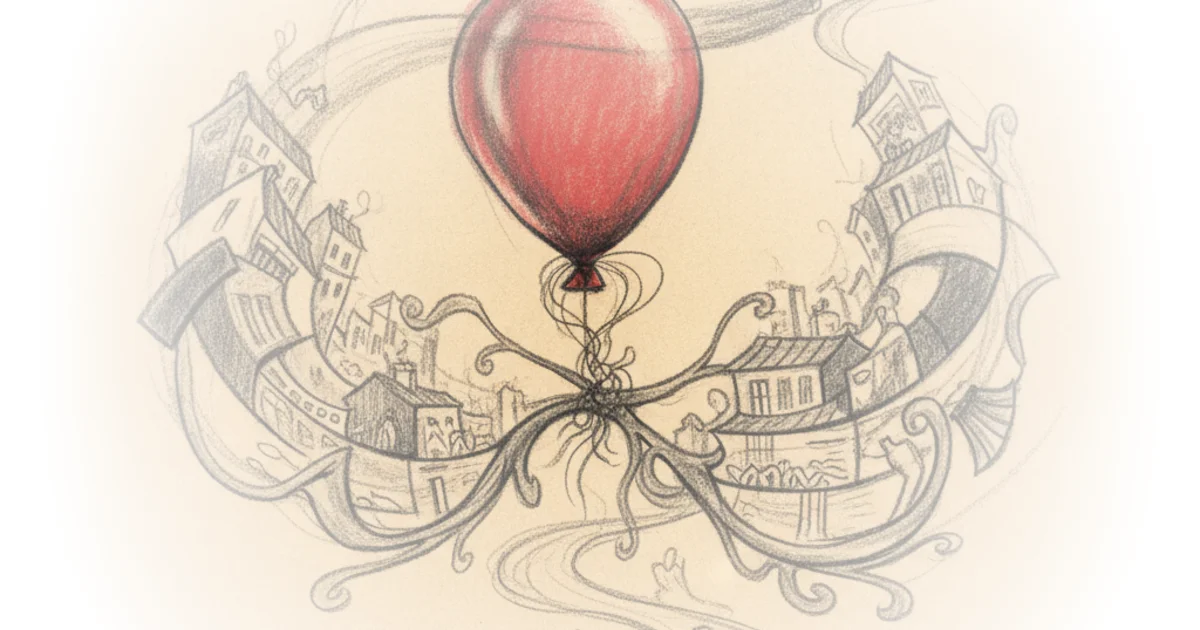
She draws a parallel between the film's protagonist, Pascal, and the modern writer's struggle with self-doubt. Pascal, the boy in the film, carries a red balloon that seems to possess its own agency. Ouellette highlights the simplicity of his approach: "He doesn't wonder whether he deserves a magical balloon. He doesn't hedge. He holds the string and walks through Paris and lets the impossible thing be true." This observation cuts through the typical anxiety of creation, suggesting that belief is an act of will rather than a result of merit.
The author's framing here is particularly effective because it shifts the focus from the quality of the output to the posture of the creator. By invoking the specific setting where Lamorisse captured this magic over six decades ago, she lends weight to the idea that these streets still hold a capacity for wonder. However, one might argue that this romanticized view of the creative process risks overlooking the structural barriers that prevent many from simply "believing" in their work, such as economic precarity or lack of time.
Pascal doesn't question or diminish it... He just holds onto it for as long as he can, and lets it be his—and when it gets taken from him, he once again allows for a miracle of possibility to sweep him over the rooftops of Paris.
The Discipline of Imperfection
Transitioning from observation to instruction, Ouellette outlines a specific practice: one hundred days of making something small and writing one hundred words about it. She explicitly rejects the tyranny of perfection, a common stumbling block for creatives. "You do not have to do this perfectly. You do not have to do every day," she writes, dismantling the binary success/failure mindset that often paralyzes artists.
The logic behind this approach is rooted in embodiment. Ouellette argues that moving from the purely mental space of writing into the physical act of making changes the writer's relationship with their material. "Once people start making things with their hands... their actual writing opens," she explains, positing that tactile engagement forces a level of presence that abstract thinking cannot achieve. This is a persuasive point; it suggests that the blockage in creativity is often a disconnection from the physical world.
She also addresses the reality of life's unpredictability, noting her own upcoming challenges with family health issues as a test case for the practice. "My life is going to be topsy turvy... but that's okay," she admits, reinforcing the idea that the container is designed to hold chaos, not just order. This vulnerability strengthens her argument, moving it from theoretical advice to lived experience.
Critics might note that a rigid 100-day structure could feel oppressive to those already struggling with consistency, potentially turning a liberating practice into another source of guilt. Yet Ouellette anticipates this by emphasizing flexibility: "People who do 60 of the 100 days will find themselves changed. People who do 40 will find themselves changed." The cumulative nature of the work is framed as a flowing stream rather than a race.
The Collective Container
The piece concludes by expanding the individual practice into a communal experience, inviting readers to share their small creations in a shared space. Ouellette suggests that this collective witnessing validates the act of making itself. She references a fellow writer, Mountain Mama, who realized that burying personal desires is often a defense mechanism against disappointment. "Allowing ourselves to want what we want also requires making peace with the idea that much of the time, the manifestation of our desire will be imperfect and/or incomplete," Ouellette paraphrases.
This communal aspect addresses a critical gap in solitary creative work: the fear of being seen while one is still becoming. By framing the practice as a shared journey where participants "come in incompletely," she normalizes the messy, unfinished nature of early-stage creation. The argument holds up well because it acknowledges that the value lies not in the final product but in the sustained attention paid to the process.
You need only take hold of the string and step forward, letting the thing be exactly what it already is.
Bottom Line
Ouellette's strongest move is reframing creativity as an act of trust rather than a performance of skill, using the enduring imagery of The Red Balloon to illustrate that belief precedes the miracle. The piece's greatest vulnerability lies in its reliance on the reader's ability to carve out time and mental space for this practice amidst modern chaos, though her emphasis on imperfection mitigates this risk. Ultimately, this is a vital reminder that the act of making, however small, is a way to reclaim agency in an unpredictable world.