Matt Yglesias cuts through the usual electoral noise to make a startling claim: the most urgent political task isn't just winning the next election, but ensuring that victory doesn't collapse two years later due to bad maps. He argues that the real threat to a Democratic majority isn't a lack of popular support, but the structural fragility created by decades of partisan redistricting.
The Structural Trap
Yglesias frames the upcoming cycle not as a simple popularity contest, but as a high-stakes battle for the rules of the game itself. He writes, "The key thing to keep in mind as you think about this election is the post-Callais, post-Virginia gerrymandering situation." This reference to the Supreme Court's Callais decision and the Virginia redistricting drama highlights how legal shifts are actively reshaping the political landscape before a single vote is cast. The author's core thesis is that while Democrats may win the popular vote in 2026, the maps could render that majority "extremely fragile in 2028 and 2030."
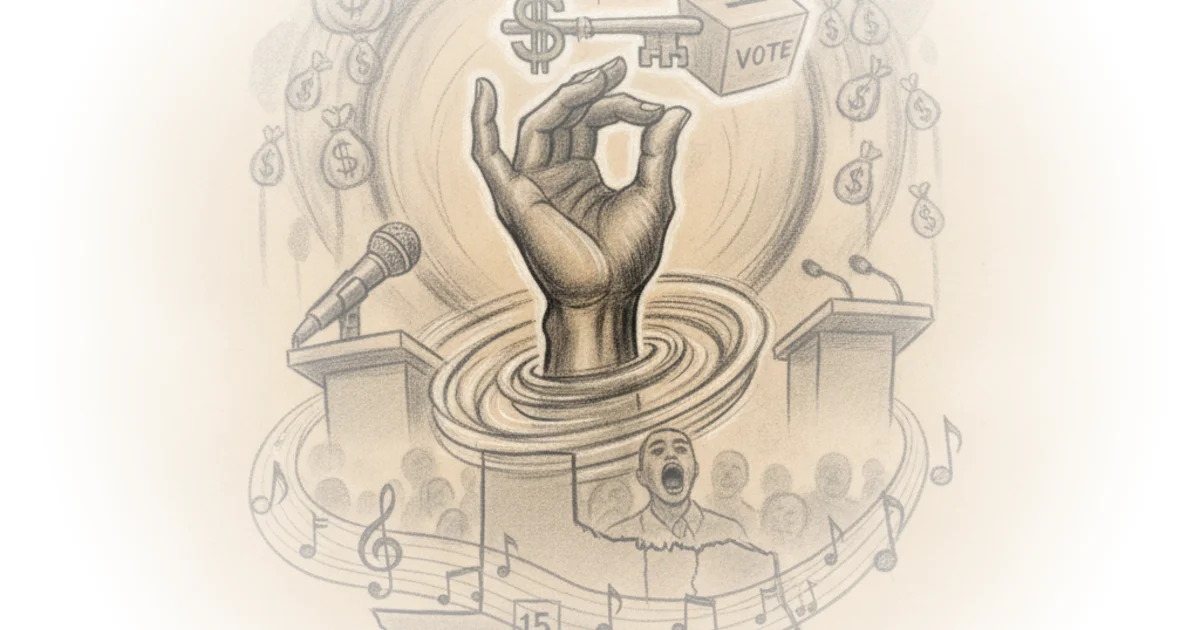
This framing is crucial because it shifts the donor's focus from the immediate thrill of a win to the long-term mechanics of power. Yglesias argues that the party needs "discerning winners who make smart decisions and can win tough races under difficult circumstances," rather than just candidates who can "coast to victory when the political climate is favorable." The logic here is sound: a seat won by a landslide in a friendly year is useless if the map is redrawn to make it unwinnable in a neutral year. Critics might note that this approach risks alienating the progressive base, which often prioritizes ideological purity over the pragmatic "moderate" candidates Yglesias champions. However, the author insists that without these pragmatic wins, the structural advantages of the opposition will remain insurmountable.
"They need to perform well in critical state-level elections to prevent the maps from getting even worse in 2028 and ideally to implement countermeasures in a few states."
Investing in the Margins
The piece distinguishes itself by prioritizing specific, underfunded races that have outsized strategic value. Yglesias highlights Bobby Pulido, a Tejano musician running in Texas's 15th District, noting that he "stands a realistic chance of beating Monica De La Cruz in a seat that went for Trump by nearly 20 points." This is a bold assertion, but it aligns with the article's broader strategy of backing candidates who can overperform in hostile environments. The author suggests Pulido could become a "star" who "makes a difference," contrasting him with the current House lineup where "Common Sense Democrats have a decent number of champions... but we don't have a star."
In North Carolina, the argument pivots to the judiciary. Yglesias reminds readers that "two years ago, Slow Boring readers put more than $50,000 behind Allison Riggs, who held her North Carolina Supreme Court seat by fewer than 1,000 votes." This historical context underscores the cumulative nature of political change. The goal is to flip the state Supreme Court to break the "viciously gerrymandered maps" that allow the legislature to "gerrymander the congressional maps." It is a clear example of how state-level judicial races are the linchpin for federal representation.
The author also champions Josh Turek in Iowa, a Paralympic gold medalist who flipped a "reddest state legislative seat." Yglesias uses Turek's success to critique the national infrastructure's reluctance to embrace moderates, stating, "'find candidates who overperform down-ballot and nominate them for higher office' continues to be underrated compared to outlandish gambits." This is a sharp critique of the party establishment's tendency to chase narrative over viability. A counterargument worth considering is that this strategy might lead to a party that is too cautious, failing to inspire the enthusiasm needed for a ground game. Yet, Yglesias maintains that in a polarized era, winning is the only path to influence.
The Alaska Exception and the Texas Narrative
The commentary takes a nuanced turn when discussing Alaska. Yglesias admits he has "fallen a bit out of love with the gambit of running independents," but concedes that Alaska's unique electoral system makes it an exception. He points to Bill Hill, a commercial fisherman, as a candidate who "would not only have better odds of winning in November — he'd also have dramatically better odds of actually holding the seat in 2028." This forward-looking analysis is the piece's most distinctive feature; it forces readers to think about the 2028 cycle while writing checks for 2026.
In Texas, the focus shifts to Johnny Garcia, who is running in a seat vacated by Greg Casar due to gerrymandering. Yglesias praises Garcia as an "old-school" Democrat and argues that his victory would help "reset the whole narrative around what's happening with this critical demographic." The author notes that Republicans invested heavily in the primary to boost an "antisemitic conspiracy theorist" hoping to embarrass Democrats, but progressives "did the right thing and rallied to support the moderate Garcia." This highlights the complex interplay between party strategy and external attacks.
"I really don't care for the tit-for-tat gerrymandering game and think a national solution should be an urgent priority for future federal legislation. But the only way out is through, and we can't allow MAGA [to win the long game]."
The State Level is the New Frontline
The final section of the article drives home the importance of state legislatures. Yglesias points to three specific candidates in Pennsylvania and Wisconsin, noting that "Democratic trifectas in both Pennsylvania and Wisconsin would likely be able to draw new maps that could net Democrats at least two congressional seats." This connects directly to the broader historical context of redistricting, where control of the state legislature has historically determined the shape of the House for a decade. The author acknowledges the difficulty, noting that other opportunities are blocked by "uncooperative state courts" or "recalcitrant Democratic incumbents."
The piece concludes with a plea for pragmatism in the Wisconsin governor's race, urging support for Sara Rodriguez over rivals who are seen as riskier bets. Yglesias argues that "hard-left factionalists are going to do their thing," but responsible voters must consolidate behind the strongest candidate to avoid blowing a "one-yard line" opportunity. This is a stark reminder that in a system designed to be unwinnable, every vote and every dollar must be deployed with surgical precision.
Bottom Line
Yglesias's strongest argument is the reframing of the election as a defense against structural erosion rather than a simple power grab; the piece effectively demonstrates that winning the popular vote is insufficient without winning the map. Its biggest vulnerability is the reliance on moderate candidates in deeply polarized districts, a strategy that carries high risk if the national mood shifts further right. Readers should watch whether these specific candidates can translate the author's strategic logic into actual victories in the coming months.
"The only way out is through, and we can't allow the current political architecture to calcify into a permanent minority rule."
The ultimate verdict is that while the path is narrow and fraught with obstacles, the author provides a clear, if demanding, roadmap for those willing to invest in the long game of democratic resilience.