Richard Hanania proposes a provocative twist on a decades-old puzzle: why do conservatives consistently report higher happiness and better mental health than liberals? The answer, he suggests, isn't about policy or economics, but about the very language we use to describe our inner lives. In a field often dominated by demographic controls and economic indicators, Hanania argues that the gap may be an artifact of "therapy culture"—a belief system that pathologizes normal human fragility and, paradoxically, makes us feel worse.
The Language of Distress
Hanania begins by dismantling the assumption that the mental health gap is purely biological or circumstantial. He points to recent research by Schaffner et al. (2025), which found that when survey questions shifted from clinical terms like "mental health" to general mood, the ideological gap vanished. "Asking about mental health in particular may exaggerate underlying differences between conservatives and liberals, but they're still there according to a wide body of research," Hanania notes, yet he pushes further. He asks: if the gap disappears when we stop using clinical labels, what does that say about the labels themselves?
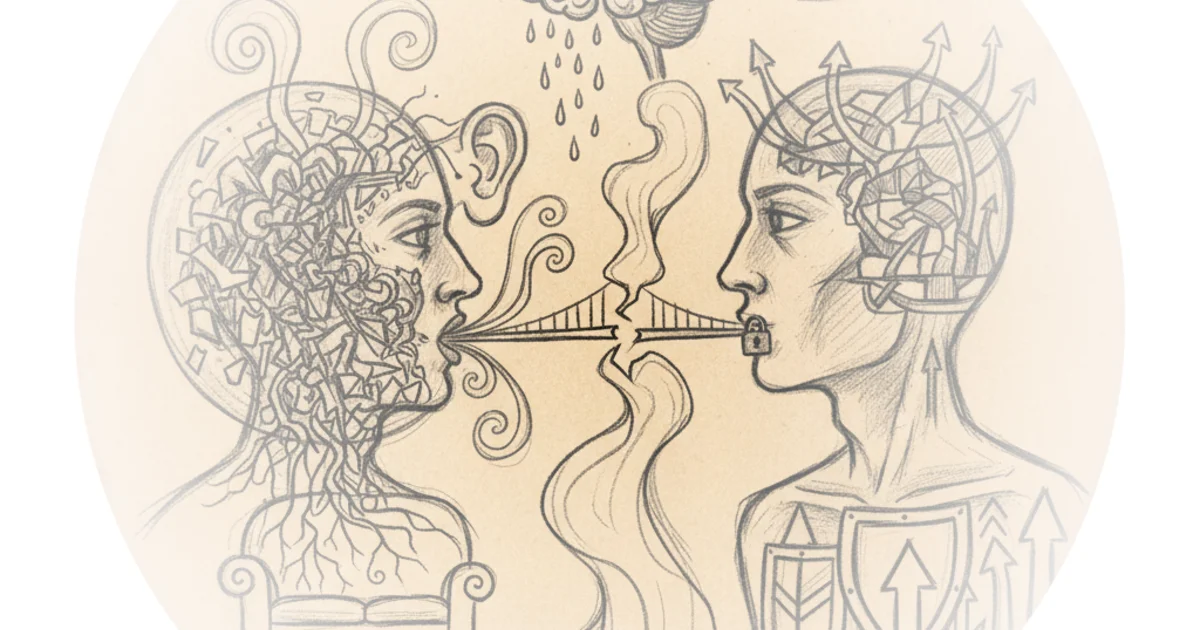
The core of his argument rests on the concept of "therapy culture," which he defines as "a belief in the idea that normal human beings are psychologically fragile and need care from professionals in order to achieve happiness and mental stability." This framing is sharp because it shifts the focus from having problems to believing we have problems. Hanania draws on Abigail Shrier's Bad Therapy to suggest that this mindset isn't just descriptive; it's causative. "If more purely physical health outcomes can be shaped by expectations, isn't this even more likely for mental health?" he asks, invoking the placebo effect to argue that our expectations of fragility can manufacture the very symptoms we fear.
"The idea that priming can affect outcomes is so widely accepted that medical trials as a matter of course test treatments against placebos. If more purely physical health outcomes can be shaped by expectations, isn't this even more likely for mental health?"
This line of reasoning is compelling, yet it requires a careful reading of the evidence. Hanania cites a 2023 review showing that school-based mental health interventions sometimes cause "iatrogenic harm," where students actually become more anxious after being taught to identify their feelings. A meta-analysis of anti-bullying programs using cognitive-behavioral therapy (CBT) found similar results: "students who were taught cognitive–behavioural therapy skills experienced an increase in internalising symptoms relative to control groups." The implication is stark: well-intentioned efforts to normalize mental health discourse may be inadvertently training young people to view normal emotional turbulence as a clinical crisis.
Critics might argue that this data is cherry-picked or that the harms are limited to specific subgroups, masking the overall benefits of these interventions. Hanania acknowledges this, noting that "even if there is evidence that a school-based intervention is effective or ineffective on average, there may still be a minority of participants to whom it can actively cause harm." However, he insists that the aggregate trend of rising anxiety in an era of heightened mental health awareness cannot be ignored.
The Data Behind the Theory
To test his hypothesis, Hanania conducted his own survey, recruiting respondents from social media platforms like X and Bluesky. While the sample is opt-in and not representative of the general population, Hanania argues it is sufficient for isolating the relationship between specific variables. He created a "therapy culture scale" based on six statements, ranging from "I think more people should go to therapy" to "People can generally recover pretty easily from many events considered traumatic."
The results were striking. Hanania found a massive correlation between ideology and belief in therapy culture: "In terms of belief in therapy culture, there's about a 1.6 standard deviation gap between those who are very liberal and very conservative! This is absolutely massive." When he ran regression models to see if this belief system explained the mental health gap, the effect of ideology itself disappeared. "The effects of ideology disappear into insignificance once you add the therapy culture index, which is associated with a standardized effect of -.19 on mental health and -.13 on mood," he writes. In plain terms, once you account for how much someone believes in the need for professional psychological intervention, their political party no longer predicts their happiness.
"These findings tell us there were instances when, on average, a participant was worse off receiving the intervention than not receiving it – i.e. this is evidence of iatrogenic harm."
The author's interpretation is that liberals, by embracing a worldview where emotional distress is a medical condition requiring professional management, are more prone to reporting poor mental health. Conservatives, by contrast, may view similar struggles as normal life challenges to be weathered without clinical framing. Hanania suggests this isn't just a reporting bias but a real psychological difference driven by belief. "My theory then, is that liberals accept more of what I call therapy culture, and therapy culture causes worse moods and mental health outcomes."
The Limits of the Lens
Hanania is careful to acknowledge the limitations of his study. He admits that the causal arrow could run both ways: "Perhaps having mental health problems causes a belief in therapy culture, rather than the other way around." He envisions a "self-reinforcing cycle" where beliefs shape experiences, which in turn reinforce beliefs. "I would guess causal arrows go in both directions, indicating that people for better or worse fall into self-reinforcing cycles, in which their beliefs about mental health affect their ideas, and those ideas in turn affect mental health."
This nuance is crucial. It prevents the argument from sliding into a simple "just get over it" dismissal of genuine mental illness. Instead, Hanania is critiquing the cultural framework that defines the scope of human suffering. He argues that the current approach to mental health, which is increasingly embedded in "medical systems, governments, and broader cultures," may be expanding the definition of pathology to include normal human variation. "Two lines of evidence suggest that what I call therapy culture has a negative impact on mental health," he writes, citing both the rise in reported challenges and the specific harms found in intervention trials.
Critics might note that the survey's reliance on self-selected social media users introduces a bias that could skew the results, particularly regarding the intensity of ideological views. Furthermore, the study does not fully account for the structural factors—such as economic insecurity or social isolation—that disproportionately affect certain groups and might independently drive both political views and mental health outcomes. Hanania briefly touches on this, noting that "differences in religiosity seem to be part of the story," but the primary focus remains on the cultural lens of therapy.
"Even more importantly, if the main theory put forward here is correct, it would imply that society may need to completely rethink our approach to human psychology and how we conceptualize mental health."
Bottom Line
Richard Hanania's piece offers a bold, if controversial, explanation for the ideological happiness gap: the very tools we use to understand our minds may be making us sadder. The strongest part of his argument is the compelling data showing that the mental health gap vanishes when clinical language is removed, suggesting that our diagnostic frameworks are not neutral observers but active participants in our emotional lives. However, the argument's biggest vulnerability lies in its reliance on a non-representative sample and the difficulty of proving causality in a complex feedback loop of belief and experience. Readers should watch for larger, more rigorous studies that can confirm whether "therapy culture" is indeed a driver of distress or merely a symptom of a deeper societal shift.